UGC Video Script Template: 7 Elements Every Brand Video Should Include
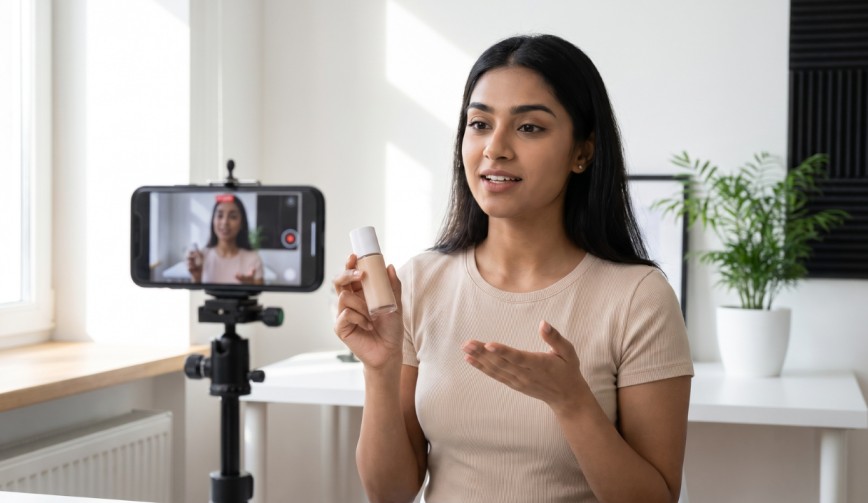
Have you ever watched a video that just felt like a mate was telling you about something they were really into? That’s the power of user generated content. A good UGC video script template will get you that same feel every time, regardless of who is actually filming for your brand. Without a template, the videos just drift, they forget the product and end up with a “right, well” rather than a “buy”. With a template, they stay on track and still sound like a real person.
Here’s what a good UGC video needs, one element at a time.
Why a Script Template Helps
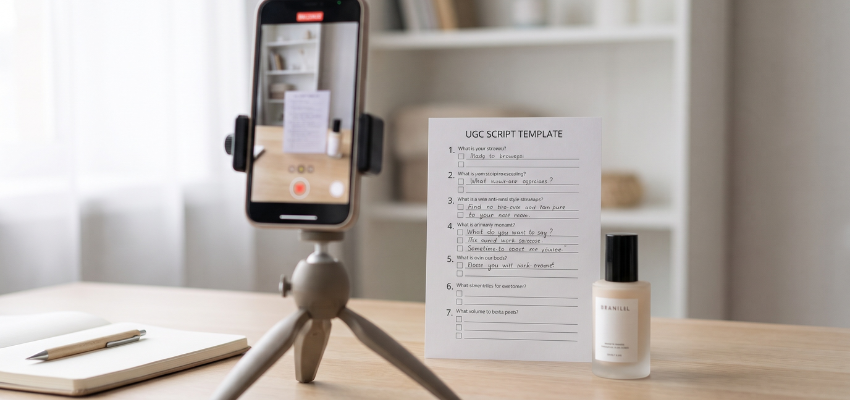
(Source – OpenAI)
Lots of brands are concerned a script will make a video sound artificial. It doesn’t have to. Think of it as a map rather than a script. It’s a guide as to where you need to go, and the creators will then decide how they want to get there in their own words.
A template also saves time. You know what to put in, you’ve got far fewer reshoots and your brand videos remain consistent without losing their character.
👉Click here to see how Boss Wallah works with brands and what we can build for you
1. The Opening Hook
You’ve got about three seconds before someone scrolls away. The hook is the first line or visual that stops them. That can be a question, a bold assertion or a problem they’re all too familiar with.
- Weak: “Hi guys, today I want to talk about a product.”
- Strong: “Does your phone die by lunch every single day?”
The strong version is about a genuine frustration. Keep your hook short and aim it at one individual rather than a group.
2. The Product Introduction
Now you’ve got their attention, say what the product is. A good product introduction will answer two questions in one or two sentences: what is it and who is it for?
For example: “This is a pocket-sized charger for the person who is always on the move.” That’s straightforward, succinct and clear. Get the detail in later. If that section is dragging, then you’ve lost the viewer before you’ve even got to the good bits.
3. Real-Life Use
This is where the video proves the product works outside of a perfect ad. Show it in a real-world setting, such as:
- In a kitchen on the counter.
- Inside a gym bag.
- On a messy desk.
This is often referred to as a product demo (i.e. showing how it works). A creator using the product as they go about their day is far more believable than a slick studio shot. You can picture the product in your own day-to-day life, and that’s what makes it work.
Read More | Creator Portfolio for Brand Deals: No Clients, No Collabs, No Problem.
4. The Benefits
A feature is what the product has. A benefit is what it does for you. Most of the audience are going to care about the benefit.
- Feature: “It has a 10,000 mAh battery.” (That’s just a battery size.)
- Benefit: “I can charge my phone three times without having to go hunting for a plug.”
Pick two or three benefits at the absolute most. If you list ten, people won’t remember any of them. Link each benefit to a real problem, and your short-form video will come across as useful rather than salesy.
5. Personal Experience
This is absolutely the heart of any good UGC video. It’s the personal story that sets it apart from a standard ad. Get the creator to tell you about things before, during and after using the product.
A line like “I was sceptical at first, but after a week I tossed my old one” is believable because it is believable. The little touches help too, a quirk of the situation or a nice little surprise. You can spot a sales pitch a mile off, so just let the real feelings do the talking.
6. Social Proof
Social proofis simply showing that other people like the product. It could be:
- A brief reference to reviews.
- A happy customer.
- A before-and-after example.
One honest line will do (e.g. “My sister bought one after seeing mine and is now absolutely raving about it”). Keep it believable. The bigger the claims, the more suspicious they will seem, and that’s entirely justified.
7. The Call to Action
Every video needs a clear next step. The call to action (CTA) is the point at which you tell the viewer what you want them to do. If you don’t have one, they’ll enjoy the video and then just go back and start scrolling again.
Good examples include:
- “Tap the link in my bio to try it.”
- “Use code SAVE10 for 10% off.”
- “Comment ‘yes’ and I’ll send you the link.”
Just pick one action. Don’t ask people to like, follow, share and buy all at once, as that just confuses them.
A Simple UGC Video Script Template to Copy
Here’s a layout you can hand to the creatives. The timing works for a 30-second video.
- Hook (0 to 3 seconds): A question or a relatable problem.
- Product introduction (3 to 8 seconds): What it is and who it’s for.
- Real-life use (8 to 15 seconds): Show it in action.
- Benefits (15 to 20 seconds): Two or three very clear benefits.
- Personal experience (20 to 25 seconds): One short, honest story.
- Social proof (25 to 27 seconds): One line of proof.
- Call to action (27 to 30 seconds): One clear next step.
Just tell the creatives these are talking points, not lines to memorise. The aim is to sound like a person, not like a robot reading off a card.
Common Mistakes to Avoid
(Source – OpenAI)
- Over scripting: If every word is fixed, the video comes across as stiff.
- Too many messages: One video should have one key message.
- Hiding the product: If you can’t get people to see it clearly, they won’t want it.
- Poor sound: Bad audio will kill the best social media ad, so make sure creators are filming in a quiet location.
Read More | Creator Licensing for Brands: What to Check Before Reusing Creator Content.
Need Videos, Creators, or Regional Content for Your Brand?
Boss Wallah helps brands plan and execute video content at scale, without managing multiple vendors.
We work with companies to:
- Shoot large volumes of short-form videos using real creators and studio setups, suitable for social media, websites, campaigns, and launches
- Adapt the same videos for different languages, regions, and platforms, so one shoot works across India and global markets
- Launch products or campaigns through dozens or hundreds of creators, all managed, tracked, and reported in one system
- Support brands with ongoing content, launches, regional expansion, and performance-focused campaigns
Whether you need videos for a new launch, content for multiple markets, creator-led visibility, or a steady content pipeline, Boss Wallah acts as a single partner handling production, creators, and execution end-to-end.
👉Click here to see how Boss Wallah works with brands and what we can build for you
Final Thoughts
A good UGC video script template doesn’t take any of the fun out of making the video. It provides a clear route to follow and still allows for your own personality to come through. Start with a strong hook, show the product in use, tell a genuine story and finish with a simple call to action. That’s it. Your videos will then come across as less like an advert and more like advice from a friend.
FAQs
1. What is a UGC video script template?
It’s a basic outline that tells the creators what to say and what to show in the video. It lists the key bits (the hook, the product info, the CTA) without necessarily dictating what the exact words are.
2. How long should a UGC video be?
The majority of content performs best in the 15 to 45-second range. That’s long enough to tell a story, short enough to keep people watching on TikTok and Instagram Reels.
3. Should the creators memorise the script?
No, they should know the key points and be able to say them naturally. A word-for-word reading will always come across as fake, and the audience will pick it up straight away.
4. How is UGC different from a regular ad?
A standard ad is put out by the brand and tends to be quite slick. UGC (user generated content) is created by real customers or real creators and is far more casual and authentic, which is precisely why it’s so much more trusted.
5. Can I use the same template for every product?
Yes. The seven elements work for almost any product. You only need to change the details, such as the hook, the benefits and the story.