Creator Portfolio for Brand Deals: No Clients, No Collabs, No Problem
Every brand wants to work with someone who’s done it before. Every new creator is left wondering how the hell you get experience if no one will employ you in the first instance. It’s like you need a job to get the experience to get the job. The good news is that a Creator Portfolio for Brand Deals (No Clients, No Collabs, No Problem) is very much a reality. You can absolutely build one this week on your phone, with a bit of creativity and a free afternoon.
Let’s walk through how.
What Is a Creator Portfolio, Anyway?
(Source – OpenAI)
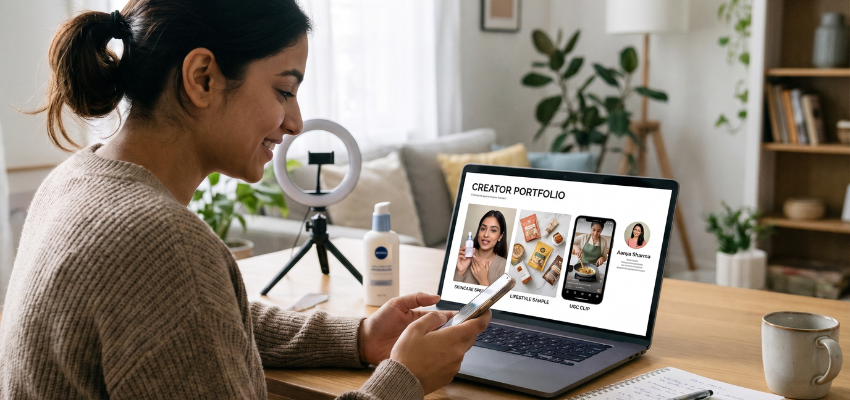
A creator portfolio is just a simple collection of your best work in one place. It’s essentially your menu. The brands will look at it and decide whether they like what you’re offering.
Here is what it usually includes:
- Best work: 3 to 6 videos, photos, or posts. Shows your style fast.
- Short bio: 2 or 3 lines about you and your topic. Helps brands see if you fit.
- Media kit: A one-page summary of who you are, who follows you, and what you offer. Saves brands time.
- Contact details: Email or a booking link. Makes it easy to say yes.
No design degree required at all.
👉Click here to see how Boss Wallah works with brands and what we can build for you
Why a Creator Portfolio for Brand Deals: No Clients, No Collabs, No Problem Actually Works
The vast majority of people don’t realise this: brands don’t just care about your past deals. They care about whether you can produce content that is in their style and will get people to pay attention.
If your work shows that, then they won’t mind the lack of past clients. In fact, many small brands actually like the idea of fresh faces, as the new guy will typically be charging less and will be far more willing to work. So your lack of experience isn’t a barrier at all. It’s just a door that needs a handle.
Step 1: Pick Your Lane
Before you do anything else, pick your niche. Your niche is the area you want to be known in. That could be skincare, budget travel, home workouts, coffee gear, etc.
Trying to appeal to all is like running a shop that sells shoes, cars and cupcakes. You end up with nobody knowing what to buy. Pick one area and stick with it for now. You can move on to another later.
Step 2: Make Your Own Sample Content
You’ve got no actual collaborations, so you’re creating sample content. These are just practice posts that are going to look like real brand content.
Here are a few ideas:
- Review something you own: Film it as if a brand hired you.
- Promote a brand you love: Make a short video showing how you would advertise it.
- Write a caption: End with a call to action, which is just a line telling viewers what to do next, like “Tap the link to try it.”
This is often referred to as UGC (user-generated content), i.e., content that’s produced by regular people rather than big ad agencies. It’s very appealing to brands as it’s so much more authentic and believable.
Read More | Creator Licensing for Brands: What to Check Before Reusing Creator Content.
Step 3: Create Mock Collaborations
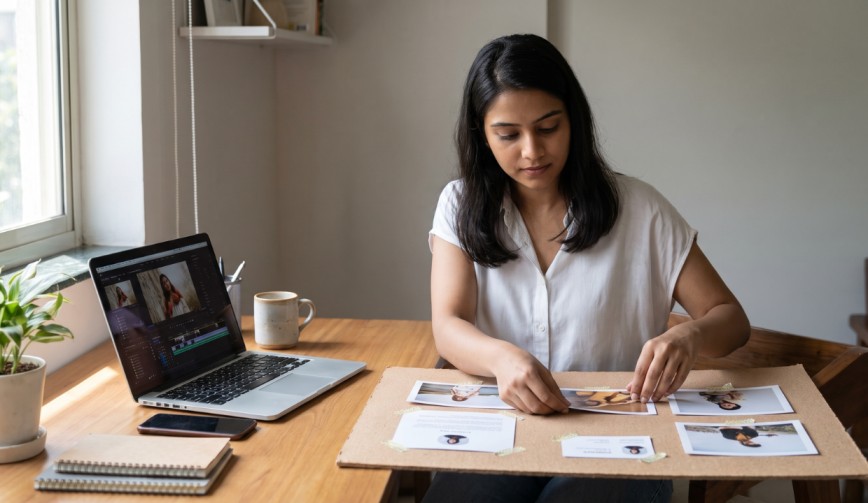
A mock collaboration is a fake brand project that you do yourself. You do it as if it’s a real job, just nobody’s actually paying you at this stage.
If you’re a fan of a local coffee brand, then go ahead and make a short Reel, a photo set and a few Stories for them. Define the objective, such as “to get more people to discover their cold brew,” and then add it to your portfolio as concept work with that clearly stated.
Be honest about this. Don’t pretend these were paid deals. The brands will know, and it will damage your reputation. “Concept work” is absolutely fine to say and sounds perfectly professional.
Step 4: Show Your Numbers (Even Small Ones)
You might think your follower count is too small to be of any significance at all. Don’t hide it. Look at your engagement rate. That’s the percentage of your followers that like, comment or share your posts. A small account with a very active (chatty) follower base can be worth far more than a large account with very little engagement.
For example:
- Creator A: 800 followers and 80 regular commenters. Strong engagement.
- Creator B: 20,000 followers and 40 regular commenters. Weak engagement.
Brands might prefer Creator A because an engaged audience can be more valuable than a large but inactive one.
Promote your wins, such as:
- A post with lots of saves.
- A video that has reached new viewers.
- A post that has generated meaningful comments.
- Content that has driven profile visits or link clicks.
Step 5: Put It All in One Easy Place
Your portfolio doesn’t need a custom website. Try one of these options:
- Link page or free site builder: Easy sharing in your bio.
- PDF: Convenient for attaching to emails.
- Pinned folder on your profile: A quick and simple start.
All three options can be free.
Keep it clean. If a brand has to go hunting for your contact details, then they’ll probably just give up and go and get a snack.
Step 6: Pitch Brands Like a Human
To ‘pitch’ a brand is to message them and suggest a working relationship. It sounds a bit daunting, but it’s really just a very polite hello with a clear proposition.
Keep your pitch short. Include these points:
- Who you are and what type of content you create.
- What you like about the brand or its product.
- One specific idea for a video, Reel or post.
- A link to your portfolio.
Don’t write a novel. Brands get loads of messages every day, so the shorter the better.
Start with smaller companies. They tend to get back to you much quicker and are generally more amenable to a first-time brand collab than a giant company, which will have ten layers of approval to get anything through.
Common Mistakes to Avoid
(Source – OpenAI)
- Adding every post you have ever made: Keep only your best 3 to 6 pieces.
- Using blurry or dark photos: Use natural light and a clean background.
- Leaving out contact details: Put your email on the first page.
- Copying another creator’s style: Add your own voice and humour.
- Quitting after a few ignored messages: Keep pitching every week.
Rejection is part of the game. Even the famous were ignored at the outset.
Read More | Micro Influencer Rates in India: How Much Should You Pay?
Need Videos, Creators, or Regional Content for Your Brand?
Boss Wallah helps brands plan and execute video content at scale, without managing multiple vendors.
We work with companies to:
- Shoot large volumes of short-form videos using real creators and studio setups, suitable for social media, websites, campaigns, and launches
- Adapt the same videos for different languages, regions, and platforms, so one shoot works across India and global markets
- Launch products or campaigns through dozens or hundreds of creators, all managed, tracked, and reported in one system
- Support brands with ongoing content, launches, regional expansion, and performance-focused campaigns
Whether you need videos for a new launch, content for multiple markets, creator-led visibility, or a steady content pipeline, Boss Wallah acts as a single partner handling production, creators, and execution end-to-end.
👉Click here to see how Boss Wallah works with brands and what we can build for you
Final Thoughts
You don’t need a long client list to look the part. You need a clear niche, good sample work, honest numbers and the guts to actually hit send. A strong Creator Portfolio for Brand Deals: No Clients, No Collabs, No Problem is just proof that you can do the job. That’s all you need to show, and the deals will come.
Start small, stay consistent and remember that every big creator had an empty portfolio at one point or another.
Frequently Asked Questions
1. Can I build a portfolio with no followers?
Yes, brands do care about the quality of your content and how well it fits in with their own style. Get some strong sample work and establish a clear niche first.
2. How many pieces should I include?
Three to six of your very best are more than enough. A few really good ones are far better than a long list of mediocre ones.
3. Is it acceptable to include concept work?
Yes, as long as you label it properly. If you call it a concept project, then it’s perfectly acceptable.
4. Do I need a website?
No, a simple link page, a PDF or a clean social profile is fine. You can always upgrade later on when you’ve got more deals.
5. How long does it take to get your first brand deal?
It’s all very variable. Some people will get one in a few weeks, while others will take a few months. Consistent posting and consistent pitching can help you improve your chances.