Influencer Payment Terms in India: When and How Should Creators Get Paid?
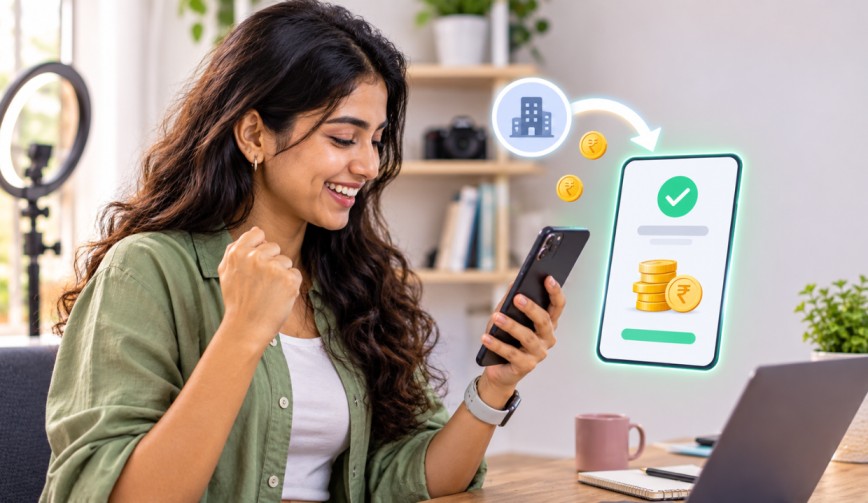
Every creator has heard that line at some point: “Payment will be done soon.” ‘Soon’ can be three days, three weeks or three Diwalis from now! That’s why it’s so important to understand the influencer payment terms in India as much as it is to make a good reel. The payment terms are simply the rules that define how much you’ll be paid, when you’ll be paid and how the money will get to you. When the payment terms are clear, everyone’s at ease and the brand and the creator can get on with the work.
Let’s go through it all in the plainest possible terms.
Why Clear Payment Terms Matter

(Source – OpenAI)
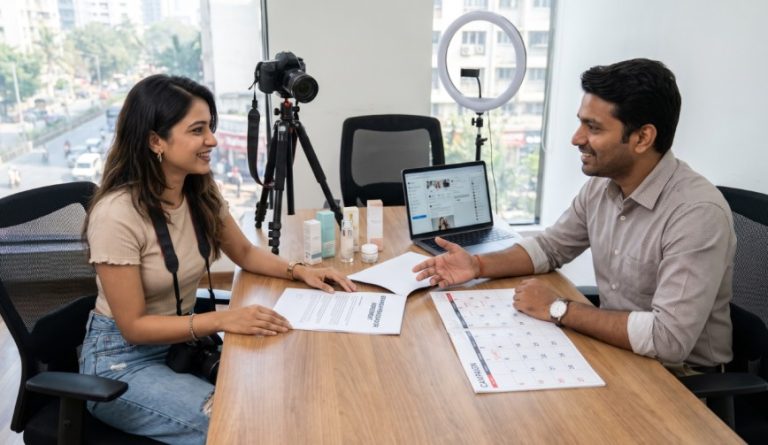
Loads of creators will kick off a collab via a quick chat on Instagram DMs or WhatsApp. It’s all very friendly and easy until the post goes live and then the brand just goes cold. You’ve got absolutely nothing to go on if there’s no written agreement.
Clear terms protect both parties. The brand knows what they’re getting for their money and the creator knows what they’re getting. It’s just like ordering food online. You wouldn’t place an order without knowing the price and the delivery time, so why would you accept a brand deal without that level of clarity?
👉Click here to see how Boss Wallah works with brands and what we can build for you
The Usual Influencer Payment Schedule in India
There is no single national rule, but most deals follow one of these patterns in the influencer payment schedule:
100% advance: The full amount is paid upfront. That’s the norm for small one-off posts and deals with new creators.
50% advance and 50% on posting: This is by far the most popular option. 50% upfront and 50% once the content has gone live.
Milestone-based payments: For larger campaigns, the payment is released in stages. For example, 30% on signing, 40% on content approval and 30% on posting.
Payment upon delivery: The full amount is paid only after delivery. That’s the riskiest option for the creator, so use it with care.
If you’re just getting started, try and ask for at least some advance payment. That shows the brand is taking it seriously and covers your costs for props, travel, editing, etc.
Read More | Top 10 Influencer Marketing Platforms in India for Brands and Creators.
Understanding Payment Timelines
You might come across the term Net 30 or Net 45 in a contract. That’s just jargon, really. It’s a way of saying the brand will pay you within 30 or 45 days of you sending them your invoice (your bill).
In India, quite a few brands, particularly bigger brands and agencies, will pay in 30 to 60 days. That’s perfectly acceptable as long as it’s in writing. What’s not acceptable is a ‘payment upon campaign completion’ type of line. You need a clear date or a clear number of days. Your rent isn’t going to wait for the campaign to complete.
Put It in a Written Influencer Contract
A good influencer contract doesn’t need to be a fifty-page legal monster. One or two pages are enough if they cover the basics:
Total fee and what the fee includes.
Number of posts, reels or stories.
Number of revisions allowed.
Payment dates or milestones.
Late payment rules.
Usage rights (how long the brand can reuse your content).
Usage rights are the thing to be on the lookout for. If a brand wants to run your video as an ad, that’s going to be worth a lot more. Don’t just hand it over for free because the brand has been nice.
GST and TDS Made Simple
Taxes are the area that trips up a lot of creators, so here’s the simple version.
GST for influencers: GST stands for Goods and Services Tax. If your income from services in a year exceeds the threshold set by the government (currently Rs. 20 lakh for most service providers in most states), you will need to register for GST and include it on your invoice. The threshold can vary depending on the type of service and state, so it’s always worth checking with a tax advisor.
TDS (Tax Deducted at Source): This simply means the brand deducts a portion of your payment and deposits it with the government on your behalf. You can claim that amount as tax credit when you file your income tax return. So, if your invoice says Rs. 50,000 and you receive a little less, don’t worry. The difference may have been paid to the government as tax in your name.
Always ask the brand for the TDS certificate. That’s your proof, and you’ll need it at tax time.
How Should Creators Be Paid?
Stick to safe and traceable methods:
Bank transfer (NEFT, RTGS or IMPS): Ideal for larger amounts and straightforward record-keeping.
UPI: Quick and convenient for smaller amounts.
Payment gateways/platforms: Some agencies pay through a platform that handles invoicing and payments.
Avoid cash deals wherever possible. They leave no digital trail and can create problems when filing your taxes or proving your income if you need a loan.
What to Do When Payment Is Late
It happens to the very best of us. Here is a calm way to handle it:
Send a polite reminder with the invoice attached.
Follow up after 3 to 5 days.
Mention the late payment clause in your contract, if you have one.
Pause any pending work or content usage until the dues are cleared, where your agreement allows it.
As a final step, consider sending a formal legal notice.
Most delays are down to slow accounts teams rather than any ill intent. A well-worded, friendly but firm message will resolve a surprising number of issues.
Quick Tips to Get Paid Faster

(Source – OpenAI)
Send out your invoice on the day the content goes live.
Double-check your bank details and GST number before sending the invoice.
Keep all chats, approvals and screenshots safe.
Add a late fee clause (e.g. 1% to 2% per month on late payments), where legally agreed.
Never post until the advance has reached your account.
Read More | Hidden Cost of Influencer Marketing vs Video Ads: What Brands Don’t Calculate.
Need Videos, Creators, or Regional Content for Your Brand?
Boss Wallah helps brands plan and execute video content at scale, without managing multiple vendors.
We work with companies to:
- Shoot large volumes of short-form videos using real creators and studio setups, suitable for social media, websites, campaigns, and launches
- Adapt the same videos for different languages, regions, and platforms, so one shoot works across India and global markets
- Launch products or campaigns through dozens or hundreds of creators, all managed, tracked, and reported in one system
- Support brands with ongoing content, launches, regional expansion, and performance-focused campaigns
Whether you need videos for a new launch, content for multiple markets, creator-led visibility, or a steady content pipeline, Boss Wallah acts as a single partner handling production, creators, and execution end-to-end.
👉Click here to see how Boss Wallah works with brands and what we can build for you
Final Thoughts
Getting paid on time isn’t about being pushy. It’s about being professional. If you’ve got clear influencer payment terms in India from day one, you’ll never have to go down the path of awkward chasing, delayed payments and sleepless nights. Know your rates, put them down in writing and treat your own work with respect. Your content takes effort, and your payment should therefore be on time without you having to be a detective.
Frequently Asked Questions
1. How much should an influencer be asking for in advance?
A 50% advance is a perfectly reasonable and fairly standard request. New creators can certainly ask for more, and experienced creators with a track record of good results can generally get that 50% without much difficulty.
2. Is it legal for brands to pay influencers in free products?
It’s not illegal if both parties agree. Free products aren’t a substitute for income, though. If you’re giving your time and your audience, you can and should ask for money. That agreement should be in writing.
3. Do small creators need to pay tax in India?
Yes, income is income, however small. Whether you’re liable to pay tax depends on your total annual income and the applicable tax rules. You should keep records of every payment you receive.
4. What is the difference between an invoice and a contract?
A contract is the agreement made before the work begins. An invoice is the bill you issue for the work completed. You need both.
5. What if the brand just refuses to pay after I’ve posted the content?
Start with polite reminders and keep your proof ready. If that fails, consider sending a legal notice. Having a signed contract and saved messages makes your case much stronger.