Regional Language Video Marketing in India: Why Does It Matter for Brands?
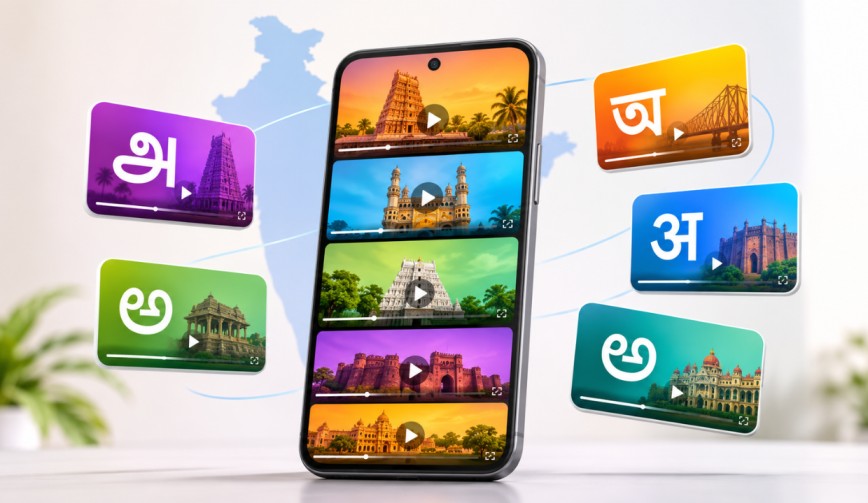
Imagine a shop owner in Madurai looking at an ad in English. He gives it a nod; he’s got half of it, and he’s just scrolled on. Now imagine the same ad in Tamil, with a bit of humour he actually gets. He stops. He watches. He may well share it. That’s the power of regional language video marketing in India. It’s just about creating your video content in the language that people actually speak. Rather than just doing it in English and Hindi.
What Is Regional Language Video Marketing?
(Source – OpenAI)
It’s the practice of making promo videos, ads, tutorials and social clips in local languages (so Tamil, Telugu, Bengali, Marathi, Kannada etc). You’ll often hear it referred to as vernacular video content. “Vernacular” is just a fancy word for the language of the region.
It’s not the same as just running one Hindi ad across the country. Each language has its own flavour, its own set of expressions and its own sense of humour. A good regional video ad will take all that on board.
👉Click here to see how Boss Wallah works with brands and what we can build for you
Why Indian Brands Should Care
India has hundreds of millions of internet users and a large proportion of them will go to their mother tongue for content. They’ll be quite comfortable with English for work but will switch to their own language for entertainment, for shopping and for any big money decisions.
Brands that don’t do this are speaking to a far smaller audience than they realise. Brands that do take on the local language are the ones that are going to be able to reach the small towns and villages where internet penetration is growing most rapidly. The other advantage is that very few brands are actually doing it well so you’re not competing with a whole host of others.
How Local Languages Build Trust and Engagement
People trust what they understand without any effort. If a video is speaking to you in your own language then your brain can relax. You don’t have to be doing the mental translation so you can just focus on the message.
This builds audience trust. A brand that talks like a neighbour is going to feel more authentic than one that talks like it’s written in a textbook. It also increases engagement (i.e. how much people watch, like, comment and share). A viewer who feels they’ve been understood is far more likely to comment than a viewer who feels like they’re an outsider.
Read More | UGC Portfolio Mistakes That Make Brands Ignore Your Content.
Popular Regional Languages for Video Marketing
You don’t need to cover everything at once. These languages have large audiences and active online communities:
Hindi: The widest reach, particularly across the northern and central states.
Tamil and Telugu: Huge video viewers with a real passion for film and for the filmmakers.
Bengali: A proud language community with very high levels of engagement.
Marathi: Big in Maharashtra and growing fast online.
Kannada and Malayalam: Smaller but very loyal audiences, generally quite responsive to brands that do their bit.
Gujarati and Punjabi: Ideal for business, food and lifestyle products.
Cultural Localisation: More Than Translation
Here’s where so many brands get it wrong. Cultural localisation is about adapting your video to the local culture (local habits, local festivals, local food, local humour) rather than simply translating the words from one language to another.
A straight translation can come across as stiff or, worse still, unintentionally funny for the wrong reasons. A Diwali campaign in Delhi is going to be very different to one in Kerala where Onam is the big thing. You need local faces, local settings and local language. If your actor is saying “yaar” in a Chennai ad then you’ve definitely got a problem.
Subtitles and Voiceovers
You don’t necessarily need to shoot a fresh video for every language. Two useful tools for that:
Subtitles: These are the text at the bottom of the screen. They’re cheap, quick and useful as a large number of people will watch a video on mute in a public environment.
Voiceovers (also known as dubbing): These replace the original audio with another language. They tend to be more natural than subtitles, though they are more expensive and require a lot of care to ensure the lip movement and the words match.
A smart plan is to use subtitles for the quick tests and then go in and do full voiceovers or full local shoots in your top-performing markets.
Choosing the Right Language for Your Audience
Don’t guess. Start with the data. Where are your current customers located? What languages are you getting in your social media comments? What does your website analytics tell you about where your visitors are coming from?
Then just ask the simple questions:
Who is your customer?
Are they in a big city or a smaller town?
The younger demographic in the metros will probably be happy with a bit of English and a bit of the local language, while the rural audience will probably prefer all local language.
Start with one or two languages and see what sticks. Then you can gradually expand.
Platforms for Regional Video Campaigns
Different platforms suit different goals:
YouTube: Excellent for longer-format videos, product explainers and YouTube Shortsfor shorter clips.
Instagram Reels: Ideal for fun, quick content for a younger audience.
Facebook: Still very strong in smaller towns and with older audiences.
ShareChat and Moj: Built for users of regional languages, so the audience is already in the right frame of mind.
- WhatsApp: Not quite a video platform, but sharing short clips on there is a very effective way of getting your message out.
Read More | Top 10 UGC Agencies in India for Brands Looking to Create Better Content.
Challenges Brands Face
It’s not all plain sailing. Common hurdles include:
Higher costs: More languages mean more scripts, more actors and more editing.
Quality control: If no one on your team speaks Malayalam, how are you going to know if the content is any good?
Dialect differences: Hindi in Bihar is quite different from Hindi in Rajasthan.
Consistency: Your brand voice should be the same regardless of the language being used.
The fix is to work with local writers, editors and creatives who actually know the language. They’ll pick up the errors that a translation tool will never pick up.
How to Measure Reach and Engagement
(Source – OpenAI)
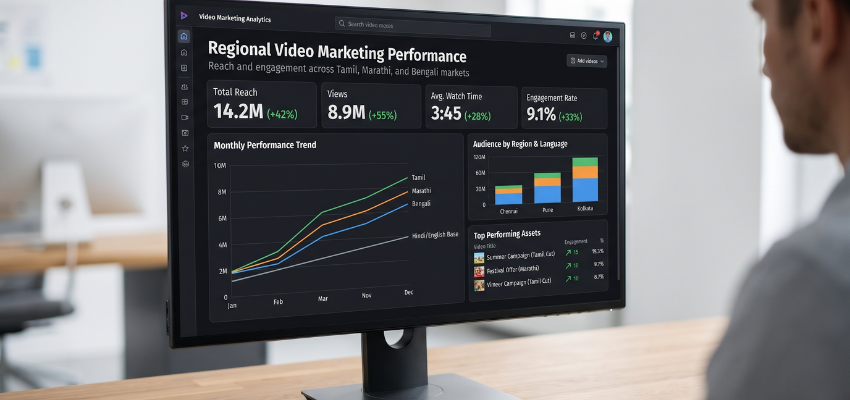
Once your video is live, the numbers will tell you the story. Keep an eye on these:
Reach: How many unique people viewed your video.
Views and watch time: How long people actually stayed. A view that lasts two seconds isn’t very impressive.
Engagement rate: The percentage of viewers who liked, commented or shared.
Click-through rate: The percentage of viewers who clicked your link after viewing it.
Conversions: The number of people who bought, signed up or otherwise took the action you wanted.
Compare the results across languages. You might find that a Telugu video is miles ahead of your English one, and that’s precisely the kind of insight you want to act on.
Need Videos, Creators, or Regional Content for Your Brand?
Boss Wallah helps brands plan and execute video content at scale, without managing multiple vendors.
We work with companies to:
- Shoot large volumes of short-form videos using real creators and studio setups, suitable for social media, websites, campaigns, and launches
- Adapt the same videos for different languages, regions, and platforms, so one shoot works across India and global markets
- Launch products or campaigns through dozens or hundreds of creators, all managed, tracked, and reported in one system
- Support brands with ongoing content, launches, regional expansion, and performance-focused campaigns
Whether you need videos for a new launch, content for multiple markets, creator-led visibility, or a steady content pipeline, Boss Wallah acts as a single partner handling production, creators, and execution end-to-end.
👉Click here to see how Boss Wallah works with brands and what we can build for you
Final Thoughts
Language is more than just a means of communicating information. It’s a means of feeling understood. A brand that invests in video marketing in the local language is signalling that it cares enough to speak their language. Start small, listen to your audience and keep getting better. Your customers are already speaking. It’s time to start the conversation.
FAQs
1. What is regional language video marketing?
It’s the use of video in local languages (Tamil, Bengali, Marathi etc) to promote a brand, product or service to people in that particular region.
2. Is it expensive for small businesses?
It doesn’t have to be. Start with subtitles on your existing videos and then progressively move to voiceovers and fully local content as your budget allows.
3. Which language should I start with?
Pick the language of your current customers (or the language of the region you’re looking to grow in). Your sales and social media data will give you a good indication of what that is.
4. Are subtitles sufficient or do I actually need voiceovers?
Subtitles work well for testing and for viewers who watch on mute. Voiceovers feel more personal and are better for your most important markets.
5. How do I know if my regional campaign is working?
Track reach, watch time, engagement rate, click-through rate and conversions. Compare these numbers across languages to see where your video performs best.