What Should You Charge for a Brand Deal? A Creator Rate Card Guide for India
What should you charge for a brand deal? That’s the question that has pretty much got most new creators going quiet in the middle of a DM. If you ask too much, the brand will just ghost you. If you ask too little, you’ve spent the entire weekend filming for the price of a pizza. This guide is going to help you pick a sensible number and explain it without having to sweat the small stuff.
Start With a Creator Rate Card

(Source – OpenAI)
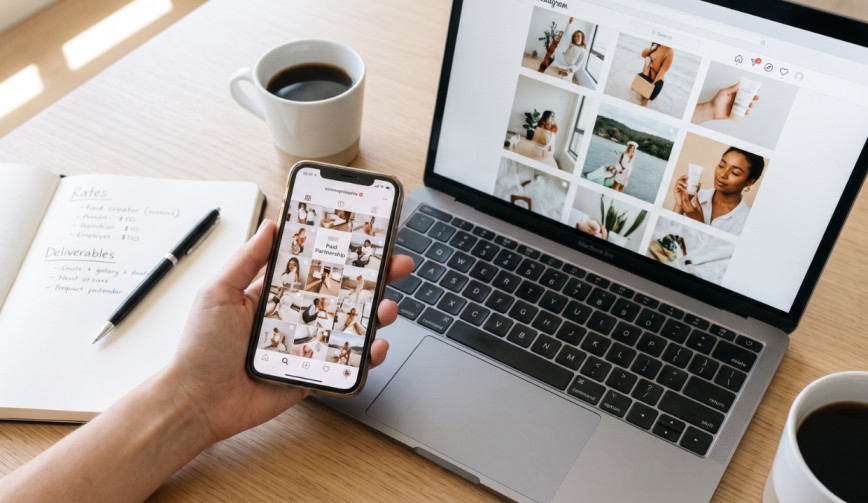
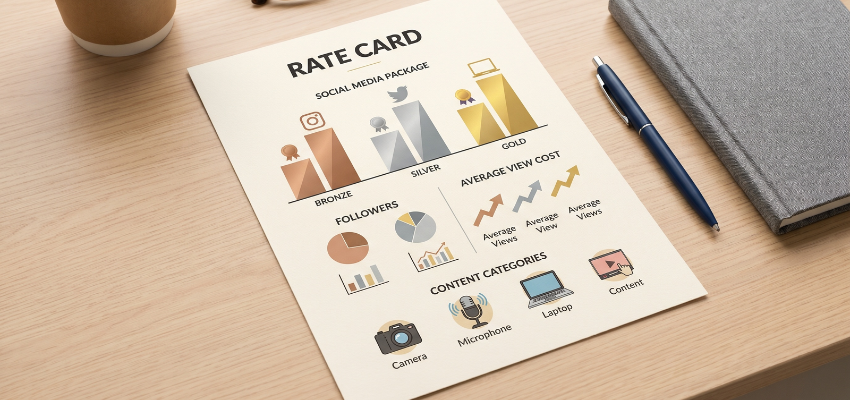
A creator rate card is just a price list. It’s essentially the same as a restaurant menu. Reel costs this, Story costs that, a YouTube mention costs x. When a brand comes to you and asks for your prices, you just send them the rate card rather than inventing a price on the spot.
Keep it to one page. Add your follower count, your average views, your niche (food, fashion, tech, etc.) and your prices. That’s it.
👉Click here to see how Boss Wallah works with brands and what we can build for you
What Decides Your Price?
Followers matter, but they’re not the whole picture. Brands look at a number of other things as well.
- Engagement rate: It’s the percentage of your audience that actually engages with your posts in the form of likes, comments, shares and saves. So, if you have 1,000 followers and 100 of them interact, your engagement rate is 10%. A small but very engaged page can easily outperform a much larger, quite inactive one.
- Average views: These tell you how many people are actually going to see your product. That’s usually a more useful figure than followers.
- Niche: This also has an effect on price. Finance, tech and beauty brands will generally pay more than a more general lifestyle brand, as their customers are spending more.
- Production effort: A quick talking video is going to cost less than a styled shoot with editing, props and three outfit changes.
Sample Influencer Rates in India
These are very rough figures for influencer rates in India for a single Instagram Reel. The actual prices will vary enormously depending on the niche, the city and the brand budget, so take these as a guide rather than anything definitive.
- Nano creators (1,000 to 10,000 followers): Rs 500 to Rs 3,000
- Micro influencers (10,000 to 100,000 followers): Rs 3,000 to Rs 25,000
- Mid-tier creators (100,000 to 500,000 followers): Rs 25,000 to Rs 1,00,000
- Macro creators (500,000 and above): Rs 1,00,000 and up
An Instagram Story is typically 30-50% of the cost of a Reel. A static post is generally a little cheaper than a Reel. YouTube integrations (a very short product mention within your video) are generally more expensive than a Reel, as they stay on YouTube for years and continue to get views.
Read More | Google Business Profile Posts: Are Your Updates Actually Bringing Customers In?
A Simple Formula You Can Try
Here’s an easy way to work out your base price. Brands will often think in CPM (cost per 1,000), which is just a fancy way of saying, “How much do I pay to get 1,000 people to see it?”
In India, a fairly standard CPM for creators is in the region of Rs 200 to Rs 800, depending on the niche.
If your Reels are getting about 20k views on average, then you’d divide 20k by 1,000 to get 20. Multiply that by Rs 400 and you’ve got Rs 8,000. That’s a perfectly reasonable rate for one Reel.
Now round it up a bit. You’ll almost certainly be asked for a discount, so allow some room.
Do Not Forget the Extras
So, loads of people lose money because they’ll only price the video and completely forget about what’s actually included with it. Add these to your rate card:
- Usage rights: This means the brand can reuse your video in its own ads and on its website. That’s extra value for them, so it should be priced at an extra 30-100% on top of your base fee.
- Exclusivity: You’re promising that you won’t be working with their competitors for a period of time. If you’ve got an exclusivity agreement with a skincare brand, you can’t then promote any other skincare brand for a while. You can charge 20-50% more for it.
- Extra revisions: Include one or two rounds of changes. After that, each additional round should come with a fee. Otherwise, “just one small change” can easily become twelve.
- Rush delivery: If the brand needs the content by tomorrow, that’s going to cost more.
- UGC: User-generated content. In this case, the brand pays you to produce a video for its own page, and you don’t post it on yours. As your audience isn’t involved, it’s normally priced differently.
How to Negotiate Brand Deals Without Awkwardness
You don’t need to be pushy to negotiate brand deals. You just need to be calm and clear.
If the offer is too low, don’t just say “no” and walk away. Say:
“Thanks for the offer. My rate for this is Rs 10,000. If your budget is lower, I can scale back the deliverables.”
Deliverables just means the list of things you’re going to produce (e.g. one Reel and two Stories).
This way, the brand gets a choice and you protect your value. If they still can’t meet your price, then it’s perfectly fine to walk away. A bad deal can cost you time that you might otherwise spend on a better one.
Payment Terms Worth Asking For
For any brand collaboration you’re doing, put the details in writing (even if it’s just an email).
A good rule of thumb is:
- 50% upfront and 50% after the post.
- For smaller deals, full payment before the post isn’t out of the ordinary at all.
If you’re earning regularly, then it’s worth speaking to a tax professional about GST and income tax. Brands will often ask for an invoice, and being able to provide one is a great way of looking professional.
Read More | The Local Business Intelligence Stack: How AI Turns City Data Into Business Ideas.
Review Your Prices Often
(Source – OpenAI)
Your rate card isn’t set in stone. If your views double, then your price should go up. Check it every three months.
Bear in mind that a brand that comes back for a second deal is a good thing, so a small loyalty discount can be a good move. Just don’t make it a habit.
Need Videos, Creators, or Regional Content for Your Brand?
Boss Wallah helps brands plan and execute video content at scale, without managing multiple vendors.
We work with companies to:
- Shoot large volumes of short-form videos using real creators and studio setups, suitable for social media, websites, campaigns, and launches
- Adapt the same videos for different languages, regions, and platforms, so one shoot works across India and global markets
- Launch products or campaigns through dozens or hundreds of creators, all managed, tracked, and reported in one system
- Support brands with ongoing content, launches, regional expansion, and performance-focused campaigns
Whether you need videos for a new launch, content for multiple markets, creator-led visibility, or a steady content pipeline, Boss Wallah acts as a single partner handling production, creators, and execution end-to-end.
👉Click here to see how Boss Wallah works with brands and what we can build for you
Final Thoughts
So, how should you price a brand deal? Start with your average views, go with the CPM method, add on any extras and leave yourself a bit of room to negotiate. Be kind to yourself in the process. Your time, your ideas and your editing are all real work, and they should be paid for.
FAQs
1. Can I charge for a brand deal if I have less than 5k followers?
Yes, brands are very much interested in trust and engagement. A lot of small creators will start out with free products and then progress to paid deals as their numbers grow.
2. Should I take free products rather than cash?
Sometimes. If the product is a bit pricey and you really want it, then it can be fair. If the product costs very little for the brand, then you should ask for a fee as well.
3. How many Reels should one deal include?
Start with one Reel and a few Stories. You can bundle more content and offer a small discount, but you’ll never work for free just to “win” a long-term contract.
4. What if a brand says its budget is fixed?
Cut the work rather than the price. Offer fewer deliverables, drop the usage rights or reduce the exclusivity period.
5. How frequently should I update my creator rate card?
Every three months is a good rule of thumb, or sooner if your views, followers or engagement have really shot up.