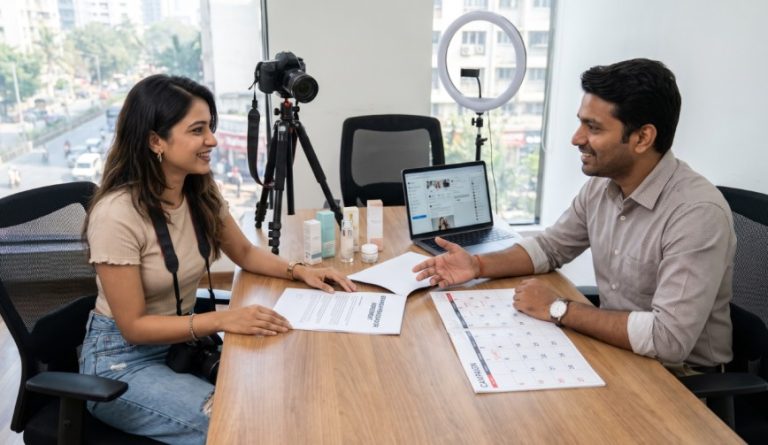
Influencer Campaign Cancellation Policy: What should brands and creators know?

No-one signs a deal thinking it’s going to fall to pieces. Campaigns get cancelled all the time though and when they do the question that invariably comes up is ‘who pays what’? An Influencer Campaign Cancellation Policy is the answer to that question. It’s a set of straightforward rules that define what happens if either the brand or the influencer decides to walk away from the deal. It’s essentially a seatbelt. You hope you never have to use it but you’ll be very glad you do if you ever do.
Why You Need an Influencer Campaign Cancellation Policy

(Source – OpenAI)
No rules at all and a cancelled campaign can go very very wrong very quickly. The creator may have spent days on the campaign already (planning, shooting, editing). The brand may have already paid for the products, shipping and ad space. If one side walks away with nothing then both sides feel cheated.
A written policy is the way to keep things fair. It protects the time and effort of the person who created it, it protects the brand’s budget and it protects everyone from the long email chains with the subject line “Quick question” that are anything but quick.
👉Click here to see how Boss Wallah works with brands and what we can build for you
Common Reasons Campaigns Get Cancelled
Cancellations occur for all sorts of reasons and not all of them are in any way dramatic. Here are the usual suspects:
The brand changes its marketing plan or loses its budget.
The product launch gets delayed.
The creator becomes unwell or faces a personal emergency.
The content doesn’t match the campaign brief (the document that sets out what the brand wants to achieve, the style they want, the goals and the deadlines).
A public row makes one side rather uncomfortable.
Both sides can’t agree on the edits or approvals.
Knowing these reasons enables you to write rules which are appropriate for real life rather than just rules for an ideal situation.
What a Good Policy Should Include
A good policy doesn’t need any fancy legalisms. It just needs to be clear. Here are the key bits.
Notice Period: That’s how many days’ notice someone must give before cancelling. A brand, for instance, might be required to give 7 days’ notice before terminating a deal. The more notice you give the other side, the more of a fair chance they have to adjust.
Cancellation Fee: This is a payment to the other side when you cancel. If the brand cancels after the creator has already started work, then the cancellation fee will cover the time that’s already been spent.
Kill Fee: You’ll hear that term all the time in influencer marketing. A kill fee is simply the amount of the fee the creator keeps if the brand cancels the project after the work has started. The usual range is 25-50% of the total fee, depending on how far along the work is.
Content Deliverables: Those are the precise items the creator has committed to providing (e.g. two Instagram Reels and three Stories). Your policy needs to state what happens to the content deliverables that have already been completed in the event of a cancellation.
Usage Rights: If a brand has paid for the work, can they still use it? That needs to be spelt out. If the deal is cancelled prior to full payment, then the creator will normally retain the rights.
Force Majeure: That fancy phrase simply means events beyond anyone’s control, such as a natural disaster, a strike or a platform going down. It means that neither party is to blame if an event of this nature leads to a cancellation.
Read More | Turn One Idea into a Week of Posts with a Social Media Content Repurposing Workflow.
Fair Rules for Brands
If you’re a brand, then think of creators as business partners rather than vending machines. Here is what keeps things smooth:
Pay for work already done, even if the campaign subsequently stops.
Give written notice as early as possible.
Approve content on time. Any delays on your side can be a hidden cause of cancellations.
Don’t cancel just to get out of paying. Creators talk to each other and your reputation moves very quickly.
A good brand collab is all about trust. If you treat the creators right today, it makes it far easier to get the best talent on board tomorrow.
Fair Rules for Creators
Creators also have a responsibility. The brands will be relying on your promises when they’re doing their budgeting and planning their launch dates. Keep these points in mind:
Don’t take on any more work than you can cope with.
Tell the brand right at the outset if you’re not going to be able to deliver.
Return any advance payment for work you didn’t complete (unless your influencer contract states otherwise).
Keep all conversations and approvals in writing.
An influencer contract is the actual agreement between the two parties. If your cancellation clauses aren’t in it, then they might as well not be there. Verbal promises are fine for a dinner party; they’re not good for business.
Tips to Avoid Cancellations in the First Place

(Source – OpenAI)
Prevention is cheaper than any fee. Try these simple habits:
Write a detailed brief so there’s absolutely no guessing.
Set clear deadlines for the drafts, the edits and the final post.
Split the creator payment into stages (e.g. 50% up front and 50% after the post has been published). That keeps both parties on board.
Keep the lines of communication open. A quick message at the outset is far better than a surprise at the last minute.
Have a back-up plan in place, such as a flexible posting date.
Read More | Stop Guessing Your Social Media Performance: Calculate Engagement Rate in 2026.
Need Videos, Creators, or Regional Content for Your Brand?
Boss Wallah helps brands plan and execute video content at scale, without managing multiple vendors.
We work with companies to:
- Shoot large volumes of short-form videos using real creators and studio setups, suitable for social media, websites, campaigns, and launches
- Adapt the same videos for different languages, regions, and platforms, so one shoot works across India and global markets
- Launch products or campaigns through dozens or hundreds of creators, all managed, tracked, and reported in one system
- Support brands with ongoing content, launches, regional expansion, and performance-focused campaigns
Whether you need videos for a new launch, content for multiple markets, creator-led visibility, or a steady content pipeline, Boss Wallah acts as a single partner handling production, creators, and execution end-to-end.
👉Click here to see how Boss Wallah works with brands and what we can build for you
Final Thoughts
A good Influencer Campaign Cancellation Policy isn’t about expecting the worst. It’s about ensuring that if things change, no-one is left to pick up the bill or take the blame. It’s about being clear, being fair and putting it all in writing. Your future self and your inbox will thank you.
Frequently Asked Questions
1. What constitutes an Influencer Campaign Cancellation Policy?
It’s a written set of rules that sets out what happens when a brand or creator cancels a campaign. It covers notice, fees and what happens to the finished work.
2. Is a kill fee mandatory?
No, it’s not legally required in most cases. It’s a fair and fairly common way of paying creators for work that has already been done, though, and many brands will include it.
3. Can a creator cancel a campaign as well?
Yes, a creator can cancel for good reasons (e.g. illness or an emergency). The policy should set out how much notice is required and whether any advance payment would be refundable.
4. What if the contract has no cancellation clause at all?
Then both sides must settle it through talks, which can get messy. It is wise to agree in writing on how to handle it, and for bigger deals, ask a legal expert to review the terms.
5. How much notice should be given before cancelling?
There is no fixed rule, but 7 to 14 days is common for most campaigns. Larger or longer campaigns may need more time.