YouTube SEO Explained for Businesses: What Actually Determines Whether a Video Gets Found
Have you ever posted a video, waited a few days, and seen almost no views? It happens to a lot of businesses. You make a good video, you hit publish, and then nothing much happens. This is not bad luck. It usually means the video was never set up to be found. This is where YouTube SEO comes in.
YouTube SEO simply means making your video easy for YouTube to understand and easy for people to find. It is not a trick. It is more like giving YouTube clear clues about what your video is about, so it can show it to the right people at the right time.
Let us go through what really matters, using simple words anyone can follow.
YouTube Is a Search Engine, Not Just a Video App
(Source – OpenAI)
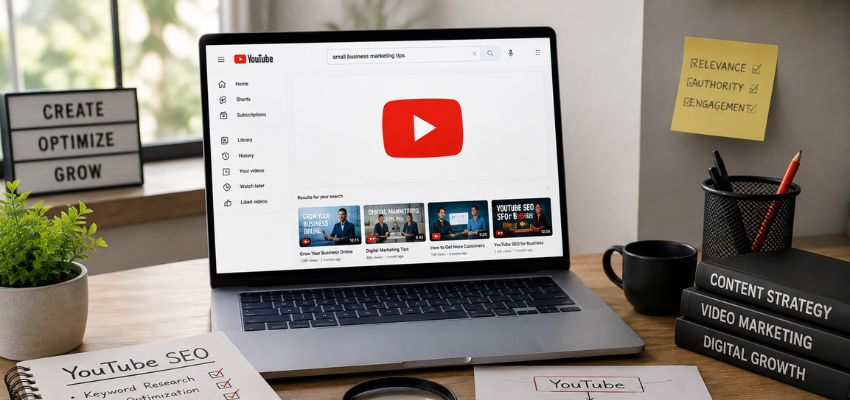
Many people forget that YouTube is actually a giant search engine. People type in what they want, just like on Google, and YouTube tries to show the best match. So good video SEO starts with one simple question: what are your customers actually typing into that search bar?
This is called keyword research for YouTube. It just means finding out the exact words people use when they search. You do not need fancy tools to start. Just type a topic into YouTube’s search box and look at the suggestions that pop up. Those suggestions come from real searches by real people.
| Weak Search Habit | Better Search Habit |
|---|---|
| Guessing what sounds nice | Checking real search suggestions |
| Using broad words like “tips” | Using specific words like “office electricity saving tips” |
| Ignoring what competitors rank for | Checking what similar channels use in titles |
👉Click here to see how Boss Wallah works with brands and what we can build for you
Your Title Does More Work Than You Think
Video title optimisation is one of the easiest ways to improve your results, yet many businesses get it wrong. A title should do two jobs at the same time. It should tell YouTube what the video is about, and it should tell a real person why they should click.
A weak title like “5 Tips” does not tell anyone anything. A title like “5 Tips to Reduce Office Electricity Bills” is clear, specific, and useful. It also naturally includes the kind of words people are searching for.
A few quick rules for better titles:
- Keep your main keyword near the beginning
- Keep it short enough to read at a glance
- Make it sound like something a human wrote, not a robot
- Avoid clickbait that does not match the video
Descriptions Are Not Just Extra Space
A lot of businesses write two lazy lines in the description box and move on. That is a wasted chance. A good description helps YouTube understand your video better, and it can also improve your YouTube search ranking.
Here is a simple way to think about your description:
- First two lines: a short, clear summary, since this is what people see before clicking “show more”
- Middle section: more details about the video, written naturally
- End section: links to your website, social pages, or related videos
Try to include relevant secondary keywords here, but only where they fit naturally. If your description reads like a pile of keywords stuck together, it will not help you, and it will not help your viewer either.
Tags Still Help, Just Not as Much as Before
YouTube tags used to be treated like magic words, but that is no longer true. Today, tags play a smaller role. They mostly help YouTube understand context, especially for words that could be spelt differently or mean more than one thing.
Still, it is worth adding a few honest, relevant tags. Do not add random trending tags that have nothing to do with your video. YouTube is fairly good at noticing when tags do not match the content, and it will not reward that kind of guessing.
Read More | Freelancer to Founder: When It Actually Makes Sense to Turn Your Freelance Work Into a Registered Business.
Watch Time Matters More Than Views
This part often surprises business owners. YouTube does not only care about how many people click your video. It cares deeply about watch time, which means how long people actually stay and watch.
This is closely tied to something called audience retention, which just means how much of your video people watch before leaving. If viewers leave in the first ten seconds, YouTube notices, no matter how great your title looked.
Video optimisation is not only about titles and tags. It is also about your actual content. A slow, rambling start pushes people away. Getting to the point quickly keeps them watching, and that tells YouTube your video is worth recommending to others.
Thumbnails Quietly Affect Your Rankings Too
Thumbnails do not directly control your YouTube search ranking, but they strongly affect something called click-through rate. This simply means how many people click your video after seeing it appear on their screen.
A good thumbnail should be:
- Simple and easy to read, even on a small phone screen
- Honest about what is actually in the video
- Different from a random screenshot or generic stock photo
When more people click, YouTube learns that your video looks appealing, and that quietly supports better rankings over time.
Growth Takes Consistency, Not Luck
YouTube channel growth rarely comes from one lucky viral video. It usually comes from steady, regular uploads that slowly build trust with both your audience and the algorithm.
You do not need to post every single day. A realistic schedule, such as once a week or once every two weeks, works well if you stick to it. Think of it less like flipping a switch and more like watering a plant. Results build up slowly, but they build up steadily.
Engagement Sends Small but Powerful Signals
(Source – OpenAI)
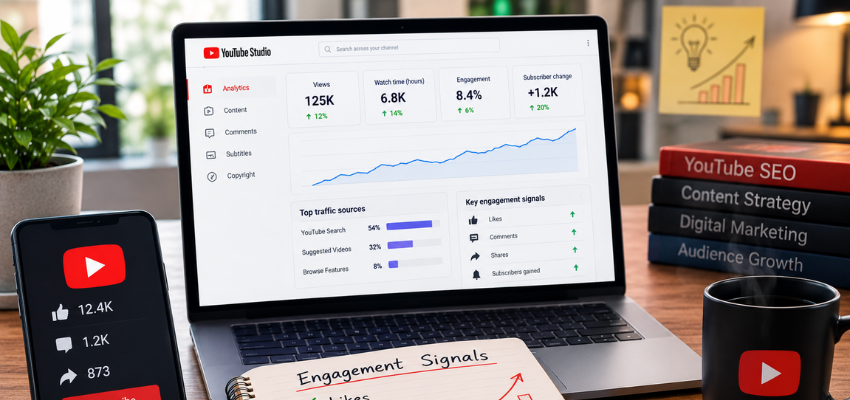
Comments, likes, shares, and subscribes all send quiet signals to YouTube about how useful your video really is. You do not need to beg people to engage. Simply asking a genuine question at the end of your video, or inviting people to share their opinion, can naturally boost these numbers.
This connects directly to how the YouTube algorithm works. It is always trying to answer one simple question: are people finding this video useful enough to interact with it? The more honest engagement you get, the more the algorithm trusts your content.
Read More | How to Monetise Facebook and Turn Content Into Consistent Revenue in 2026.
Quick Summary Table
| Factor | Why It Matters |
|---|---|
| Video SEO basics | Helps YouTube understand and match your video to searches |
| Video title optimisation | Grabs attention and includes the right keyword |
| Description | Gives context and supports YouTube search ranking |
| YouTube tags | Adds small extra context, though less powerful than before |
| Watch time | Signals whether your content is truly useful |
| Thumbnail | Affects clicks, which indirectly affects ranking |
| YouTube channel growth | Built through steady, consistent uploads |
| Engagement | Shows the YouTube algorithm your content is valuable |
Need Videos, Creators, or Regional Content for Your Brand?
Boss Wallah helps brands plan and execute video content at scale, without managing multiple vendors.
We work with companies to:
- Shoot large volumes of short-form videos using real creators and studio setups, suitable for social media, websites, campaigns, and launches
- Adapt the same videos for different languages, regions, and platforms, so one shoot works across India and global markets
- Launch products or campaigns through dozens or hundreds of creators, all managed, tracked, and reported in one system
- Support brands with ongoing content, launches, regional expansion, and performance-focused campaigns
Whether you need videos for a new launch, content for multiple markets, creator-led visibility, or a steady content pipeline, Boss Wallah acts as a single partner handling production, creators, and execution end-to-end.
👉Click here to see how Boss Wallah works with brands and what we can build for you
Final Thoughts
Getting YouTube SEO right for your business is not about tricking a system. It is about being clear, honest, and consistent. Understand what people are searching for. Write titles and descriptions that make sense. Keep your videos interesting enough that people stay till the end. Use thumbnails that tell the truth. And most importantly, keep showing up regularly.
None of this promises overnight success, but it does stack the odds in your favour. On a platform as big and busy as YouTube, that is often exactly what separates a video that gets found from one that quietly disappears.
Frequently Asked Questions
1. How long does YouTube SEO take to show results?
Usually a few months of steady effort, since YouTube needs time to collect data on your videos.
2. Should I stuff my title and description with keywords?
No, using keywords naturally works far better than repeating them everywhere.
3. Does video length affect ranking?
Not directly, but shorter videos with strong watch time often perform better than long ones with heavy drop-off.
4. Are captions or subtitles important for SEO?
Yes, captions help YouTube understand your content and also make videos more accessible.
5. Can I improve old videos that are already published?
Yes, updating titles, descriptions, and tags on old videos can boost their visibility again.