YouTube Algorithm Explained: What Really Helps Videos Rank in 2026
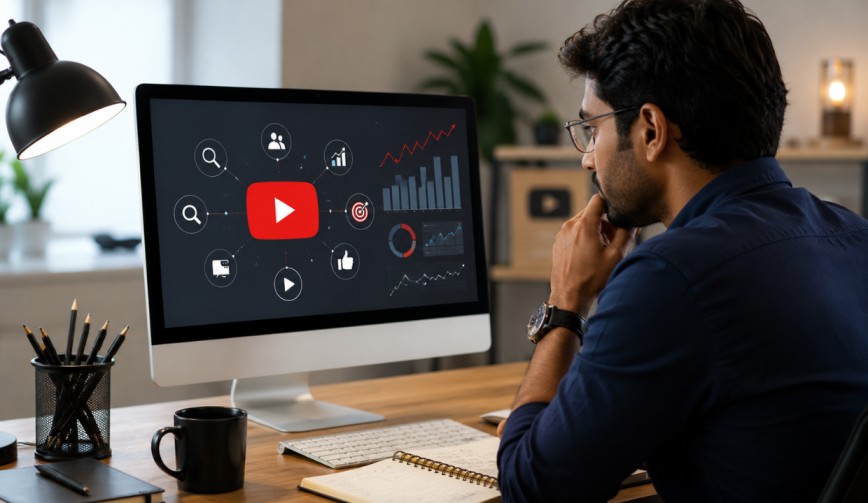
If you have ever uploaded a video, watched it get almost no views, and then whispered “why does the YouTube algorithm hate me” into your laptop screen, welcome. You are not alone. Every creator, from someone filming cooking videos in their kitchen to a channel with a million subscribers, has had this exact moment.
The good news is that the YouTube algorithm is not some mysterious villain plotting against you. It is not moody, it does not play favourites for fun, and it definitely does not care whether you posted at 9 a.m. or 9 p.m. What it does care about, especially in 2026, has actually become a lot clearer. So let us break down the real YouTube ranking factors in plain language, no confusing tech talk, just what is really going on behind the scenes of video SEO today.
First, What Even Is the YouTube Algorithm?
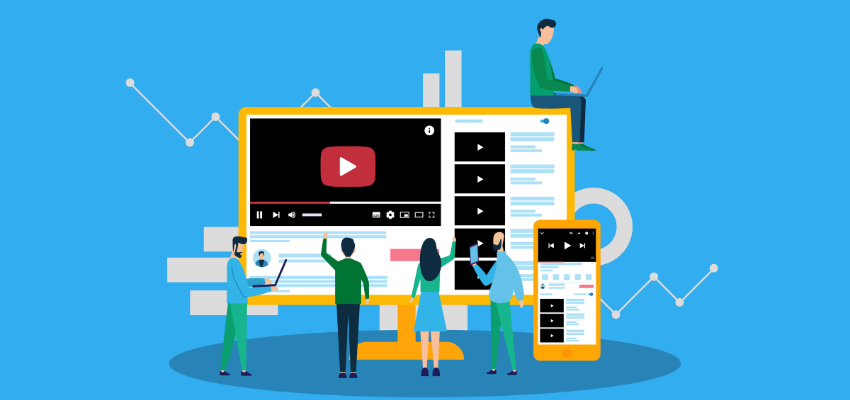
(Source – quickframe.com)
Think of the YouTube algorithm as a very enthusiastic friend whose only job is to guess what you want to watch next. It looks at your past viewing habits, what you searched for, how long you stuck around on similar videos, and then tries to serve you something you will actually enjoy. It is not trying to promote any one video. It is trying to match the right video with the right person at the right moment.
For creators, this means the real question is not “how do I beat the algorithm?” It is “how do I make something that keeps this matchmaking friend confident in recommending my video again?”
👉Click here to see how Boss Wallah works with brands and what we can build for you
The Big Shift in 2026: Satisfaction Beats Watch Time
For years, the golden rule was simple: keep people watching longer, and you win. Watch time, which just means the total minutes people spend on your video, used to be the top ranking factor.
That has changed. In 2026, YouTube leans more heavily on something called satisfaction signals. This basically means the platform is trying to figure out whether viewers actually enjoyed what they watched, not just whether they sat through it. A viewer who watches a short, tightly edited eight-minute video from start to finish and hits like sends a much stronger positive signal than someone who watches forty per cent of a rambling twenty-five-minute video and clicks away.
In short, quality over quantity. Nobody wants to sit through fifteen minutes of a creator “getting to the point eventually.”
Here is a quick comparison of how the priority has shifted:
| Factor | Old Approach (Pre-2024) | 2026 Approach |
|---|---|---|
| Main focus | Raw watch time | Viewer satisfaction |
| Search ranking | Exact keyword matches | Topic relevance and intent |
| Shorts vs long-form | Linked together | Fully separate algorithms |
| Thumbnail testing window | Up to 72 hours | Around 24 hours |
| Engagement priority | Likes mattered most | Comments and saves carry more weight |
Meet Session Contribution, the New MVP
Here is a term you will hear a lot this year: session contribution. It sounds technical, but it simply means how much your video helps keep someone watching YouTube overall, not just your video.
If someone watches your video and then goes on to watch three more videos afterwards, that is a big win in YouTube’s eyes. If someone watches your video and immediately closes the app, that is treated as a red flag, even if they watched the whole thing. So the algorithm is not just asking “did they like this video?” it is asking “did this video keep them on the platform?” A bit dramatic, but that is basically YouTube’s whole business model in one sentence.
Signals that typically boost session contribution include:
- Videos that naturally lead into a related topic that viewers want to explore next
- End screens and cards that point to genuinely relevant videos, not random ones
- Playlists that keep a viewer inside your content instead of sending them elsewhere
- A satisfying ending that does not just cut off abruptly
Read More | Brand Collaboration Rates: How to Calculate Them Without Underselling Yourself.
Shorts and Long-Form Videos Are Now Separate Games
If you make both Shorts and regular long videos, here is something worth knowing. YouTube has fully separated the ranking systems for Shorts and long-form content. In the past, a badly performing Short could quietly drag down your long-form videos too, which felt more than a little unfair. That link has now been cut.
This means you can experiment with Shorts without worrying that it will tank your main channel, and vice versa. A quick side-by-side of what the YouTube Shorts algorithm and the long-form algorithm actually reward:
| Shorts Algorithm | Long-Form Algorithm |
|---|---|
| Hook within the first 1 to 2 seconds | Hook within the first 15 to 30 seconds |
| Rewards, replays, and full completions | Rewards audience retention and watch time |
| Swipe-away rate matters heavily | Click-through rate matters heavily |
| Best for quick discovery | Best for building deeper channel authority |
Search Has Grown Up Too
YouTube search used to work a lot like a simple keyword-matching game. Type in “best pasta recipe,” and get videos with those exact words in the title. Now the search algorithm understands intent, meaning it tries to figure out what you actually want, not just the words you typed.
This is part of why keyword stuffing, cramming your title and description with repeated keywords, hoping to trick the system, does not work anymore. YouTube is better at reading context and matching real meaning.
Good YouTube SEO in 2026 looks less like keyword tricks and more like:
- Writing titles the way a real person would search, not a robot
- Using clear, descriptive chapter titles inside the video
- Adding a detailed description that actually explains the content
- Covering a topic thoroughly instead of stuffing in random trending words
Thumbnails and Titles Still Matter, A Lot
None of this fancy AI understanding changes one simple truth: if nobody clicks your video, none of the other signals ever get a chance to work. Your click-through rate, meaning the percentage of people who see your thumbnail and actually click it, still plays a major role in getting your first wave of views.
Here is the twist, though. That testing window has gotten shorter. YouTube used to give videos a couple of days to prove themselves before deciding how far to push them. Now that window is tighter, sometimes closer to a single day. So a weak thumbnail or a boring title can bury your video quickly, before it even gets a fair shot. Moral of the story: spend real time on your thumbnail. It is doing more heavy lifting than you think.
Consistency Still Counts
Uploading on a random schedule confuses viewers and, to some extent, the algorithm too. YouTube tends to reward channels that build a predictable rhythm, whether that is weekly uploads or a recognisable series format. This does not mean you need to post every single day. It means picking a pace you can actually stick to and sticking to it.
Quick Checklist for Better YouTube Rankings in 2026
- Hook viewers early and deliver on your title’s promise
- Design a thumbnail that is clear, not just flashy
- Write titles and descriptions the way people actually search
- Keep viewers on the platform with smart end screens or playlists
- Treat Shorts and long-form as two separate strategies
- Post on a schedule you can realistically maintain
- Focus on genuine audience retention over gimmicks
Read More | Future of AI for Entrepreneurs: What Every Business Owner Should Know Before Scaling.
What This Means for You as a Creator

(Source – searchenginejournal.com)
Here is the simplest way to think about the whole thing. The YouTube algorithm is not trying to trick you or punish you. It is trying to keep people happy, so they keep coming back to the platform. Every update in the last few years has moved in the same direction: reward content people genuinely enjoy, and quietly push down content that tries to game the system with cheap tricks.
So instead of chasing hacks, focus on the basics that never really go out of style: a strong hook in the first few seconds, a clear and honest thumbnail, content that delivers on its promise, and a reason for people to stick around after your video ends. Do that consistently, and video optimisation stops feeling like guesswork, and the algorithm tends to notice on its own.
Need Videos, Creators, or Regional Content for Your Brand?
Boss Wallah helps brands plan and execute video content at scale, without managing multiple vendors.
We work with companies to:
- Shoot large volumes of short-form videos using real creators and studio setups, suitable for social media, websites, campaigns, and launches
- Adapt the same videos for different languages, regions, and platforms, so one shoot works across India and global markets
- Launch products or campaigns through dozens or hundreds of creators, all managed, tracked, and reported in one system
- Support brands with ongoing content, launches, regional expansion, and performance-focused campaigns
Whether you need videos for a new launch, content for multiple markets, creator-led visibility, or a steady content pipeline, Boss Wallah acts as a single partner handling production, creators, and execution end-to-end.
👉Click here to see how Boss Wallah works with brands and what we can build for you
Final Thoughts
At the end of the day, the YouTube algorithm is really just a reflection of what real viewers want. It is not something you outsmart with a clever trick or a lucky upload time; it is something you earn by consistently making videos people are genuinely glad they clicked on. The specifics will keep changing; that is just how YouTube works, but the core idea stays the same year after year: satisfied viewers lead to better rankings, and better rankings lead to steady growth.
So take a breath, stop refreshing your analytics every ten minutes, and focus on what you can actually control. Strong hooks, honest thumbnails, clear titles, and content that respects your viewer’s time will always be a safer bet than chasing whatever hack is trending this week. Do that consistently, and the algorithm tends to do the rest.
Frequently Asked Questions
1. Does posting more often help the YouTube algorithm push my videos?
Not really, YouTube has said there is no direct link between upload frequency and more views; consistency matters far more than sheer volume.
2. Is watch time still important for the YouTube algorithm in 2026?
Yes, but it now works alongside satisfaction signals like likes, saves, and continued viewing, rather than being the single deciding factor.
3. Can I use the same strategy for Shorts and long-form videos?
No, Shorts and long-form videos are ranked by separate systems now, so each needs its own approach to hooks and pacing.
4. Does keyword stuffing still help videos rank in YouTube search?
No, YouTube search now focuses on intent and topic relevance, so using your keyword naturally works far better than repeating it everywhere.
5. How important are thumbnails for the YouTube algorithm ranking?
Extremely important, since the testing window has shortened, a weak thumbnail can bury even great content before it gets a fair chance.