Static Ads: Why Some Get Clicks While Others Get Ignored

There was a time when creating an online ad was simple. Add a product photo, write “Limited Offer”, click publish, and hope for the best. Today, audiences scroll faster than ever, attention spans are shorter, and competition is everywhere. That is why some static ads perform brilliantly while others disappear into the internet void without a single click.
The funny part? Many businesses think static ads are “easy” because they do not move like videos or animations. In reality, creating a high-performing static ad takes smart design, strong messaging, and a good understanding of human psychology.
This article explains why some static ads attract attention while others get ignored, along with practical tips to improve your ad performance.
What Are Static Ads?

(Source – magnific.com)
Static ads are advertisements that use a single image or graphic without motion. They are commonly used on platforms like Instagram, Facebook, LinkedIn, websites, and display networks.
Examples include:
- Banner ads
- Instagram image posts
- Facebook promotional graphics
- Website display ads
- Product offer posters
Unlike video ads, static ads rely on one visual moment to capture attention.
👉Click here to see how Boss Wallah works with brands and what we can build for you
Why Businesses Still Use Static Ads
Even in the age of short-form videos, static ads continue to work because they are:
| Benefit | Why It Matters |
|---|---|
| Affordable | Easier and cheaper to create |
| Fast to Produce | No editing or animation needed |
| Easy to Understand | Delivers quick information |
| Great for Branding | Strong visuals improve recall |
| Effective for Retargeting | Reminds users about products |
A good static ad can still outperform expensive video campaigns if the message is clear and visually strong.
Why Some Static Ads Get Ignored
Many ads fail because they make basic mistakes. Here are the biggest reasons users scroll past them.
1. The Design Looks Too Busy
When an ad contains too many colours, fonts, stickers, and text blocks, viewers feel confused instantly.
People do not study ads carefully. They scan quickly.
If the design looks crowded, the brain simply says: “Too much work. Skip.”
Common Problems
- Too much text
- Too many colors
- Poor spacing
- Multiple messages in one ad
- Tiny unreadable fonts
Better Approach
Focus on:
- One main idea
- One clear image
- One strong headline
- One call-to-action
Simple ads often perform better because they are easier to process.
2. Weak Headlines Kill Clicks
The headline is usually the first thing people notice.
A boring headline can destroy even the best-looking ad.
Weak Example
“Buy Our Shoes Today”
Better Example
“Shoes So Comfortable You Forget You’re Wearing Them”
The second version creates curiosity and emotion.
Good static ad copy should:
- Solve a problem
- Trigger curiosity
- Highlight benefits
- Speak naturally
3. The Ad Does Not Match the Audience
An ad designed for teenagers will probably not work for business owners. Yet many brands create one generic ad and show it to everyone.
That usually ends badly.
Example
A luxury watch ad using slang and memes may confuse professional buyers.
A successful static ad understands:
- Age group
- Interests
- Buying behavior
- Pain points
- Platform style
This is called audience targeting, which means showing ads to the right people based on their interests and behaviour.
4. Bad Visual Quality Creates Distrust
Blurry images, stretched graphics, and poor layouts make brands look unprofessional.
People judge businesses quickly online.
If the ad looks cheap, viewers may assume the product is low quality, too.
High-Performing Static Ads Usually Have:
- Sharp images
- Clean layouts
- Professional fonts
- Consistent brand colors
- Balanced spacing
Think of your ad like a shop window. If the window looks messy, people may never enter the store.
5. No Clear Call-to-Action
Sometimes ads look attractive but fail because users do not know what to do next.
A call-to-action tells users the next step.
Examples of Strong Call-to-Action Buttons
- Shop Now
- Learn More
- Book Today
- Start Free Trial
- Download Now
Without direction, users simply scroll away.
Read More | Static Ads: Easy to Create, Surprisingly Hard to Ignore.
The Psychology Behind High-Performing Static Ads
Good ads work because they understand how people think and react.
Attention Comes First
Before people click, they must notice the ad.
Bright contrast, strong headlines, and emotional visuals help grab attention quickly.
Emotion Drives Action
People often buy emotionally first and logically later.
Static ads that create feelings usually perform better.
Emotional Triggers Include:
- Happiness
- Fear of missing out
- Trust
- Excitement
- Curiosity
- Relief from problems
Best Practices for Creating Effective Static Ads
Use One Main Focus
Do not try to sell five things in one image.
Choose:
- One product
- One message
- One action
Clear communication wins.
Keep Text Minimal
People rarely stop scrolling to read paragraphs inside ads.
Use short and direct copy.
Good Formula
Headline + Benefit + Call-to-Action
Example: “Work Smarter With AI Tools, Save 5 Hours Every Week, Try Free Today”
Choose Colours Carefully
Colours affect emotions and visibility.
| Colour | Common Feeling |
|---|---|
| Red | Urgency |
| Blue | Trust |
| Green | Growth or health |
| Black | Luxury |
| Yellow | Energy |
Too many bright colours together can feel chaotic.
Static Ads vs Video Ads
Many marketers believe video ads always win. That is not always true.
| Static Ads | Video Ads |
|---|---|
| Faster to create | Takes longer to produce |
| Lower cost | Higher production cost |
| Easy to understand quickly | More storytelling ability |
| Great for retargeting | Strong for emotional engagement |
| Works well on display networks | Strong on social media feeds |
In many campaigns, businesses use both formats together.
Common Static Ad Mistakes Businesses Make
Using Stock Images That Feel Fake
People can instantly recognise overused stock photos.
A smiling office team pointing at laptops for no reason rarely builds trust anymore.
Authentic visuals work better.
Ignoring Mobile Design
Most users see ads on phones.
If the text is too small or important visuals get cropped, performance drops quickly.
Always test ads on mobile before publishing.
Copying Competitors Blindly
What works for another brand may not work for yours.
Your audience, pricing, and goals are different.
Learn from competitors but create your own brand identity.
How to Improve Static Ad Performance
(Source – magnific.com)
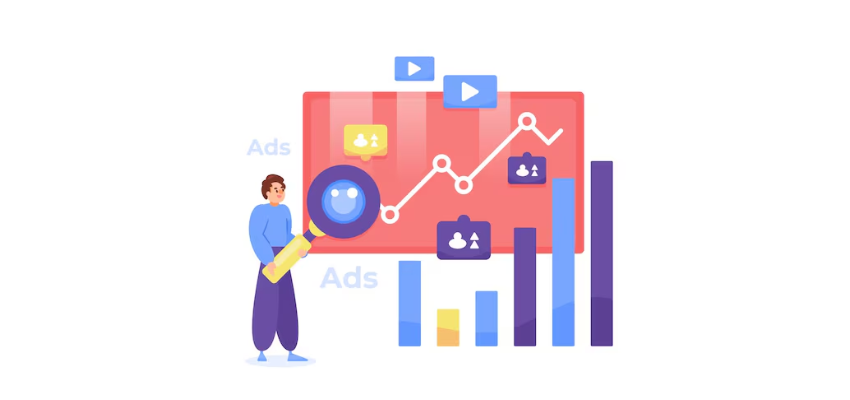
Test Multiple Versions
This is called A/B testing.
It means creating different versions of an ad to see which performs better.
You can test:
- Headlines
- Colors
- Images
- Call-to-action buttons
- Layouts
Even small changes can improve click-through rates significantly.
Focus on Benefits, Not Features
People care more about outcomes than specifications.
Weak Copy
“5000mAh Battery”
Better Copy
“Battery That Lasts All Day”
Benefits feel more personal.
Create Platform-Specific Ads
An ad that works on LinkedIn may fail on Instagram.
Different platforms have different user behaviour.
Example
- LinkedIn users prefer professional visuals
- Instagram users prefer bold visual storytelling
- Facebook audiences often respond to emotional messaging
Why Static Ads Still Matter in 2026
Despite the rise of video content, static ads remain important because:
- They load faster
- They are cheaper
- They are easier to test
- They work well for retargeting campaigns
- They fit smaller marketing budgets
For many businesses, static ads are the starting point of digital advertising.
And honestly, not every brand needs dramatic drone shots and cinematic background music just to sell coffee mugs.
Sometimes a clean image and a strong message are enough.
Read More | Ad Creatives: The Real Difference Between Ads That Scroll and Ads That Sell.
Key Takeaways
- Static ads succeed when they are simple, clear, and visually strong
- Weak headlines and crowded designs reduce engagement
- Understanding the audience improves ad performance
- High-quality visuals build trust
- Strong call-to-action buttons increase clicks
- A/B testing helps improve results over time
- Static ads still work effectively alongside video marketing
Need Videos, Creators, or Regional Content for Your Brand?
Boss Wallah helps brands plan and execute video content at scale, without managing multiple vendors.
We work with companies to:
- Shoot large volumes of short-form videos using real creators and studio setups, suitable for social media, websites, campaigns, and launches
- Adapt the same videos for different languages, regions, and platforms, so one shoot works across India and global markets
- Launch products or campaigns through dozens or hundreds of creators, all managed, tracked, and reported in one system
- Support brands with ongoing content, launches, regional expansion, and performance-focused campaigns
Whether you need videos for a new launch, content for multiple markets, creator-led visibility, or a steady content pipeline, Boss Wallah acts as a single partner handling production, creators, and execution end-to-end.
👉Click here to see how Boss Wallah works with brands and what we can build for you
Final Thoughts
Static ads may not dance, talk, or explode with special effects, but they remain one of the most effective tools in digital marketing when used correctly.
The difference between a successful ad and an ignored one usually comes down to clarity, design, messaging, and audience understanding.
Businesses that focus on simple communication, emotional connection, and smart design often achieve better results than brands trying too hard to impress.
In digital advertising, louder is not always better. Clearer is.
FAQs
1. What are static ads in digital marketing?
Static ads are image-based advertisements that do not contain animation or video. They use visuals and text to promote products or services.
2. Are static ads still effective in 2026?
Yes. Static ads remain effective because they are affordable, fast to create, and perform well for brand awareness and retargeting campaigns.
3. Why do some static ads get ignored?
Static ads often fail because of poor design, weak headlines, unclear messaging, low-quality visuals, or incorrect audience targeting.
4. What is the ideal text length for static ads?
Short and direct text usually works best. Most successful static ads use a clear headline, one main benefit, and a strong call-to-action.
5. How can businesses improve static ad performance?
Businesses can improve results through A/B testing, better audience targeting, stronger visuals, platform-specific designs, and clearer messaging.