AI Video Localisation: Making Videos Feel Local, Not Just Translated
Picture this: you’re viewing a video in your own language, yet the jokes don’t make sense, the examples seem strange, and the speaker comes across as entirely out of place. Although you understand the words, the video still doesn’t have the feel of being made for you. That is precisely the reason why AI Video Localisation is important. It enables brands to adapt their videos for various audiences by making changes that go beyond simply translating the language. The aim is to make people feel as though the content has really been designed with them in mind.
What Constitutes AI Video Localisation?
(Source – OpenAI)
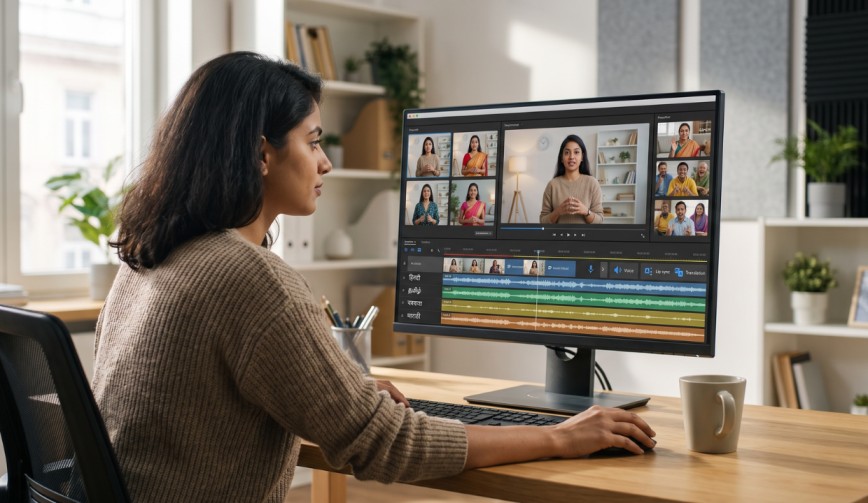
AI Video Localisation involves adapting videos for people who speak different languages and live in various regions and cultures by using artificial intelligence. This process may entail translating the speech, producing voiceovers, adding subtitles, adjusting lip movements, and modifying examples to match local audiences.
For instance, a brand selling a skincare product in India would employ a different tone, kind of language, and cultural references when addressing people in Tamil Nadu compared to when addressing those in Maharashtra.
The product can remain unchanged, but the way the brand presents it might differ since people tend to relate more to content that seems familiar.
👉Click here to see how Boss Wallah works with brands and what we can build for you
Why Does Merely Translating Not Suffice?
Translation only changes the words, while localisation makes the whole message sound natural.
Translating a script that uses an American holiday as an example of a big shopping event will not automatically make that example appropriate for an Indian audience.
There are several reasons why video localisation requires more than a word-for-word translation:
- Cultural differences: The meaning of humour, traditions, gestures, and everyday situations can differ from one place to another.
- Local language preferences: People might understand a language but still feel more comfortable watching content in their preferred regional language.
- Different buying habits: Examples that influence customers in one market might not have the same effect in another.
- Natural conversations: Direct translations often sound awkward, particularly when people use expressions specific to their local dialect.
A video that has been localised successfully should feel like something a local person would genuinely watch, understand, and enjoy.
Read More | Tier 3 Creators and Brand Collaborations: Why Smaller Cities Deserve More Attention.
How AI Video Localisation Makes Videos Feel Local
AI toolsallow brands to adapt their videos more quickly since they don’t have to create each version from scratch. Below are some practical ways in which they make a difference.
1. Adjusting the Language and Tone
AI can translate scripts into various languages and help adjust the wording so that it sounds more natural. Additionally, brands can review local expressions, common phrases, and cultural references before publishing.
For instance, a friendly explanation of a product could be effective in one market, while another group of people might prefer a more direct approach.
What’s important isn’t just getting the words correct. It’s also ensuring that the message comes across as appropriate.
2. Creating Natural Voiceovers
AI voiceover tools can create spoken versions of a script in several languages, which enables companies to produce multiple versions without arranging individual recording sessions for each language.
A voiceover must match the mood of the video. For example, a cheerful product demonstration should not sound as if someone is reading a train announcement.
To ensure that the final audio sounds natural, brands should check:
- Pronunciation of words.
- The speed at which they are spoken.
- The tone and emotion used in the voiceover.
3. Aligning Lip Movements With Speech
Certain AI tools can adjust the way a person’s lips move to match translated speech. This process is generally referred to as AI lip-sync.
Dubbed videos can appear smoother because the speaker’s mouth movements better match the new audio. This is particularly useful for interviews, product demonstrations, and videos in which a person speaks directly to the camera.
Even so, brands should carefully check the final result, since unnatural facial movements may distract viewers rather than enhance their experience.
4. Adding Local Context
This is where localisation becomes more interesting. Companies can replace unfamiliar examples with situations that local audiences recognise.
For example:
- A personal finance video could use examples based on everyday expenses familiar to its target audience.
- A food brand could adjust its serving recommendations to match local eating habits.
- A product advertisement could include familiar situations and cultural references that connect with local viewers.
With human guidance, AI-driven video editing can help teams produce different versions while maintaining a consistent main message.
5. Making Subtitles Easier to Follow
AI-generated subtitles are useful for people who watch videos without sound or prefer reading along.
Subtitles require more than automatic translation. They should be accurate, easy to read, and properly timed with the spoken words. If long sentences are crammed into just a few seconds, the video can end up feeling like an exam.
Benefits of AI Video Localization for Brands
Localisation can make video marketing more adaptable for brands that want to reach audiences in different regions.
- Reach more audiences: Companies can share their content with people who prefer different languages.
- Save production time: AI can speed up translation, voiceovers, and editing.
- Maintain consistent messaging: Teams can keep the main message similar across different versions.
- Connect better with audiences: Familiar words and examples can make content easier to relate to.
- Support content at scale: Businesses can adapt product videos, social media clips, tutorials, and advertisements for different markets.
The extent of these advantages depends on the quality of the tools, the content, and the final review. Although AI can speed up production, it cannot ensure that every video will appeal to viewers.
Common Mistakes to Avoid in AI Video Localisation
Even when they have the right tools, brands may make mistakes that affect how their videos are received.
- Depending completely on automatic translation: Check the translated language to ensure it is accurate and sounds natural.
- Ignoring cultural context: Make sure jokes, examples, gestures, and references are appropriate for the local audience.
- Using the same voice for every audience: Select a voice and speaking style that suit the content and target viewers.
- Skipping quality checks: Review subtitles, audio, timing, and lip-sync before publishing.
- Overlooking local preferences: Consider which platforms, video lengths, and content styles suit each audience best.
A short review by a human can stop a minor translation error from turning into a serious marketing issue.
How Brands Can Get Started With AI Video Localisation

(Source – OpenAI)
It is not necessary for brands to localise all their videos at the same time. Starting with a small number of important pieces of content makes the process easier to manage.
Here are a few steps brands can follow:
- Choose a target market: Understand the audience’s language preferences and cultural expectations.
- Select an existing video: Start with a video that is already performing well.
- Use AI tools to adapt it: Create localised versions with suitable translations, voiceovers, and subtitles.
- Get a human review: Ask someone familiar with the target language and culture to check the result before publishing.
- Compare performance: Examine watch time, completion rates, engagement, and conversions to understand how viewers respond.
This method allows brands to find out what works before committing to larger multilingual video marketing campaigns.
Need Videos, Creators, or Regional Content for Your Brand?
Boss Wallah helps brands plan and execute video content at scale, without managing multiple vendors.
We work with companies to:
- Shoot large volumes of short-form videos using real creators and studio setups, suitable for social media, websites, campaigns, and launches
- Adapt the same videos for different languages, regions, and platforms, so one shoot works across India and global markets
- Launch products or campaigns through dozens or hundreds of creators, all managed, tracked, and reported in one system
- Support brands with ongoing content, launches, regional expansion, and performance-focused campaigns
Whether you need videos for a new launch, content for multiple markets, creator-led visibility, or a steady content pipeline, Boss Wallah acts as a single partner handling production, creators, and execution end-to-end.
👉Click here to see how Boss Wallah works with brands and what we can build for you
Final Thoughts
AI Video Localisation is about making people feel included, not merely helping them understand the words on the screen. Although translation is an important first step, local expressions, natural voices, cultural references, and appropriate examples make the experience more meaningful.
For brands that want to reach audiences in different regions, AI can make video localisation faster and easier to manage. The most successful outcomes are achieved when technology is combined with human judgement. A video may speak someone’s language and still fail to get the point across.
FAQs
1. What Is AI Video Localisation?
AI Video Localisation uses artificial intelligence to adapt videos for different languages, regions, and cultures through translation, voiceovers, subtitles, and other modifications.
2. What Is the Difference Between Video Localisation and Translation?
Translation involves changing the language, whereas localisation also adjusts cultural references, tone, examples, and other details to suit the target audience.
3. Can AI Translate Videos Into Local Indian Languages?
Yes, AI tools can help localise videos into languages such as Tamil, Telugu, Bengali, Marathi, and Kannada. However, accuracy and naturalness should be checked.
4. Does AI Video Localisation Improve Audience Engagement?
It can make videos more relatable and accessible, which may lead to higher engagement. Results depend on the content, audience, platform, and quality of localisation.
5. Do Brands Still Need Human Editors for AI Video Localisation?
Yes, human reviewers can identify awkward translations, cultural misunderstandings, incorrect pronunciation, and visual problems that automated tools might overlook.