WhatsApp API Pricing in India – Costs, Charges and GST Explained
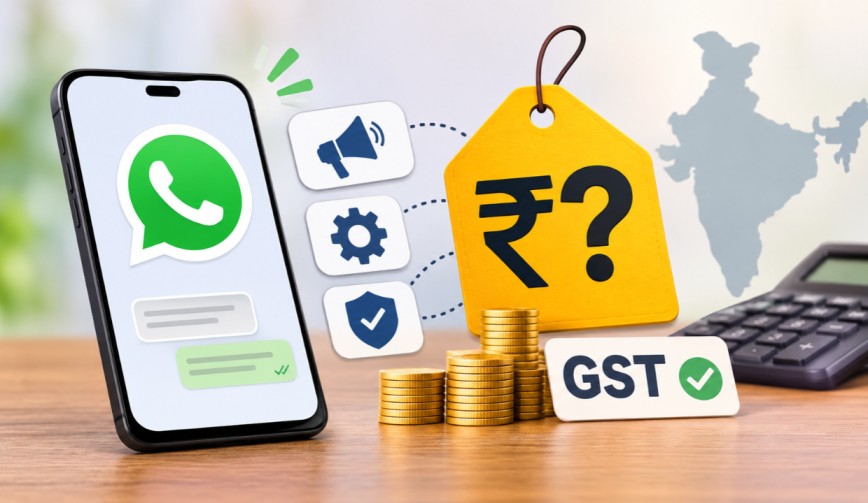
If you ask three people about WhatsApp API pricing in India you’ll get four different answers. One will talk about a monthly fee, one will talk about “credits” and the third will just go “it depends”. Frustrating, isn’t it? Here’s the straight version with all the confusing bits explained as we go along.
So What Is the WhatsApp Business API Anyway?
(Source – OpenAI)
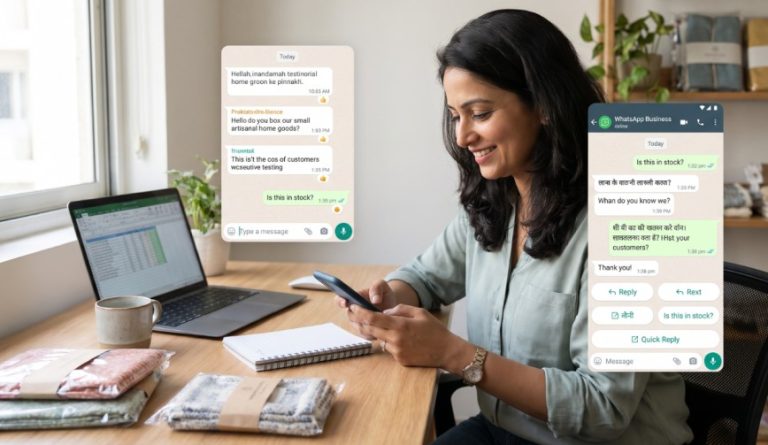
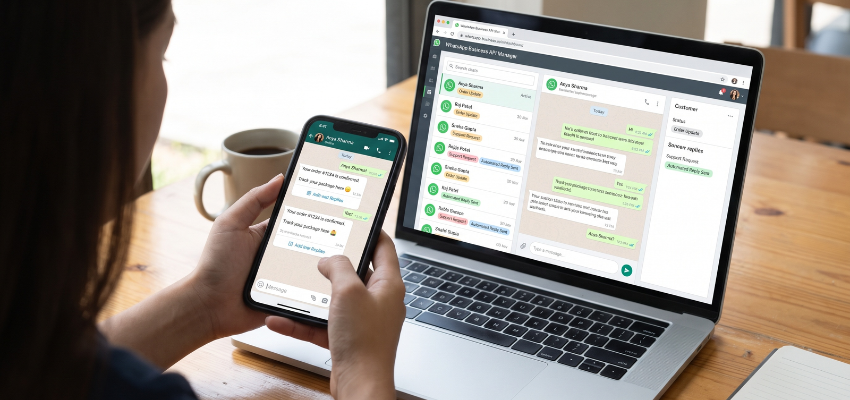
You know the green WhatsApp Business app on your phone? That’s fine for a small shop. If you’re looking at chatbots, having loads of agents all replying from one number, or automated order updates then you need the WhatsApp Business API. That’s the full-on version for businesses that are talking to a lot of customers.
One caveat: you can’t sign up for it directly. You have to go via an approved intermediary and that’s where the first bit of pricing confusion kicks in.
👉Click here to see how Boss Wallah works with brands and what we can build for you
You Are Paying Two Different People
Your WhatsApp API cost is in fact two bills in one.
The first goes to Meta (the company that owns WhatsApp) who take a small fee per message.
The second goes to your provider (officially a BSP (Business Solution Provider)). That’s the company that gives you access to the API.
A lot of BSPs will charge you a monthly platform fee and some will also add their own little mark-up on each message.
The vast majority of people will just compare the Meta rate and then be surprised when the invoice comes through. Don’t be the vast majority.
How Meta Actually Charges You
Meta are now using per message pricing. Previously they charged on a 24 hour conversation basis which was very difficult to predict. Currently you’re charged per message that is delivered. If it doesn’t get to the customer you don’t get charged. That’s fair enough.
The price varies according to the type of message and there are four types.
Marketing messages: These are the ones that are the most aggressive: the sale alerts, the discount codes, the ‘you left something in your cart” messages. They are the most expensive. Meta charge ₹0.8631 per marketing message (before tax).
Utility messages: These are useful messages that are triggered by something the customer has already done (e.g. an order confirmation, a delivery update). They cost ₹0.115 per delivered message pre-GST.
Auth messages: These are your OTPs and login codes. They’re also ₹0.115 each prior to GST.
Service messages: These are the ones you send in response to a customer messaging you first. They were previously free. From 1st October 2026 you’ll get 1,000 free service messages per month per business number and thereafter they’ll be charged at the same rate as utility and authentication messages.
Read More | WhatsApp Catalog for Small Businesses: How to Turn Product Views Into Orders.
Yes, GST Shows Up Too
The prices are pre-tax. Add on 18% GST and a utility message is coming in at around ₹0.136. That sounds insignificant, but if you multiply that by 50,000 messages you’ll see what I mean. Always factor in GST as part of your budget from the very beginning.
What Does This Look Like in Real Life?
Imagine you’re running an online clothing store. In one month you’ll be sending out 5k order updates, 2k sale offers and 1k OTPs.
The order update is around ₹575.
The OTPs are around ₹115.
The 2k sale offers are around ₹1,726.
So that’s roughly ₹2,416 total before GST and before whatever your provider tacks on.
See the pattern? Your 2k offers cost three times what your 5k order updates did. Marketing is the expensive guest at the party so you have to be very careful about who you invite.
Why WhatsApp API Pricing in India Is Different From Other Countries
Meta sets their rate per country (it’s based on where the customer’s phone number is registered rather than where your business is). A message to someone in India is going to cost a lot less than the same message to someone in Europe. If you’re planning on messaging customers overseas then you need to check the rate card for each country first.
There’s also something called volume tiers. That just means if you’re sending a lot of utility/auth messages, Meta will reduce the price per message. A kind of bulk discount.
Ways to Stop the Bill From Growing Legs
A few habits make a huge difference.
Choose the correct message category. An order update goes in a utility template message (which is a pre-approved message format from Meta). If you simply label a shipping update as marketing you’re paying a premium for nothing.
Get the customer to message you first. Once they do, your replies will fall within the free service window. A “Chat with us on WhatsApp” button on your website is the way to do it.
Don’t just blast everyone. Sending out offers to people who have never asked for them is akin to handing out leaflets in the rain. You’re going to waste money and people are just going to get annoyed.
Compare the providers properly. Two BSPs can be using the exact same Meta rate and still end up sending you very different bills.
Read More | How to Audit Your Social Media Content and Find What Needs Improvement.
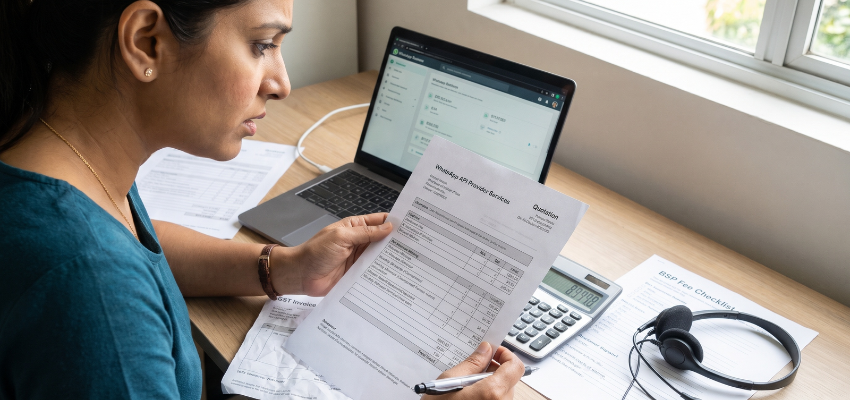
Questions to Ask a Provider Before You Sign
(Source – OpenAI)
Keep it simple really. Ask:
Is there a monthly fee and what does it cover?
Do you add a markup to Meta’s rates?
Are there any setup fees?
Is GST already included in the quote?
What happens if something breaks at 11 PM on sale night?
Their answers to those questions will tell you a hell of a lot.
One caveat: Meta do occasionally update their rate card and so different sites will quote slightly different rates as a result of tax and provider markups. Use the figures above as a guide and check the actual rates on the Meta pricing page or with your BSP prior to finalising anything.
Need Videos, Creators, or Regional Content for Your Brand?
Boss Wallah helps brands plan and execute video content at scale, without managing multiple vendors.
We work with companies to:
- Shoot large volumes of short-form videos using real creators and studio setups, suitable for social media, websites, campaigns, and launches
- Adapt the same videos for different languages, regions, and platforms, so one shoot works across India and global markets
- Launch products or campaigns through dozens or hundreds of creators, all managed, tracked, and reported in one system
- Support brands with ongoing content, launches, regional expansion, and performance-focused campaigns
Whether you need videos for a new launch, content for multiple markets, creator-led visibility, or a steady content pipeline, Boss Wallah acts as a single partner handling production, creators, and execution end-to-end.
👉Click here to see how Boss Wallah works with brands and what we can build for you
Final Thoughts
WhatsApp API pricing in India is a right mess until you know three things: what type of message you’re sending, your volume and your provider’s markup. Get those three things right, categorise your messages correctly and read the small print. Once you’ve done that your WhatsApp budget will be perfectly behaved.
FAQs
1. Is the WhatsApp Business API free in India?
No. Meta charge per delivered message and your provider may also charge you a monthly fee. Some of the replies to customers who message you first are free (up to a monthly limit).
2. What type of message is the cheapest?
Utility and auth messages are around ₹0.115 each (before GST). Marketing messages are by far the most expensive.
3. Do I pay for messages that don’t get through?
No, you only pay for the messages that actually get to the customer.
4. Is GST added on top of Meta’s rates?
Yes, the rates listed are pre-tax and 18% GST is added to your final bill.
5. Can I just use the standard WhatsApp Business app?
If you are small and send few messages, yes. But it has no large scale automation, no multi-agent access and no CRM link. For those, you need the API.