Strip Farming: What is it, Purpose, Techniques, Setup Cost & More
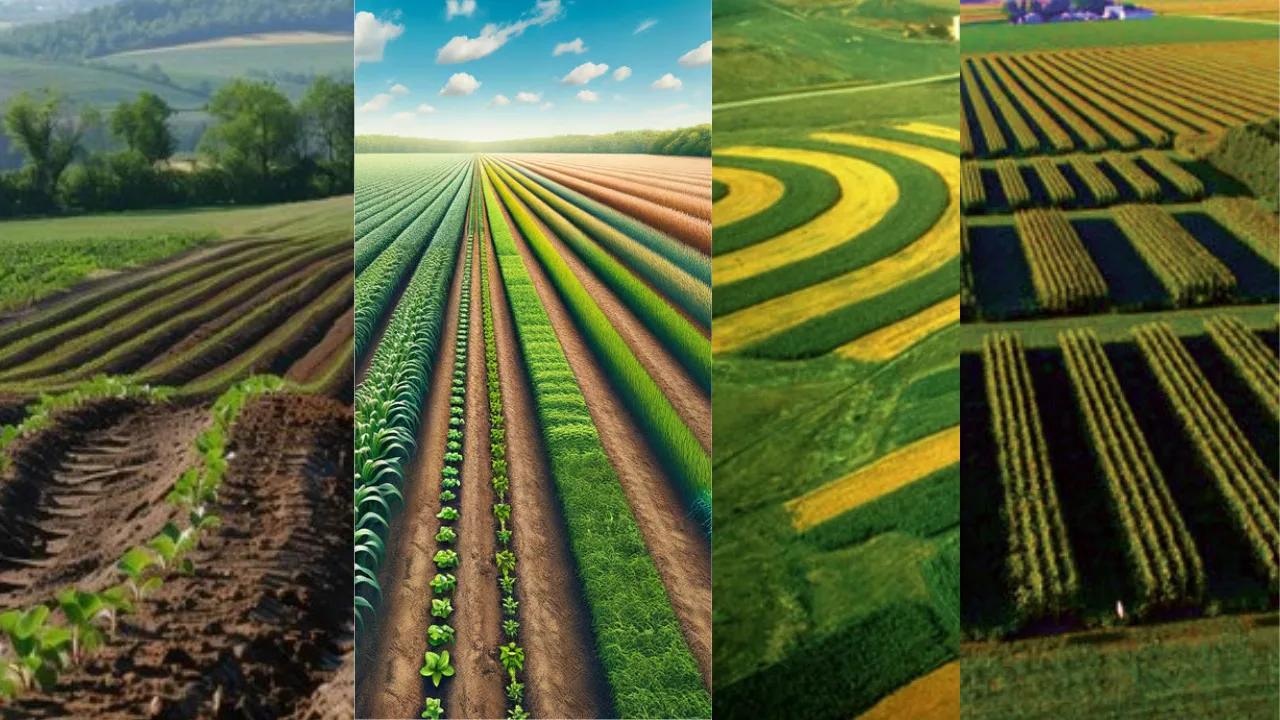
Table of contents
- What is Strip Farming?
- Purpose of Strip Farming
- Common Techniques Used in Strip Farming
- Suitable Crops for Strip Farming in India
- Where is Strip Farming Practised in India?
- Setup Cost for Strip Farming in India
- Revenue & Profit Potential
- Real-Life Example
- Benefits of Strip Farming
- Challenges of Strip Farming
- Government Support & Subsidies
- Conclusion
- Frequently Asked Questions (FAQs)
Strip farming is a smart and eco-friendly agricultural practice that helps farmers grow different crops side by side in strips. It’s mainly used to prevent soil erosion, improve soil fertility, and increase crop yields. This method is especially helpful in India’s hilly and erosion-prone areas. If you’re a farmer or investor looking for sustainable and profitable farming options, this guide will walk you through every detail about strip farming.
What is Strip Farming?

Strip farming, also known as strip cropping, is the practice of growing different types of crops in alternating strips on the same piece of land. These strips are planted in a way that helps reduce water runoff, soil erosion, and nutrient loss.
Key Characteristics:
- Alternating rows or strips of crops
- Can be done on flat or sloped land
- Improves biodiversity and soil health
- Effective for erosion control
Purpose of Strip Farming

Strip farming isn’t just about growing more crops—it’s about farming smarter. Here’s why it’s gaining popularity:
- Prevents Soil Erosion: Especially helpful in regions with heavy rainfall or slopes.
- Improves Soil Fertility: Legumes in strips fix nitrogen, enhancing the soil for other crops.
- Controls Pests Naturally: Intercropping reduces the spread of pests and diseases.
- Increases Crop Yield: Diverse cropping leads to better land use and improved output.
- Reduces Water Runoff: Helps retain water, particularly in dry zones.
Common Techniques Used in Strip Farming
Different techniques are used based on the region, climate, and crops. Some popular ones in India include:
1. Contour Strip Cropping
- Planted along the natural contours of the land.
- Common in hilly areas like Uttarakhand and Himachal Pradesh.
2. Field Strip Cropping
- Strips are laid out in equal width regardless of land shape.
- Used in flat lands like Punjab and Haryana.
3. Wind Strip Cropping
- Focuses on reducing wind erosion by using strips of grass or trees.
- Beneficial in dry and semi-arid regions like Rajasthan.
Suitable Crops for Strip Farming in India
Strip farming works best when crops are carefully chosen. Some ideal combinations include:
| Crop A (Main Crop) | Crop B (Supportive/Legume) |
|---|---|
| Maize | Cowpea |
| Wheat | Lentils |
| Cotton | Groundnut |
| Sugarcane | Soybean |
| Millets | Green Gram |
💡 Pro Tip: If you want to start a Business but have too many doubts, connect with a Business expert from Boss Wallah for guidance – Check Out
Where is Strip Farming Practised in India?

Strip farming is practised in regions prone to soil erosion and uneven rainfall. Some examples:
- Himachal Pradesh: For slope management using maize and legumes.
- Odisha & Chhattisgarh: To control waterlogging and increase yield.
- Karnataka & Maharashtra: On drylands with sugarcane, pulses, and oilseeds.
Setup Cost for Strip Farming in India
Strip farming is affordable and does not require a huge investment. Here’s a general cost breakdown:
| Item | Estimated Cost (INR/acre) |
| Land Preparation | 2,000 – 3,000 |
| Seeds (2 Crops) | 1,500 – 3,000 |
| Fertilizers & Pesticides | 1,000 – 2,000 |
| Labour | 2,000 – 4,000 |
| Irrigation (optional) | 1,000 – 3,000 |
| Total Cost | 7,500 – 15,000 |
Tip: Government schemes like PM-KISAN and National Mission for Sustainable Agriculture can offer support.
ALSO READ | Traditional Farming: Methods, Ancient Practices in India, Tools & More
Revenue & Profit Potential
- Average Yield Increase: 10–30% compared to mono-cropping.
- Dual Income: Earn from both main and supportive crops.
- By-product Sale: Sell biomass, fodder, and compost.
- Estimated Profit: INR 20,000–40,000 per acre annually (depending on crop combo).
Real-Life Example
In Karnataka’s drought-prone Tumkur district, farmers adopted strip cropping of millets and pulses. Result: 25% increase in yield and reduced soil degradation within 2 years.
Benefits of Strip Farming

- ✅ Controls erosion naturally
- ✅ Boosts crop diversity
- ✅ Enhances soil nutrients
- ✅ Reduces the cost of fertilisers
- ✅ Provides climate resilience
- ✅ Supports organic farming
Challenges of Strip Farming
- Requires knowledge of crop compatibility
- Initial planning may be complex
- Irrigation setup needs to be tailored
- Limited awareness among Indian farmers
Solution: NGOs and Krishi Vigyan Kendras (KVKs) offer training workshops.
ALSO READ |Truck Farming: Meaning, Techniques, Benefits & More
Government Support & Subsidies
- National Mission on Sustainable Agriculture (NMSA)
- Soil Health Card Scheme
- Subsidies for micro-irrigation systems
- Training through ATMA & KVKs
Visit the AgriIndia Portal for more schemes.
Need Expert Guidance?
Starting a business can be challenging, but you don’t have to do it alone! At Boss Wallah, our 2,000+ business experts are ready to provide valuable insights and guidance. Whether you need help with marketing, finance, sourcing, or any other area of any business, our business experts are here to help you succeed
Confused about Which Business to Start?
Want to start your own business but unsure which one to choose? Explore Boss Wallah, where you’ll find 500+ courses by successful business owners, featuring practical, step-by-step guides on starting and growing various businesses.
Find your perfect business idea today
Conclusion
Strip farming is a low-cost, high-benefit farming method that is ideal for India’s diverse agricultural landscape. From improving soil health to increasing farm income, strip farming is the sustainable future of agriculture. With increasing climate risks and land degradation, this technique could be the key to a better, greener future for Indian farmers.
Frequently Asked Questions (FAQs)
1.What is strip farming?
- Growing crops in alternating strips to control erosion and boost productivity.
2. Is strip farming suitable for small farms?
- Yes, it can be scaled to small plots with minimal investment.
3.Which crops are best for strip farming?
- Maize with legumes, wheat with lentils, cotton with groundnut.
4. What is the cost of setting up strip farming in India?
- INR 7,500 to 15,000 per acre.
5. How does strip farming help with soil erosion?
- It slows down water runoff and wind erosion through crop barriers.
6. Can strip farming be used with organic farming?
- Absolutely! It’s highly compatible with organic methods.
7. Where is strip farming common in India?
- Himachal Pradesh, Odisha, Karnataka, and Maharashtra.
8.Are there any government schemes for this?
- Yes, under NMSA, Soil Health Card, and PM-KISAN.
9.Can I use mechanisation with strip farming?
- Yes, with some planning on strip width and spacing.
10. What training is available for beginners?
- Krishi Vigyan Kendras (KVKs) and ATMA provide free training.