Synthetic Influencers in India: What Brands Should Check Before Collaborating
What about having a brand ambassador who is never late, never posts a controversial tweet at 2 a.m., and never asks for a vanity van? Doesn’t that seem like an excellent idea? That is the reason given in support of synthetic influencers in India, and that is also the reason why so many marketing teams have become curious. Nevertheless, before you agree with anything, it is useful to know precisely what you are getting.
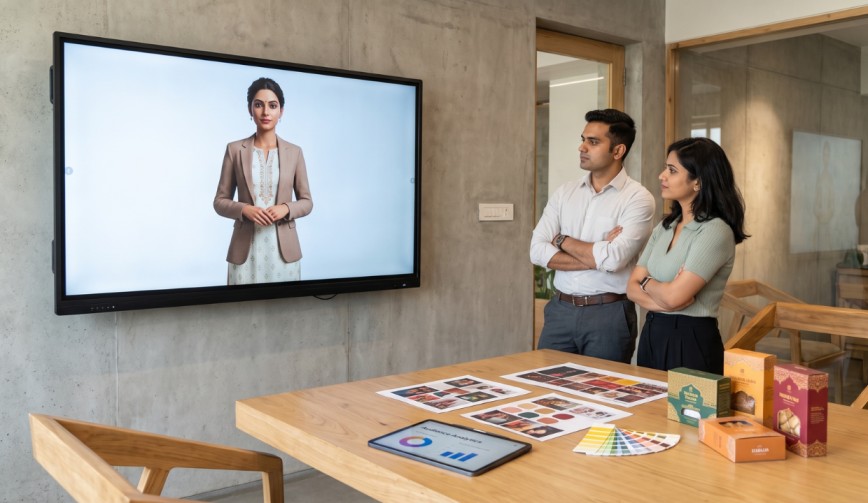
A synthetic influencer is a character developed on a computer using design software or AI tools; it has a face, a personality, and a social media page, but there is no real person behind the screen. They are also known as virtual influencers or AI influencers and, just like genuine influencers, they post, pose and promote products.
Why Brands Are Paying Attention
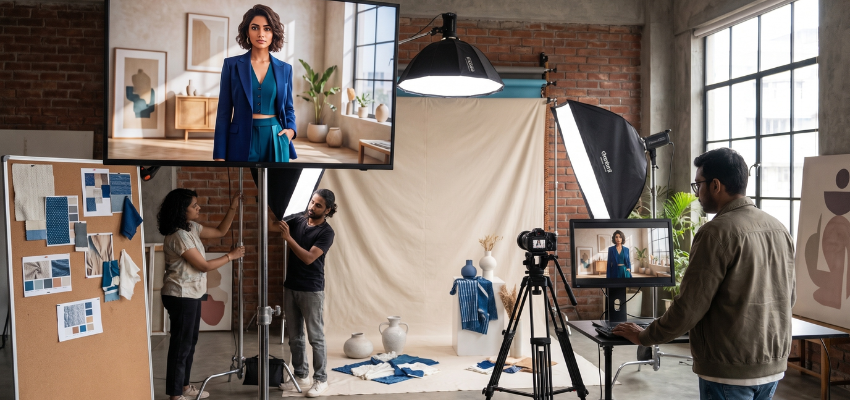
(Source – OpenAI)
- The first reason is that it gives you control, since the computer-generated character carries out your script exactly.
- The second reason is consistent output, because there are no sick days or delays when filming.
- The third reason is novelty, since a new and futuristic appearance allows your influencer marketing campaign to stand out in a crowded feed.
Indian audiences have seen some of these characters before, with names like Kyra and Naina showing up on social media sites. Even though there is a great deal of curiosity, this curiosity doesn’t turn into trust, which is why we have the checklist.
👉Click here to see how Boss Wallah works with brands and what we can build for you
1. Discover the owner of the character
Although it might appear boring, this is the most important aspect: discover who created the character and who actually holds the intellectual property (that is, the legal right to the design, appearance, and voice). If you’re dealing with a character from a small studio, consider the situation in the event that studio closes, as your campaign could then vanish along with it.
You should also check whether the creator could rent the same character to your competitor next month and exclusivity must be stated in the contract and not just supposed over chai.
2. Make sure you understand the rules about disclosure
In India the Advertising Standards Council of India (ASCI) has guidelines relating to advertisements by influencers, and these guidelines stipulate that people should be made aware when a post is a paid promotion. The ASCI has also recommended that clarity be provided in the case of virtual influencers so that their followers know they are not speaking to a real person.
It would be wrong to conceal this; eventually your audience will realise and nobody likes being tricked by a pixel. Therefore, make it clear by including labels such as “virtual character” and “paid partnership” on all of your posts. Since the rules may change, you should check with your legal team to confirm what the current disclosure rules are before launching.
3. It is necessary to go beyond just considering the number of followers.
Although a large number of followers may look very appealing in a presentation, some accounts buy followers or get engagement from bots. You should verify genuine audience engagement, for instance by looking at thoughtful comments, shares, and saves. In the case of a post which has 50,000 likes and only ten comments that say “nice”, there is a problem.
You should also investigate who the followers are. A person who is popular among college students in Mumbai may not be able to help you in selling pressure cookers in Lucknow. Instead, you should tailor your product to your audience, not to your own list of preferences.
Read More | Employee-Generated Content: Why the People Inside Your Brand Matter.
4. Ensure that the product is appropriate for Indian audiences
A virtual face that looks good in a global fashion campaign could appear strange in a local festival campaign. This is because India has many different languages, skin tones, clothing styles and cultural habits, so you should think about whether the character seems to look and sound believable to your target group.
Many people also find hyper-realistic characters a bit disturbing, and this effect is known among designers as the “uncanny valley”, a term used to describe a face that looks as if it is almost human but isn’t quite and thus makes people feel uncomfortable. Therefore, it is advisable to carry out a small test with real customers before making a large investment.
5. Protect your brand’s safety
What brand safety means is that your name must never be linked with anything harmful or embarrassing. Even though a synthetic influencer won’t get involved in a personal scandal, the people who manage the account could still post something inappropriate. You should find out who writes the captions, who approves the content, and how quickly mistakes are corrected.
You should also ensure that the character wasn’t created based on a real person without that person’s permission or that AI tools were trained using stolen photographs; otherwise, a vague origin story could result in an unpleasant headline for your brand’s reputation.
6. Think About Authenticity
The problem lies in the fact that people subscribe to influencers because they appear to be genuine. A person can’t really use your face cream or taste your new biscuits. Should your campaign say “I love this product” and the individual have no skin or tongue, your followers might roll their eyes.
Instead, produce content that honestly deals with what the character really is. Use storytelling, engaging visuals, and imaginative worlds, not fake personal reviews. Avoid making claims such as ‘this changed my skin in a week’ from someone who has no skin.
7. Calculate the costs and returns in a mathematical way.
Synthetic influencers aren’t always a cheap option either; in some cases the cost can be as high as, or even greater than, that of employing a human to create a high-quality character, animate it, and look after the online page. Before you begin, ask for a full price list and decide in advance what success will mean since it might be measured in website visits, sales, or sign-ups, not just likes.
Begin with a small pilot campaign; treat it as a trial run rather than as a wedding.
A Quick Checklist Before You Say Yes
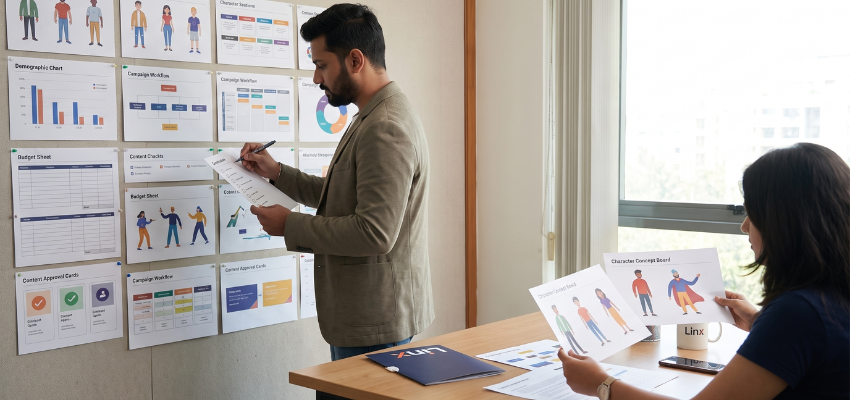
(Source – OpenAI)
- Who owns the character and has exclusivity been set up?
- Should disclosure labels be included with every post?
- Is the audience really there and does it match your potential customers?
- Has the design been tested by customers in India?
- Is the procedure for approving content clear and rapid?
- Are the costs and the objectives written down?
Read More | Real ROI Equation: Video Ads vs Image Ads When Creative Volume Is the Bottleneck.
Need Videos, Creators, or Regional Content for Your Brand?
Boss Wallah helps brands plan and execute video content at scale, without managing multiple vendors.
We work with companies to:
- Shoot large volumes of short-form videos using real creators and studio setups, suitable for social media, websites, campaigns, and launches
- Adapt the same videos for different languages, regions, and platforms, so one shoot works across India and global markets
- Launch products or campaigns through dozens or hundreds of creators, all managed, tracked, and reported in one system
- Support brands with ongoing content, launches, regional expansion, and performance-focused campaigns
Whether you need videos for a new launch, content for multiple markets, creator-led visibility, or a steady content pipeline, Boss Wallah acts as a single partner handling production, creators, and execution end-to-end.
👉Click here to see how Boss Wallah works with brands and what we can build for you
Final Thoughts
Synthetic influencers can be a smart and original addition to a brand’s collaboration strategies, but they don’t offer a magic fix; they work best when brands are honest, carry out some research, and use the character as a creative tool rather than as a means of rapidly establishing trust. A little bit of effort at this stage will stop the need for excuses later on.
FAQs
1. What are synthetic influencers?
These characters are produced by computers and act in the way of social media influencers; they have a look, a personality, and an account, but there is no real person behind the image.
2. Is the use of synthetic influencers legal in India?
Although they can be used in marketing, companies must follow advertising rules, for example by clearly marking paid posts and by being honest about the fact that the character is virtual.
3. Is it less expensive to use them than to employ human influencers?
Building and managing a quality character is not always a cheap affair; in fact, the main way in which they result in cost savings is by enabling long-term control and repeated use.
4. Do people in India trust virtual influencers?
Trust varies; even though a great many people regard them as a form of entertainment, they may end up placing more trust in genuine reviews, since honest labels and creative storytelling are both useful.
5. What methods are available to a brand in order to evaluate the success of a synthetic influencer?
Begin by setting objectives, such as aiming for a specific number of clicks, sign-ups, or sales. Then, check the level of engagement, the quality of the audience, and the results from a small pilot programme before increasing the scale.