Creator Marketing Attribution: How to Find Out Which Creators Drive Sales

Creator marketing can help brands reach new audiences, build trust, and get people to buy products. Yet all brands eventually ask themselves the same question: which creators are actually generating sales? Creator Marketing Attribution provides an answer by showing how content produced by creators affects customer behaviour, from clicking on a product link to making a purchase. Instead of evaluating a campaign based on likes and views, brands can find out which creators are driving real business results.
What Is Creator Marketing Attribution?

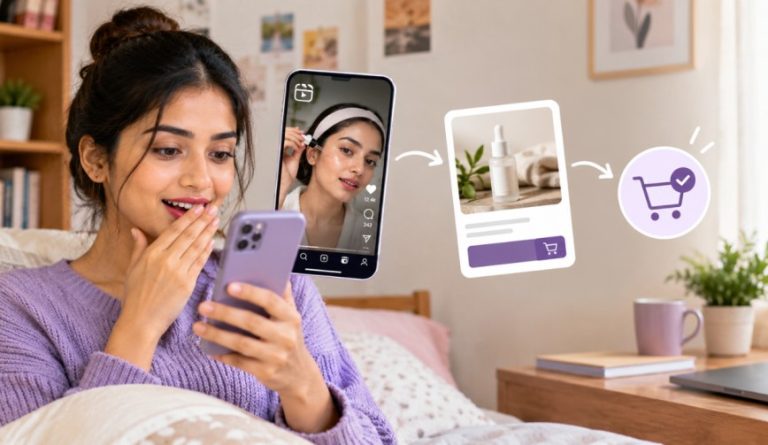
(Source – OpenAI)
Creator marketing attribution refers to the process of identifying which creators, posts, or campaigns influence a customer’s decision to buy. It enables brands to connect creator activity to actions such as website visits, product purchases, and sign-ups.
For example, if a skincare brand works with five creators to promote a face wash, one creator may receive thousands of views while another receives fewer views but generates more purchases. The brand might mistakenly conclude that the first creator has performed better.
Creator campaign tracking enables businesses to go beyond popularity and identify what actually encourages people to buy.
👉Click here to see how Boss Wallah works with brands and what we can build for you
Why Is Creator Marketing Attribution Important?
Just sending products to creators and waiting for their posts to go live is not sufficient. Brands have to determine whether their investment is producing results.
Here is why attribution matters:
- Check sales performance: Identify the creators who attract customers who make purchases.
- Measure campaign ROI: Compare the results of a campaign with its cost to understand the return on investment.
- Improve creator selection: Identify creators whose audiences are more likely to buy products.
- Manage budgets wisely: Invest in partnerships that produce meaningful results.
- Improve future campaigns: Identify the content styles, offers, and platforms that encourage purchases.
In short, attribution allows brands to make decisions based on evidence rather than guessing which creator should get another campaign.
Read More | Creator Commerce vs Influencer Marketing: How the Two Models Actually Make Money for a Brand.
How to Track Which Creators Drive Sales
You do not need a complicated system to get started. A few practical tracking methods can help you understand how creator campaigns are performing.
1. Use Tracking Links
Provide each creator with a unique link to your website or product page. These links help identify which creator sent visitors to your website and whether those visitors made a purchase.
For example, if a creator shares a link to a clothing collection, the brand can track the visits and orders generated through that link.
Affiliate tracking links are useful because they allow brands to connect creator promotions with sales. However, a customer might visit a website through a creator’s post and return later through another route. In such cases, the creator’s full impact may not be recorded.
2. Create Special Discount Codes
Provide each creator with a unique discount code, such as STYLE10 or BEAUTY15. When customers use the code at checkout, the brand can identify which creator’s promotion helped generate the order.
Creator discount codes are easy to manage and can encourage customers to make purchases.
However, customers might share codes with friends or purchase products without using them. This is why discount codes should be used alongside other tracking methods.
3. Track Website Visits and Purchases
Use website analytics and ecommercereporting tools to understand what happens when people click on a creator’s link.
Look at metrics such as:
- Website visits from each creator
- Product page views
- Add-to-cart activity
- Completed purchases
- Revenue generated
Conversion tracking shows how many visitors complete a desired action, such as placing an order.
These numbers can reveal useful patterns. For instance, a creator might generate fewer clicks but attract visitors who are more likely to make a purchase.
4. Look Beyond Last-Click Sales
A customer could discover a brand through an Instagram Reel, watch a YouTube review a week later, and then make a purchase after seeing a paid advertisement.
If the brand gives credit only to the final click, the first two creators may receive no acknowledgement for influencing the decision.
Multi-touch attribution examines the different ways a customer interacts with a brand before making a purchase. It provides a broader understanding of how creators contribute to the buying journey.
Brands should choose an attribution approach that matches their available data and campaign goals because no method can perfectly capture every influence.
5. Compare Sales With Campaign Costs
Sales figures become more useful when compared with the amount the brand spent.
Suppose a brand pays ₹10,000 to one creator and achieves ₹30,000 in tracked sales. Another creator costs ₹5,000 and generates ₹20,000 in tracked sales.
The second creator generated more sales per rupee spent. However, the brand should also consider product costs, discounts, returns, and profit margins before deciding which partnership performed better.
Creator marketing ROI helps brands assess whether campaign results justify the investment. Remember, revenue and profit are not the same thing.
Which Metrics Should Brands Measure?
Not all campaigns have the same objective. A campaign intended to increase awareness needs different measures from one designed to generate immediate purchases.
Important metrics include:
- Reach and impressions: The number of people who saw the content and how often it appeared.
- Click-through rate: The percentage of people who clicked a link after seeing it.
- Conversion rate: The percentage of visitors who completed a desired action.
- Average order value: The average amount customers spend on each order.
- Revenue per creator: The sales value attributed to each creator.
- Customer acquisition cost: The amount spent to gain a new customer.
- Return on investment: A comparison of campaign returns with campaign costs.
Influencer marketing analytics brings these measurements together so brands can evaluate performance. Instead of tracking every figure simply because it appears on a dashboard, choose metrics that match your objectives.
Read More | Micro Creator Partnerships: What Brands Learn When a Creator Pushes Back.
Common Creator Attribution Mistakes to Avoid

(Source – OpenAI)
Even a well-planned campaign can produce misleading results when tracking is handled poorly.
Avoid these common mistakes:
- Relying only on likes and views: High engagement does not always lead to sales.
- Using the same discount code for everyone: This makes it difficult to assess individual creator performance.
- Ignoring delayed purchases: Customers may take days or weeks to make a purchase.
- Forgetting campaign costs: Creator fees, discounts, and other expenses should be included when assessing performance.
- Expecting perfect attribution: Privacy settings, activity across different devices, and untracked purchases can leave gaps in the data.
Before a campaign begins, brands should also agree with creators on tracking methods and reporting timelines. Clear expectations make it easier to review campaign performance.
Need Videos, Creators, or Regional Content for Your Brand?
Boss Wallah helps brands plan and execute video content at scale, without managing multiple vendors.
We work with companies to:
- Shoot large volumes of short-form videos using real creators and studio setups, suitable for social media, websites, campaigns, and launches
- Adapt the same videos for different languages, regions, and platforms, so one shoot works across India and global markets
- Launch products or campaigns through dozens or hundreds of creators, all managed, tracked, and reported in one system
- Support brands with ongoing content, launches, regional expansion, and performance-focused campaigns
Whether you need videos for a new launch, content for multiple markets, creator-led visibility, or a steady content pipeline, Boss Wallah acts as a single partner handling production, creators, and execution end-to-end.
👉Click here to see how Boss Wallah works with brands and what we can build for you
Final Thoughts
Creator Marketing Attribution enables brands to identify the creators who influence purchases and understand where their marketing budget is generating results. With tracking links, discount codes, website analytics, and appropriate performance metrics, creator campaigns can become a measurable part of a marketing strategy.
The goal is not to judge creators on sales alone. Some creators help customers discover a brand, while others encourage them to make the final purchase. Understanding these different roles helps brands build stronger partnerships, improve their campaigns, and spend their budgets more thoughtfully.
After all, a million views may look impressive in a report, but knowing what those views actually achieve is even more useful.
FAQs
1. What Is Creator Marketing Attribution?
Creator marketing attribution identifies how individual creators, posts, or campaigns contribute to customer actions, such as purchases and sign-ups.
2. How Can Brands Track Sales Generated by Creators?
Brands can connect creator activity to purchases by using unique tracking links, individual discount codes, website analytics, and ecommerce reports.
3. Which Metrics Matter Most in Creator Marketing Attribution?
For sales-focused campaigns, useful metrics include conversion rate, attributed revenue, customer acquisition cost, and return on investment.
4. Is Creator Marketing Attribution the Same as Influencer Marketing Analytics?
No. Creator marketing attribution connects marketing activity with customer actions, while influencer marketing analytics covers broader performance data, including reach, engagement, and audience growth.
5. Can Creator Marketing Attribution Track Every Sale?
No. Customers may return through another channel, use a different device, or forget to apply a discount code. Attribution tools provide useful estimates but may not capture every creator’s influence.