Beyond Views and Likes: How to Measure Creator Campaign Impact

A creator campaign can easily generate thousands of views, hundreds of likes and a good number of comments. Does that necessarily mean it’s had a positive impact on the business? Not necessarily. Beyond Views and Likes: How to Measure Creator Campaign Impact is all about looking beyond the social media metrics to assess whether the campaign actually delivered. For brands, it’s about working out what did and didn’t work, what needs to change and where their marketing spend is actually going.
Why Views and Likes Do Not Tell the Whole Story

(Source – OpenAI)
Views and likes are useful as a starting point; they don’t tell the whole story of a campaign. A video can get thousands of views and still achieve zero website visits and zero sales.
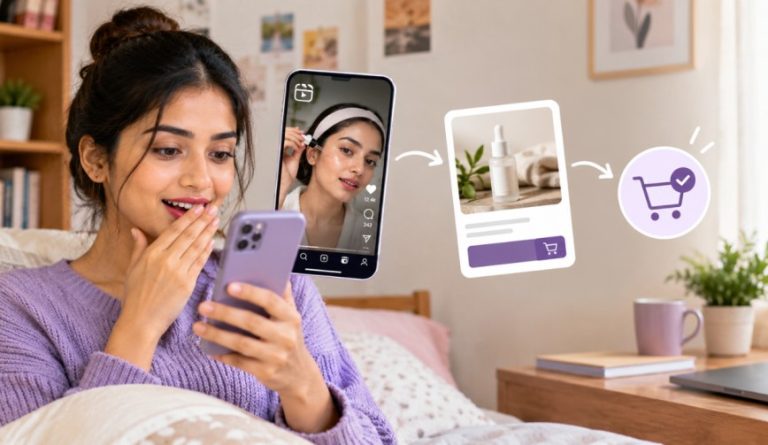
For instance, a creator might post a skincare review and get 50k views. That sounds great. The problem is if the audience just scrolls past and doesn’t actually learn anything about the product or take any action, then the campaign may not have achieved what the brand was after.
This is why brands need to look at creator campaign performance in terms of more than just the obvious metrics. They need to consider audience interest, website visits, leads, sales and all the other outcomes that are actually relevant to their objectives.
👉Click here to see how Boss Wallah works with brands and what we can build for you
Beyond Views and Likes: How to Measure Creator Campaign Impact
The best way to measure a creator campaign is to define what success looks like prior to the campaign commencing. Here are some key metrics that brands should be tracking.
1. Track Audience Engagement
Audience engagement is all about how the audience interacts with the content of the creator. This is measured in things like likes, comments, shares, saves and all the other actions that are available on a platform.
However, the type of engagement is important. A considered comment on a product is likely to be a more indicative sign of interest than a simple like.
Brands should be looking at the quality of the interactions rather than just the volume. They should be looking at engagement across creators to see who actually has the best connection with the audience.
2. Measure Reach and Brand Awareness
Brand awareness is essentially how familiar people are with a brand. Creator campaigns can be used to introduce a product to an audience who may not have come across it in any other way.
Brands can track reach (the number of unique accounts that see the content) and impressions (the number of times the content is displayed).
They can also track brand mentions, profile visits and changes in branded search. That gives you an indication of whether the brand is being talked about more.
3. Monitor Website Traffic and Clicks
A creator may be able to get people to want to find out more about a product, but the question for the brand is whether those people actually go on to visit the site.
Using trackable links, unique URLs, or campaign-specific landing pages enables the business to measure the amount of traffic to their site that is driven by a particular creator or campaign.
Brands can then look at what the visitors do once they’ve arrived. Do they go on to look at the product pages? Do they sign up for the newsletter? Do they just walk away? That’s far more informative than just looking at views.
4. Measure Leads and Sales
For a lot of businesses, the real aim is to take that audience interest and turn it into paying customers. That’s where the importance of creator campaign ROI comes in.
ROI (return on investment) is the metric that allows a brand to work out whether the results have justified the money that’s been spent.
Brands can track purchases via unique discount codes, affiliate links or website analytics. For lead generation campaigns they can track newsletter sign-ups, enquiry forms and demo requests.
It’s also important to look at the total campaign cost (creator fees, product samples, content production, paid promotion etc).
A simple way to calculate ROI is:
ROI = (Revenue attributed to the campaign – Campaign cost) ÷ Campaign cost × 100
For example, if a campaign generates ₹1.5L in attributed revenue and costs ₹50k the ROI is 200%. That’s a useful metric but brands have to remember that not every purchase will be attributable to the creator content.
5. Understand Audience Quality
A creator may have a huge following, but that doesn’t necessarily make them the right fit for every brand.
Audience quality is about how well a creator’s audience matches the audience that a business is trying to reach. A smaller creator with a relevant audience can actually be better than a larger creator whose audience is of very little interest in the product.
Brands should be thinking about audience location, audience interests, the quality of the actual interactions and the degree to which the creator’s content is actually relevant to the product.
The aim isn’t just to get the message out to more people. It’s to get it out to the people who are likely to care.
6. Compare the Results Across the Various Creators
When you’re working with a number of creators, the comparison of the results can tell you which of those partnerships are worth paying more attention to.
For instance, one creator may be the one that gets the most engagement, another the one that brings the most visits and sales. Both may be good in their own way, just different in their strengths.
Using influencer marketing analytics enables brands to compare performance across campaigns, creators and platforms. It also makes it easier to spot the types of content that resonate with the audience.
Brands should be using the same measurement period and the same clear objectives when they’re looking at their results. Otherwise, the comparison isn’t going to be fair.
Read More | Real ROI Equation: Video Ads vs Image Ads When Creative Volume Is the Bottleneck.
Common Mistakes Brands Should Avoid

(Source – OpenAI)
Even a well-thought-out campaign can end up with confusing results if the measurement is all over the place.
Here are a few mistakes to watch out for:
- Focusing purely on vanity metrics: High view counts, high like counts, etc don’t necessarily equate to good business results.
- Ignoring campaign objectives: A campaign which is designed to be an awareness campaign shouldn’t be measured purely on sales.
- Forgetting delayed purchases: Some customers will take days or weeks to make up their mind.
- Using unclear tracking methods: With no trackable links and no campaign-specific codes, you simply can’t work out where the results are coming from.
- Stopping the measurement too early: Looking at the results over an appropriate period of time gives the brand a much clearer picture of performance.
Avoiding those mistakes will help businesses to make better decisions in future when it comes to partnering with creators.
Read More | From ₹0 to ₹10L Ad Spend: When Should You Switch from Image Ads to Video Ads?
Need Videos, Creators, or Regional Content for Your Brand?
Boss Wallah helps brands plan and execute video content at scale, without managing multiple vendors.
We work with companies to:
- Shoot large volumes of short-form videos using real creators and studio setups, suitable for social media, websites, campaigns, and launches
- Adapt the same videos for different languages, regions, and platforms, so one shoot works across India and global markets
- Launch products or campaigns through dozens or hundreds of creators, all managed, tracked, and reported in one system
- Support brands with ongoing content, launches, regional expansion, and performance-focused campaigns
Whether you need videos for a new launch, content for multiple markets, creator-led visibility, or a steady content pipeline, Boss Wallah acts as a single partner handling production, creators, and execution end-to-end.
👉Click here to see how Boss Wallah works with brands and what we can build for you
Final Thoughts
Measuring the success of a creator campaign isn’t about disregarding views and likes. It’s about understanding what those metrics mean for the business.
By looking at engagement, brand awareness, website traffic, leads, sales and campaign ROI brands can see which partnerships are actually delivering. They can then go on to improve their future campaigns rather than just re-running the same thing in the hope of a different result.
At BossWallah, brands can build creator-led content strategies that actually connect with their audience across the platforms. With the right content and measurement approach, creator marketing isn’t just a numbers game. It’s a real way of building trust, finding new customers and driving business growth.
FAQs
1. What Is a Creator Campaign’s Impact?
Creator campaign impact is the impact of a creator partnership measured in terms of audience engagement, brand awareness, website visits, leads and sales.
2. What Metrics Are Most Important for Creator Campaigns?
The most useful metrics will, of course, be those that are relevant to your campaign objective. A brand may be looking at reach for awareness, engagement for interest and conversions/sales for business growth.
3. How Can Brands Measure the ROI of a Creator Campaign?
Brands can compare the revenue that can be attributed to the campaign against the total cost of the campaign. They can use tracked links, discount codes and the various analytics tools available to them to measure the results.
4. Are Views and Likes Still Relevant for Creator Marketing?
Yes. Views and likes are useful in terms of measuring visibility and engagement but should be combined with other metrics if you’re going to get a true picture of the impact of the campaign.
5. How Frequently Should Brands Be Measuring the Performance of Their Creator Campaigns?
Brands should be monitoring performance throughout the campaign and then reviewing the final results afterwards. For purchases that take a while to happen, they need to allow sufficient time to capture the delayed conversions.