Top 10 Influencer Fraud Detection Strategies to Help Brands Run Safer Campaigns
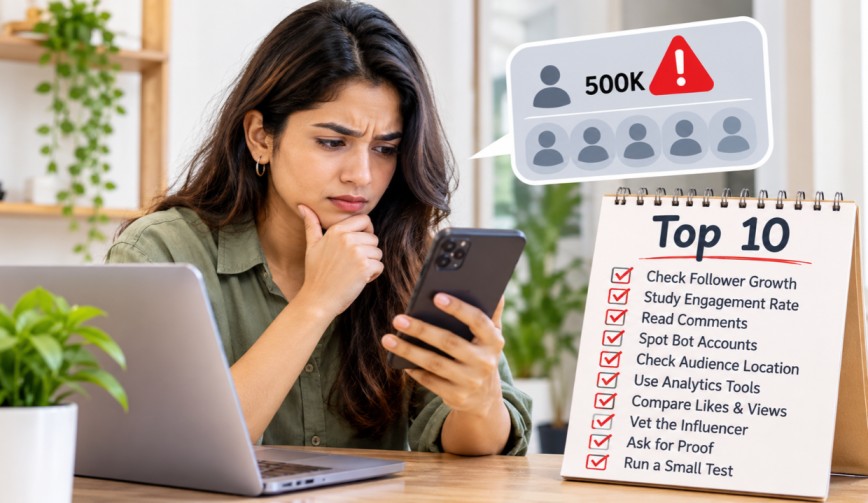
Imagine this. You pay an influencer; they post a beautiful shot of your product and the numbers look absolutely fantastic. Then sales are flat. What’s gone wrong? Possibly half of those followers were bots with no money to spend. If that rings a bell, then you need the Top 10 Influencer Fraud Detection Strategies to help your brands run safer campaigns. Fraud in influencer marketing is very much the norm; it’s just very easy to spot once you know what the red flags are.
Why Influencer Fraud Matters
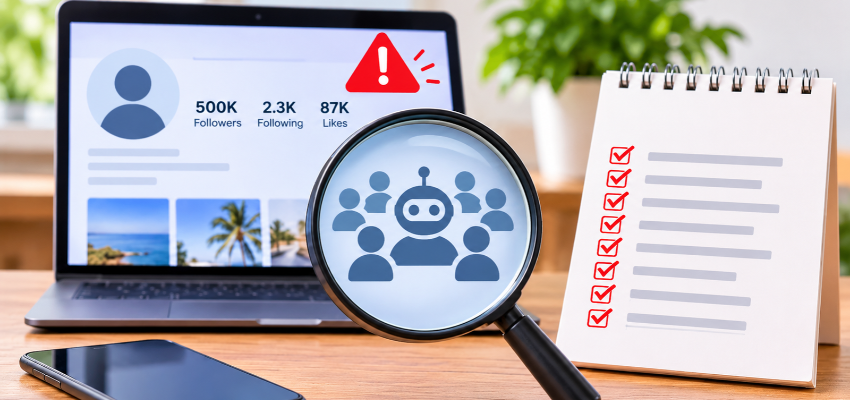
(Source – OpenAI)
Influencer fraud is when someone fakes their reach in order to get paid more. They’ll buy followers, buy likes, or use all sorts of other tricks to make themselves look bigger than they actually are. The end result is wasted money, a poor campaign, and in some cases a bit of damage to your brand’s reputation.
👉Click here to see how Boss Wallah works with brands and what we can build for you
Quick Look at the Top 10 Influencer Fraud Detection Strategies to Help Brands Run Safer Campaigns
| No. | Strategy | What to Look For |
|---|---|---|
| 1 | Check follower growth | Sudden jumps with no reason |
| 2 | Study engagement rate | Too low or too high for the niche |
| 3 | Read the comments | Generic, repeated replies |
| 4 | Spot bot accounts | Empty profiles, number-heavy names |
| 5 | Check audience location | Followers from the wrong country |
| 6 | Use analytics tools | Automatic fake follower reports |
| 7 | Compare likes, comments, views | Numbers that do not match |
| 8 | Vet the influencer | Past deals and brand fit |
| 9 | Ask for proof | Screenshots of real insights |
| 10 | Run a small test | Clicks and sales from a trial |
Read More | Stop Guessing Your Social Media Performance: Calculate Engagement Rate in 2026.
Each Strategy Explained
1. Check the Follower Growth Pattern
Real growth is gradual and a bit bumpy. Fake growth is the business of rockets. If an account is up by 20,000 followers in a day with no viral post to account for it then you should be very suspicious. A lot of the tools will show you a growth history in the form of a simple graph.
2. Study the Engagement Rate
Engagement rate is the % of followers that like, comment or share a post. If you’ve got 500k followers and only get 200 likes, that’s a problem. Extremely high numbers can also be a cause for concern. Always compare the rate to others in the same niche.
3. Read the Comments Carefully
Skim the comments like a detective, really. You’ll see loads of “Nice pic!” and “Great post!” from accounts you’ve no idea who they are. That’s a dead giveaway of fake engagement. The real fans will have something to say, will ask questions, will sometimes even disagree.
4. Look for Bot Accounts
Bot accounts are accounts run by software, not people. They typically have:
No profile picture.
Bizarre usernames full of numbers.
Very few posts, if any.
Little or no genuine activity.
If a significant portion of the follower list looks like that, then just walk away.
5. Check Audience Location
If you’re selling sarees in India but the influencer’s audience is predominantly from countries you don’t ship to, then that’s a mismatch. Good audience quality is about having the right kind of audience, i.e. the people you actually want to reach.
6. Use Influencer Analytics Tools
You don’t have to go through it all manually. Influencer analytics tools will scan the account and give you a quick report on:
Fake followers.
Engagement rates.
Audience demographics.
Audience quality.
Think of them as a metal detector for your marketing budget.
7. Compare Likes, Comments, and Views
These figures should make sense in conjunction with each other. A video with 100k views and 12 likes and zero comments is a bit of a mystery. A healthy post will have a reasonable mix of likes and comments. If the numbers don’t add up then you’ve got questions to ask.
8. Do Proper Influencer Vetting
Influencer vetting is just about checking them out prior to hiring. You should:
Go through their past brand deals.
Check how their audience has responded to sponsored posts.
See whether they promote too many competing products.
Check whether their content matches your brand.
A basic background check will save you a hell of a lot of regret.
9. Ask for Real Proof
Ask for screenshots of their account insights (these are the private stats only the account owner can see), which will show you:
Actual reach.
Audience age groups.
Audience locations.
Other useful engagement details.
A real creator will be more than happy to provide these. A fraudster may well suddenly go all “I’m very busy”.
10. Run a Small Test Campaign First
Before you go in and sign that big contract, start small.
Give them a trackable link.
Provide a unique discount code.
Monitor clicks and conversions.
Check whether the campaign brings genuine results.
If a hundred people click and zero turn into buyers, then you’ve learned something very important without having spent any money at all.
Read More | Meta AI for Product Photography: Can It Replace a Professional Shoot?
Protecting Your Brand Beyond the Numbers
(Source – OpenAI)
Fraud is not just about fake followers. Brand safety is equally important and is about keeping your brand away from any posts or people that could potentially embarrass it. You need to check out what the influencer has previously posted as old controversial posts can always come back to bite you at the most inopportune moment.
It also helps to put it in writing. A simple contract can state that:
The influencer will not buy followers or engagement.
The brand can review their analytics during the campaign.
Any use of fake engagement is a breach of the agreement.
The brand can end the partnership if fraud is confirmed.
Need Videos, Creators, or Regional Content for Your Brand?
Boss Wallah helps brands plan and execute video content at scale, without managing multiple vendors.
We work with companies to:
- Shoot large volumes of short-form videos using real creators and studio setups, suitable for social media, websites, campaigns, and launches
- Adapt the same videos for different languages, regions, and platforms, so one shoot works across India and global markets
- Launch products or campaigns through dozens or hundreds of creators, all managed, tracked, and reported in one system
- Support brands with ongoing content, launches, regional expansion, and performance-focused campaigns
Whether you need videos for a new launch, content for multiple markets, creator-led visibility, or a steady content pipeline, Boss Wallah acts as a single partner handling production, creators, and execution end-to-end.
👉Click here to see how Boss Wallah works with brands and what we can build for you
Final Thoughts
Spending on influencers should be an investment rather than a lottery ticket. Follow these 10 tips and you’ll spot the problems early, you’ll know who to work with and you’ll get much better value for every single rupee. If something looks too good to be true, it very likely has a few bots behind it.
Frequently Asked Questions
1. What is influencer fraud in plain English?
It’s when an influencer is faking their follower count/activity in some way (usually by buying followers, likes and comments).
2. How can I quickly spot fake followers?
Look at the follower growth, engagement rate and comments. You can also run the profile through an analytics tool for a quick report.
3. Does a high follower count necessarily mean a good thing?
No. A big number is worthless if the vast majority of the followers are just inactive or fake. Real engagement is what counts, not the size of the following.
4. Are micro influencers safer than big influencers?
Not always, but they tend to have more loyal followings. Fraud can occur at any level so you need to check every profile.
5. What if we spot fraud after the campaign has already kicked off?
Pause the payments if you can.
Have a look at your contract.
Ask for proof of their stats.
If fraud is confirmed, terminate the partnership and go with a more reputable creator.