Influencer Campaign ROI: Which Metrics Actually Matter Beyond Likes and Views?

By this point, you’ve probably seen a post with 50k likes and thought, “Wow, that must have worked!” It may have. It may not have. Likes are nice, a bit like compliments at a party, but they don’t actually pay the bills. If you’re after a real understanding of Influencer Campaign ROI: Which Metrics Actually Matter Beyond Likes and Views?, you need to look at the metrics that relate to business outcomes.
In simple terms, ROI is return on investment, which is just the money you’ve made compared to the money you’ve spent.
Let’s go through the metrics that actually tell the story, without any scary spreadsheets.
Why Likes and Views Can Fool You

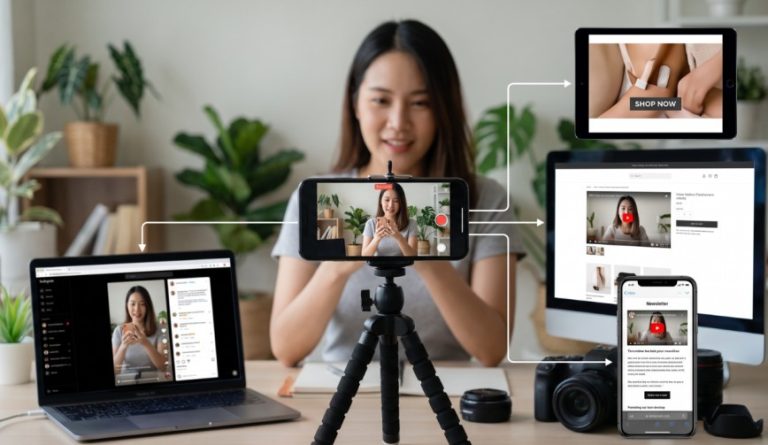
(Source – OpenAI)
Likes and views are vanity metrics. That’s just a fancy way of saying they look good but don’t necessarily tell you much about business results. A video can easily get a million views because people were curious, confused, or simply bored on the bus. That doesn’t mean it generated any sales.
Some accounts also buy fake followers and likes. The numbers may look fantastic, but no real audience is engaging with the content. So, before you celebrate, ask yourself one simple question: has that post actually encouraged someone to do something useful for your business?
👉Click here to see how Boss Wallah works with brands and what we can build for you
Influencer Campaign ROI: Which Metrics Actually Matter Beyond Likes and Views? Start Here
The best way to assess a campaign is to align your metrics with your objective. What are you actually trying to achieve? Are you looking for sales, sign-ups, or simply greater brand awareness?
Pick your objective first, then choose your metrics. Here are the ones worth your time.
1. Engagement Rate
Engagement rate measures how many people interact with a post through actions such as commenting, saving, or sharing. It is usually calculated by dividing the total engagements by the number of followers or people reached, depending on the method used.
A smaller creator with a highly engaged audience can often outperform a much bigger creator with an inactive audience. That’s why many brands work with micro-influencers, who have smaller followings but often maintain strong connections with their audiences.
2. Reach and Impressions
Reach is the number of unique people who have seen a post. Impressions count every time the post is displayed, so if the same person sees it three times, that counts as three impressions.
Both metrics are important for brand awareness, which means helping more people discover your brand. If your main objective is to get noticed, these numbers are worth tracking.
3. Click-Through Rate
Click-through rate, often abbreviated to CTR, is the percentage of people who click your link after seeing it.
For example, if 1,000 people see your link and 30 click it, your CTR is 3%. This suggests that the content was interesting enough to encourage people to take the next step.
4. Conversion Rate
Conversion rate is the percentage of people who complete the action you want them to take, such as buying a product or joining your email list.
For example, if 100 people click your link and five of them make a purchase, your conversion rate is 5%. This is where you start seeing how well your campaign turns interest into action.
5. Cost Per Acquisition
Cost per acquisition (CPA) tells you how much it costs to gain one customer.
For example, if you pay an influencer $500 and get 25 new customers, your CPA is $20.
Compare that amount with what each customer is worth to your business. If a customer brings in $60 in profit, the campaign may be worthwhile. If the profit is only $10, it might be time to reconsider your budget.
6. Customer Lifetime Value
Customer lifetime value is the total amount of money a customer is expected to bring to your business over time.
Some customers referred by influencers will buy once and disappear. Others will return every month. A campaign that brings in loyal customers can be worth much more than the first sale suggests.
7. Audience Quality
Audience quality is about whether an influencer’s followers match your target customers.
For example, a skincare brand needs an audience interested in skincare, not just people who follow an account for funny cat videos. We all love those videos, but they might not help sell moisturiser.
Before choosing a creator, ask for details about their audience, including:
- Age: Does the audience match your target age group?
- Location: Are the followers based in the markets where you sell?
- Interests: Are they interested in your products or industry?
- Authenticity: Do the followers and their interactions appear genuine?
Read More | Creator Marketing Attribution: Are You Measuring Influence or Just Counting Clicks?
How to Track What Happens After the Click
Tracking may sound technical, but the tools are fairly simple. Here are three practical ways to measure what happens after someone interacts with influencer content.
- UTM links: These are special URLs with tracking information added to them. They help you identify which creator or post sent visitors to your website.
- Unique promo codes: Give each influencer a separate discount code. When customers use it at checkout, you can identify which creator helped generate the sale.
- Campaign landing pages: Create dedicated website pages for individual campaigns so you can track visits, sign-ups, and purchases more easily.
Using even one of these methods is better than guessing. Guessing is fine at a quiz night, but not so much when it comes to your marketing budget.
A Simple ROI Formula
Here is the basic formula for calculating influencer marketing ROI:
ROI (%) = [(Revenue − Total Campaign Cost) ÷ Total Campaign Cost] × 100
For example, suppose you spend $1,000 on an influencer campaign and generate $3,000 in revenue.
- Revenue: $3,000
- Campaign cost: $1,000
- Revenue minus campaign cost: $2,000
- ROI: ($2,000 ÷ $1,000) × 100 = 200%
Your campaign has generated a 200% ROI based on these figures.
One important point: revenue and profit are not the same thing. This simplified calculation uses revenue minus campaign cost. For a more accurate picture of profitability, include other relevant expenses, such as product costs, shipping, and discounts.
Some campaigns also take time to produce results. If your goal is brand awareness, the impact may appear weeks later through increased website visits, branded searches, or new followers. Be patient and keep tracking the results.
Common Mistakes to Avoid

(Source – OpenAI)
Even a well-planned influencer campaign can fall short if you overlook a few important details. Watch out for these common mistakes:
- Choosing creators based only on follower count: A large audience is useful only if it reaches the right people.
- Skipping clear goals: If you don’t define success before launching the campaign, it becomes difficult to judge the results.
- Ignoring tracking: Set up tracking links, promo codes, or dedicated landing pages before the campaign begins. You cannot reliably recover all the missing data afterwards.
- Measuring results too early: Give the campaign enough time to generate meaningful results before deciding whether it has failed.
- Ignoring customer value: A campaign that attracts repeat buyers may deliver better long-term results than one that generates many one-time purchases.
Read More | Real ROI Equation: Video Ads vs Image Ads When Creative Volume Is the Bottleneck.
Need Videos, Creators, or Regional Content for Your Brand?
Boss Wallah helps brands plan and execute video content at scale, without managing multiple vendors.
We work with companies to:
- Shoot large volumes of short-form videos using real creators and studio setups, suitable for social media, websites, campaigns, and launches
- Adapt the same videos for different languages, regions, and platforms, so one shoot works across India and global markets
- Launch products or campaigns through dozens or hundreds of creators, all managed, tracked, and reported in one system
- Support brands with ongoing content, launches, regional expansion, and performance-focused campaigns
Whether you need videos for a new launch, content for multiple markets, creator-led visibility, or a steady content pipeline, Boss Wallah acts as a single partner handling production, creators, and execution end-to-end.
👉Click here to see how Boss Wallah works with brands and what we can build for you
Final Thoughts
Likes and views are the cherry on the cake. They’re nice, but they’re not the cake itself.
If you track engagement rate, click-through rate, conversion rate, cost per acquisition, and customer lifetime value, you’ll get a much clearer picture of what your money is actually doing.
Set a clear goal, track the right metrics, and let the data guide your next move in social media marketing.
Frequently Asked Questions
1. What is a good engagement rate for an influencer?
It varies depending on the platform, content type, and creator’s audience size. Engagement rates should be compared with similar creators in the same niche rather than judged against one universal benchmark.
2. How long should you wait before measuring the results of a campaign?
For a sales-focused campaign, review the initial results after two to four weeks, depending on the product and buying cycle. Brand awareness campaigns may require a month or longer to show their full impact.
3. Can I measure ROI if my objective is simply brand awareness?
Yes. You can track reach, impressions, new followers, website visits, branded search activity, and changes in audience awareness. These metrics help you assess results even when immediate sales are not the main goal.
4. Are micro-influencers better than big celebrities?
Not necessarily, but micro-influencers can offer better value for certain campaigns. Their audiences may be more closely connected to their content, and their fees may be lower. The right choice depends on your goals, audience, and budget.
5. What is the easiest way to track sales from an influencer?
Unique promo codes are one of the simplest options. Pair them with UTM links to understand which creators drive website traffic and which ones help generate sales.