Paid Social Ad Creative Testing: 7 Tests to Improve Results in 2026
Are your ads on Instagram, Facebook, TikTok, or LinkedIn getting views but not enough clicks or sales? Before increasing your budget, take a closer look at your creatives. Paid social ad creative testing helps you discover which images, videos, headlines, and messages connect with your audience. Instead of guessing what people might like, you can test different versions of your ads and use the results to make better decisions. Here are seven practical tests to help you get started.
Why Paid Social Ad Creative Testing Matters

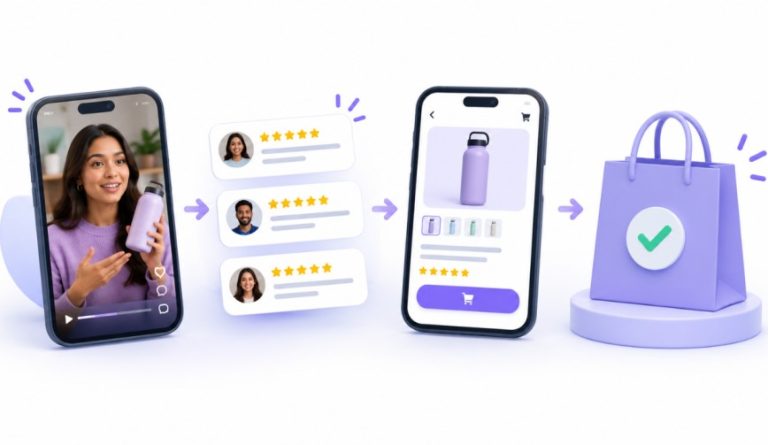
(Source – OpenAI)
Even when your targeting and budget are right, an ad may struggle if its message does not grab attention. Your creative includes everything people see or read in your advertisement, including its visuals, headline, video, and call to action.
Testing helps you understand which elements encourage people to stop scrolling, click, sign up, or make a purchase.
It can help you:
- Discover which messages connect with your audience.
- Identify creative formats that support your campaign goals.
- Improve ad performance without immediately increasing your budget.
- Spot signs that your audience is losing interest in your ads.
- Make future creative decisions using actual campaign data.
The goal is not to create the most attractive advertisement. It is to find the version that works best for your specific objective.
👉Click here to see how Boss Wallah works with brands and what we can build for you
The 7 Paid Social Ad Creative Tests at a Glance
| Test | What to Compare | Main Metric |
|---|---|---|
| 1. Opening hook | Question vs. surprising fact | Click-through rate |
| 2. Visual format | Static image vs. video | Cost per result |
| 3. Creative style | Customer-style content vs. polished ad | Conversion rate |
| 4. Headline | Benefit-focused vs. number-focused | Click-through rate |
| 5. Call to action | Soft vs. direct message | Conversion rate |
| 6. Offer | Discount vs. non-discount message | Profit per order |
| 7. Creative refresh | Existing ad vs. updated version | Cost per result and conversions |
These tests work best when you change one main element at a time. This makes it easier to understand what influenced the result.
Test 1: Change the Opening Hook
The hook is the opening part of your ad that gives people a reason to pay attention. For videos, the first few seconds are particularly important because viewers can scroll away almost immediately.
Try comparing two different openings while keeping the rest of the advertisement the same.
Example: A skincare brand
- Version A: “Still struggling with dry skin?”
- Version B: “Three everyday habits that may be drying out your skin.”
Both openings address the same problem, but they approach it differently. One asks a direct question, while the other promises useful information.
Measure the click-through rate, which is the percentage of ad impressions that result in clicks. If your objective is video engagement, you can also examine how long people watch.
What to learn: Does your audience respond better to questions, practical tips, relatable problems, or surprising facts?
Test 2: Static Image vs. Video
Should you use a simple product image or a short video? The answer depends on what you are selling and what you want people to do.
For a fair comparison, use the same product, offer, headline, and primary message in both versions.
For example, a home decor brand could test:
- Image ad: A well-lit photograph of a decorated living room.
- Video ad: A short clip showing how the same room looks before and after styling.
Track the metrics that matter to your objective, such as:
- Click-through rate to understand which format attracts clicks.
- Cost per purchase to understand how much you spend to generate a sale.
- Conversion rate to compare how often visitors complete the desired action.
An image may communicate a product’s appearance instantly, while a video may demonstrate how it works. Neither format is automatically better.
What to learn: Which format brings the right people closer to taking action, rather than simply attracting attention?
Read More | Paid Usage Rights for Creator Content: Can Brands Turn Creator Videos Into Ads?
Test 3: Customer-Style Content vs. Polished Ads
A professionally produced advertisement can look impressive, but a simple video featuring a real product experience may feel more relatable.
User-generated content (UGC) refers to content created by customers or users. Brands also work with creators to produce UGC-style videos that demonstrate products in natural settings.
Compare two approaches:
- Customer-style creative: A creator demonstrates a product at home and explains how they use it.
- Polished creative: A professionally edited video highlights the product’s features and appearance.
Keep the core message and offer consistent so that you can evaluate the creative style more fairly.
Measure conversion rate, cost per purchase, and other relevant campaign metrics. Make sure any customer testimonials or product claims are genuine and properly supported.
What to learn: Does your audience respond better to a personal demonstration or a more polished product presentation?
Remember, a phone-recorded video is not automatically more trustworthy or effective. The message, execution, and audience all matter.
Test 4: Benefit-Focused vs. Number-Focused Headlines
Your headline should give people a clear reason to pay attention. Small changes in wording can affect how your audience understands an offer.
Try comparing these examples for a sleep product:
- Version A: “Wake Up Feeling More Rested”
- Version B: “Discover 5 Ways to Improve Your Night-Time Routine”
The first focuses on a potential benefit, while the second highlights a specific number and promises practical information.
Keep the visual, audience, and offer the same. Then compare click-through rate and the quality of the traffic generated.
A headline that attracts more clicks is not necessarily the winner if those visitors leave without taking action.
What to learn: Does your audience prefer a clear benefit, a specific number, a question, or a practical promise?
Test 5: Soft vs. Direct Calls to Action
A call to action (CTA) tells people what to do next. Examples include “Learn More,” “Shop Now,” and “Get Your Free Quote.”
The right CTA depends on how much information people need before making a decision.
For example, a software company could test:
- Version A: “Explore the Features”
- Version B: “Start Your Free Trial”
The first encourages people to learn more, while the second asks them to take a more specific action.
Track the conversion rate for the action that matters to your business. If the campaign aims to generate trial registrations, measure completed registrations rather than just button clicks.
What to learn: Does your audience need more information before committing, or are they ready for a direct next step?
Test 6: Discount vs. No Discount
Discounts can encourage purchases, but they can also reduce your profit. Before offering a price cut, find out whether the discount actually improves your results.
Test different messages for the same product:
- Version A: “Get 15% Off Your First Order.”
- Version B: “Find the Right Product for Your Everyday Needs.”
Keep the product, audience, and other major elements consistent.
Compare:
- Conversion rate to see how many visitors complete a purchase.
- Cost per purchase to understand the advertising cost of each sale.
- Profit per order to check whether the additional sales justify the discount.
For example, a discounted campaign might generate more orders but leave you with less profit on each sale. A campaign without a discount might generate fewer orders but deliver better margins.
What to learn: Does the offer generate enough additional business to justify the cost?
Test 7: Refresh Your Creative Before It Gets Stale
An advertisement that performed well last month may not deliver the same results forever. When people repeatedly see the same creative, they may gradually stop paying attention. This is known as creative fatigue.
Look for possible warning signs:
- Click-through rates are declining.
- Cost per result is increasing.
- Conversions are falling despite reasonably stable campaign conditions.
- The same creative has been running for a long time without meaningful changes.
Instead of replacing everything, start by updating one element of a proven advertisement.
You could:
- Replace the opening hook.
- Use a different product demonstration.
- Test a new headline.
- Change the visual arrangement.
- Introduce a different customer problem or use case.
Compare the refreshed version with the existing creative under similar conditions. Avoid assuming that every decline is caused by creative fatigue, as audience saturation, competition, and landing-page issues can also affect results.
What to learn: Can a fresh approach improve performance without changing the entire campaign?
How to Run an Ad Creative Test Properly
Testing seven ideas is useful only when the results are reliable. A simple process can help you avoid drawing conclusions too early.
1. Choose One Clear Objective
Decide what you want the ad to achieve before launching the test.
- For awareness, examine relevant reach and video-view metrics.
- For traffic, monitor click-through rate and landing-page visits.
- For leads, track completed lead forms and cost per lead.
- For sales, prioritise purchases, cost per purchase, and profitability.
2. Change One Main Element at a Time
If you change the headline, video, offer, and CTA simultaneously, you will not know which change influenced the outcome.
Start with two versions that differ in one main element. This is the basic idea behind A/B testing, a method of comparing two versions to see which performs better.
3. Give the Test Enough Data
There is no universal number of days that guarantees a reliable result. The time required depends on your budget, audience size, traffic, and conversion volume.
Avoid declaring a winner after a handful of clicks. Allow the test to collect enough relevant data, and consider whether the difference is meaningful rather than a temporary fluctuation.
4. Record the Results
Maintain a simple testing log so that you can compare campaigns over time.
Record the following:
- Test date and campaign objective.
- Creative element being tested.
- Differences between the versions.
- Budget and test duration.
- Primary metric and final result.
- What you learned and what you will test next.
This prevents you from repeating unsuccessful experiments and helps you build on previous findings.
Read More | Instagram Sponsorship Rates India: Followers Look Big, But Rates Tell the Real Story.
Which Metrics Should You Track?
The right metric depends on your objective. Here are four useful measures.
| Metric | What It Means | What to Look For |
|---|---|---|
| Click-through rate (CTR) | Percentage of impressions that result in clicks | Whether the ad attracts interest |
| Cost per click (CPC) | Average advertising cost per click | How much you pay for traffic |
| Conversion rate | Percentage of visitors or clicks that complete a desired action | Whether people take the next step |
| Return on ad spend (ROAS) | Revenue attributed to advertising divided by ad spend | How much revenue the advertising generates |
For example, if you spend ₹10,000 on ads and generate ₹40,000 in attributed revenue, your ROAS is 4x.
However, a 4x ROAS does not automatically mean you made a profit. You must also account for product costs, shipping, discounts, platform fees, and other business expenses.
A Simple Four-Week Testing Plan

(Source – OpenAI)
You do not need to test everything at once. Start with one priority each week and use what you learn to guide the next experiment.
| Week | Test | Next Step |
|---|---|---|
| Week 1 | Opening hook | Identify which message attracts more relevant attention |
| Week 2 | Headline | Compare benefit-focused and number-focused wording |
| Week 3 | Call to action | Find which CTA generates more completed actions |
| Week 4 | Creative refresh | Test an updated version of a promising ad |
At the end of the month, review the results together. Keep changes that improve meaningful outcomes, and use inconclusive tests to decide what deserves further investigation.
The schedule is a starting point, not a rule. If a test needs more time or data, continue it rather than rushing to the next one.
Need Videos, Creators, or Regional Content for Your Brand?
Boss Wallah helps brands plan and execute video content at scale, without managing multiple vendors.
We work with companies to:
- Shoot large volumes of short-form videos using real creators and studio setups, suitable for social media, websites, campaigns, and launches
- Adapt the same videos for different languages, regions, and platforms, so one shoot works across India and global markets
- Launch products or campaigns through dozens or hundreds of creators, all managed, tracked, and reported in one system
- Support brands with ongoing content, launches, regional expansion, and performance-focused campaigns
Whether you need videos for a new launch, content for multiple markets, creator-led visibility, or a steady content pipeline, Boss Wallah acts as a single partner handling production, creators, and execution end-to-end.
👉Click here to see how Boss Wallah works with brands and what we can build for you
Final Thoughts
Better paid social ads rarely come from guessing what your audience wants. They come from testing ideas, learning from the results, and improving the creative one step at a time.
Use these seven paid social ad creative tests to explore different hooks, formats, headlines, CTAs, offers, and creative styles. Measure the results against your campaign goals, and do not confuse more clicks with more business.
You do not need to reinvent every ad each week. Sometimes, one well-tested change can teach you more than an entirely new campaign.
Frequently Asked Questions
1. How many ad versions should I test at once?
Start with two versions that differ in one main element. Testing too many variations with a limited budget can leave each version without enough data to produce a useful comparison.
2. How long should a paid social ad test run?
The duration depends on your budget, audience, traffic, and conversion volume. Several days may be enough to identify early trends, but campaigns with fewer conversions may need longer. Avoid treating a fixed number of days as proof of a reliable winner.
3. What is the first element I should test in an ad?
Start with the element most likely to affect your campaign goal. For a traffic campaign, you might test the hook or headline. For a sales campaign, consider the offer or product demonstration if those elements are central to the buying decision.
4. How often should I refresh my ad creatives?
Review performance regularly rather than refreshing ads according to a fixed schedule. If engagement declines and costs rise, investigate whether creative fatigue is responsible before producing a new version.
5. Which metric matters most when testing paid social ads?
It depends on the campaign objective. Click-through rate can help evaluate interest, while conversion rate and cost per result help measure action. For sales campaigns, ROAS and profit are also important when evaluating business outcomes.