Creator Marketing Attribution: Are You Measuring Influence or Just Counting Clicks?
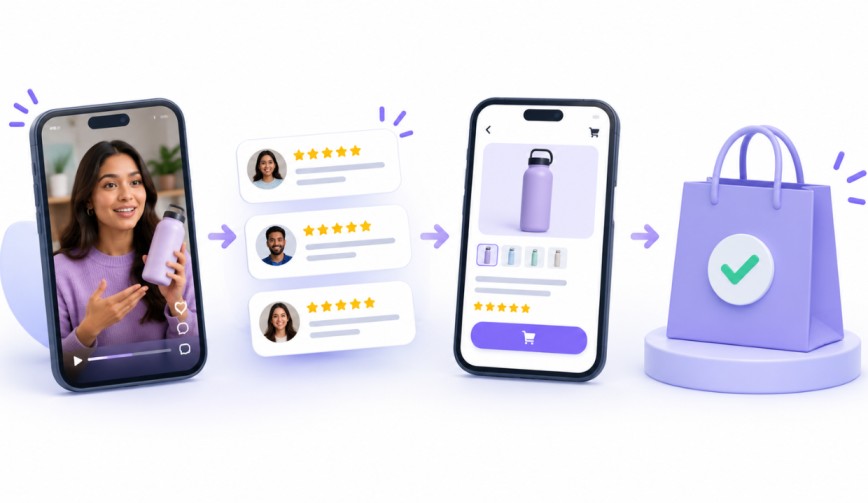
Attributing marketing efforts to creators involves working out which creator should be given the credit for a sale, a signup, or a new fan. Doesn’t that sound straightforward? In reality, though, many brands do it the way a child would mark their own homework. They count the clicks, notice a large figure, and then claim they’ve won. Yet a click doesn’t amount to influence; it’s merely someone tapping a link, perhaps by mistake, perhaps while waiting for their coffee.
Let’s fix that.
Why Clicks Alone Tell a Half-Truth
(Source – OpenAI)
It’s easy to count clicks, which is the very reason that everyone enjoys them; they fit themselves perfectly into a spreadsheet and make a good impression in a meeting.
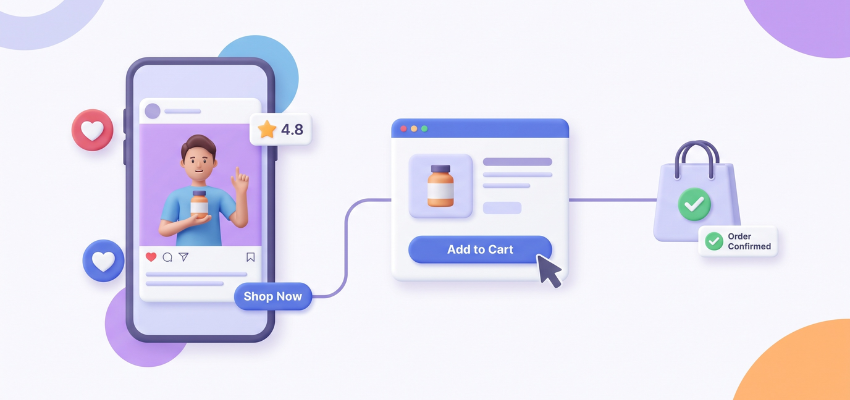
The issue is that clicks only indicate curiosity; they don’t show intent, trust, or actual purchases. Suppose a creator directs 10,000 people to your website and 9,900 of them leave after only five seconds. On the other hand, another creator sends 300 people, and 60 of them make a purchase. So which one did a better job? If you only look at the number of clicks, you’ll choose the wrong one.
Clicks also fail to pick up a great deal of the story. Consider how people in fact behave: they see a creator talking about your product on a Monday and then think about it all through the week. By Saturday, they look up your brand name on Google and make the purchase. Your analytics tool will show this as “organic search”. The creator receives no credit, even though it was they who started the whole process.
👉Click here to see how Boss Wallah works with brands and what we can build for you
What “Influence” Actually Looks Like
Influence is the force that causes people to care about your brand; although it is more difficult to detect, it does leave behind certain indications. Below are the signs that are worth keeping an eye on:
- Brand awareness increases, since more people search for your name, mention you, or follow your pages after seeing a post from a creator.
- The engagement rate is good. It is the proportion of people who like, comment, save or share a post out of the total number who saw it. A small and active audience is usually better than a large but inactive one.
- The quality of the audience is good. Are the people who are watching the ones who would actually use your product?
- The sentiment is positive, since people comment on the item in a favourable way and pose questions such as “Where can I buy this?”
They do not appear in a click report, which is the reason why you need to use more than one tool.
Read More | Beyond Views and Likes: How to Measure Creator Campaign Impact.
The Tools That Help You See More
Good creator marketing attribution involves combining a number of simple methods, just as a detective would use several clues.
- UTM links are unique web addresses that have small tags attached to the end. These tags inform your analytics tool precisely where a visitor originated, for example, from a particular creator or a specific video. They form the basic starting point.
- Promo codes work well in cases where links don’t function properly, such as in videos, podcasts, or on Instagram Stories. You can tell that Sarah was involved if the shopper types in “SARAH15” at the checkout stage, and it’s also a small extra benefit for the shopper.
- Affiliate tracking provides each creator with a personal link and gives them a commission when a sale is made. It ensures fairness and clarity for both parties.
- Post-purchase surveys are the secret weapon that most brands fail to use. If you ask customers, “How did you come across us?” you’ll get answers like “I saw it in a YouTube review.” It’s that straightforward, and you don’t need any complicated software.
- Multi-touch attribution is a method that assigns credit to various stages in the buyer’s journey rather than giving all the credit to the final click. For instance, the creator video, the retargeting ad, and the email reminder each receive a portion. The method is not perfect, but it is much more in line with reality.
Measuring Creator Marketing Attribution Without Losing Your Mind
You never need a large budget or a team of data scientists. Just follow this simple plan:
- Set a specific objective. Are you aiming for sales, new signups, or increased awareness? The numbers you need will vary depending on your goal. Avoid trying to achieve all of these at the same time.
- Provide each creator with their own link and code, since this will keep your data clean and also prevent arguments down the line.
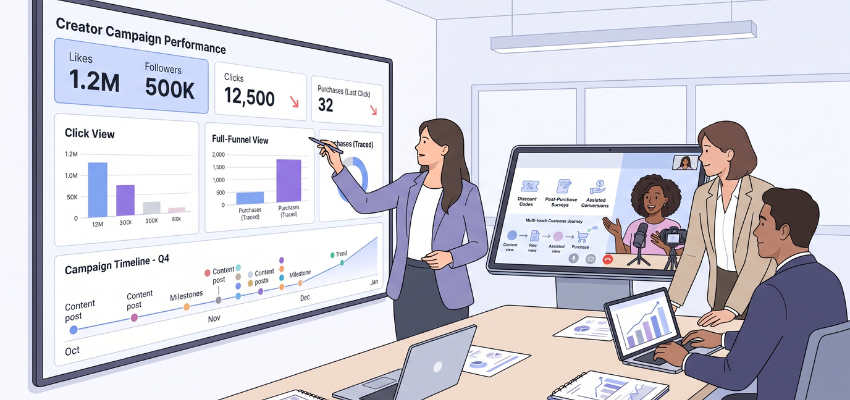
- Follow the entire process. Check the number of views, the number of clicks, the conversion rate (that is, the proportion of visitors who actually make a purchase or sign up), and the sales figures. Don’t base your assessment on the first figure alone.
- Check for the delayed effect by comparing your brand searches and direct traffic in the days following the posting of a message.
- Get feedback from your customers by including one survey question and then reviewing the responses each month.
- Look over it and make any necessary adjustments. Keep the people who actually achieve results and politely thank those who don’t.
By adding the figures together, you will be able to calculate your influencer marketing return on investment, which is just a way of saying how much money you made in comparison to how much you spent. For example, if you paid an influencer 1,000 and they resulted in 4,000 being sold, then you’re in a good position. But if it’s the other way around, then you should have a talk.
Read More | Real ROI Equation: Video Ads vs Image Ads When Creative Volume Is the Bottleneck.
Common Mistakes to Avoid
(Source – OpenAI)
Even intelligent teams make these mistakes. Be careful about these:
- Believing in vanity metrics is misleading, since although followers and likes have a certain appeal, they don’t actually cover the costs.
- Limiting yourself to a single tracking method is risky, since every method has its blind spots and therefore you should combine them.
- Judging too soon. Some posts keep working for weeks. Give them time.
- Omitting the creators’ perspective. Share the results with them, since they are usually able to explain why a particular thing succeeded and will therefore be able to produce better content for you the following time.
Need Videos, Creators, or Regional Content for Your Brand?
Boss Wallah helps brands plan and execute video content at scale, without managing multiple vendors.
We work with companies to:
- Shoot large volumes of short-form videos using real creators and studio setups, suitable for social media, websites, campaigns, and launches
- Adapt the same videos for different languages, regions, and platforms, so one shoot works across India and global markets
- Launch products or campaigns through dozens or hundreds of creators, all managed, tracked, and reported in one system
- Support brands with ongoing content, launches, regional expansion, and performance-focused campaigns
Whether you need videos for a new launch, content for multiple markets, creator-led visibility, or a steady content pipeline, Boss Wallah acts as a single partner handling production, creators, and execution end-to-end.
👉Click here to see how Boss Wallah works with brands and what we can build for you
Final Thoughts
Clicks are a good beginning, but they aren’t the end. To find out if a creator actually influences your audience, you have to consider the entire experience, from the first view through to the final purchase and all the steps in between. Once you do that, your reports will cease to be just a collection of attractive figures and will instead become a helpful indication of where to spend your money next.
Frequently Asked Questions
1. What does creator marketing attribution mean in simple terms?
This is the method you use for working out which creator was responsible for a sale, a signup, or a new customer so that you can give them due credit.
2. Why aren’t clicks sufficient as a measure of success?
The fact that someone has clicked on a link only proves that they tapped the link; it does not indicate whether they trusted the creator, liked your product, or made a purchase.
3. What is the simplest method for beginning to track creators?
Provide each creator with a separate link and a promo code, and also include a question at the point of checkout asking “How did you hear about us?” This measure costs almost nothing and quickly yields useful answers.
4. How long should one wait before assessing a creator campaign?
Allow it a period of at least two to four weeks; although many people see the post and then decide to buy it, the early figures may therefore appear smaller than they actually are.
5. Is it possible for small brands to achieve this without using expensive software?
Certainly. Once you have free analytics tools, basic UTM links, promo codes, and a simple survey, you will be able to obtain a clear understanding, and you can always upgrade at a later stage as your business grows.