Creator Licensing for Brands: When the Audience Is Not Really Yours
Creator licensing for brands seems simple: the brand collaborates with a creator, gets permission to use the content, and then proceeds to do so. However, there is one aspect of the agreement that is easy to miss. The creator’s audience remains the creator’s audience.
With a single Reel or YouTube video, a creator has the potential to get thousands of people interested in your brand. It is possible for them to watch the video, click on it, leave a comment and even make a purchase. However, at the end of the campaign, those people will not automatically turn into your audience.
Before investing money in creator campaigns, brands should consider that point.
What Creator Licensing for Brands Actually Gives You
(Source – OpenAI)
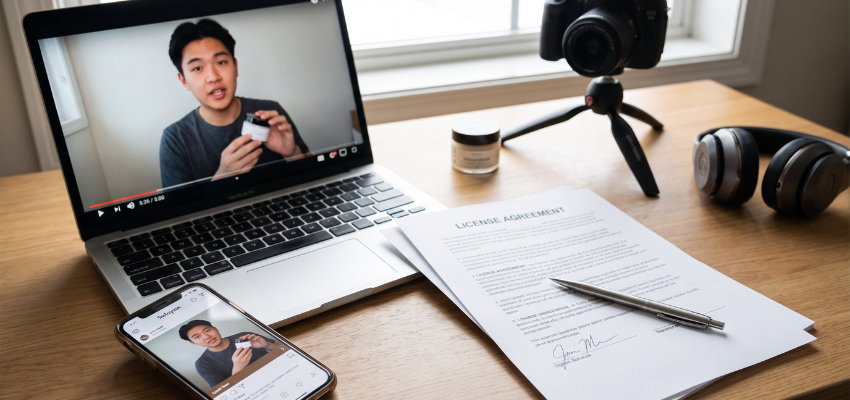
Creator licensing is just about giving permission.
A person produces a video, a photo or some other type of content for your brand, and the agreement subsequently grants you the right to use that content for certain purposes.
For example, you might be allowed to use a creator’s video:
- On your Instagram page
- In Facebook or Instagram ads
- On your website
- On a product page
- In an email campaign
- For a set period, such as six months
The key term in this case is permission.
Just because you pay a creator does not mean that you own everything they produce. Your agreement might grant you the right to use the content without giving you full ownership of it.
Which is why the licensing terms are important.
👉Click here to see how Boss Wallah works with brands and what we can build for you
The Audience Belongs to the Creator
That is where it becomes interesting.
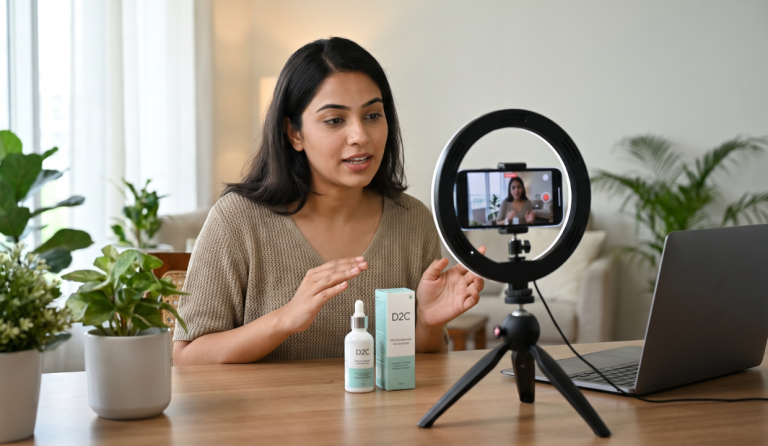
Suppose you come across a new skincare product because your favourite creator has mentioned it. Because you have confidence in that creator, you decide to try the product.
Do you automatically go along with the skincare brand?
Probably not.
You can purchase the product and then go about your day.
The distinction lies between creator reach and brand audience.
The creator has already taken years to establish that relationship. Their followers are familiar with their personality, views and style. The brand is therefore gaining some of that attention as a result of the partnership.
That does not mean the company now has ownership of the relationship.
That is not a negative point. It is just the way creator marketing functions.
Content Rights and Audience Access Are Different
It is sometimes the case that brands place these two things in the same category.
They should not.
Content rights explain what the brand can do with the creator’s content.
Audience access is about the individuals who follow and interact with the creator.
It is possible for a brand to hold wide rights to use a creator’s video in paid advertising even if the brand has no direct connection with the individuals who see the advertisement.
For instance, a brand could license a creator’s video for a period of 12 months and, while it has the license, turn the video into ads and test different versions.
The brand has access to that content.
It does not treat the creator’s Instagram followers as if they were subscribers to the brand.
It is particularly important to consider that distinction when assessing the success of a creator marketing campaign.
Read More | BossWallah vs Full-Service Agency vs In-House Team: Which Model Fits Your Business?
Why Brands Like Licensed Creator Content
The reason why this model has become so popular is simple.
Creator content often feels more natural than an ad.
A person could demonstrate the way in which they use a product while sitting at home, speaking in a normal tone and giving their opinion. This kind of presentation seems quite different from a carefully made advertisement with perfect lighting and a serious voiceover.
That is also the reason why UGC marketing has become so common.
UGC stands for user-generated content, and in simple terms, it is content that has the appearance and feel of something that a real person would naturally produce.
Brands have the option of licensing this kind of content and using it in their own advertisements.
Rather than paying for a single post that fades from people’s feeds after a day or two, the brand could be given permission to use the content for many months through various channels.
As a result, one piece of content can last a great deal longer.
Read the Licensing Agreement Carefully
Before entering into a creator deal, it is not enough merely to consider the price.
Consider exactly what you are actually receiving.
An agreement should be able to deal with a number of fundamental questions.
Where can you use the content?
Does the license include:
- YouTube
- Your website
- Paid ads
- All of these channels
How long can you use it?
A license valid for 30 days is quite different from one that lasts for 12 months.
Can you make changes to the content?
If you are cutting a 60-second video into three shorter advertisements, you should first check if the agreement permits it.
Can you use the creator’s name, face and voice?
The use of the content together with the creator’s identity in advertising might involve different rights.
Is there going to be an exclusivity period?
Certain agreements include clauses that stop creators from working with their direct competitors for a specific period of time. If this point is important to your campaign, ensure that it is clearly stated.
Though these details may not be very exciting, it is better to deal with them before the campaign begins than afterwards, when someone sends an unpleasant email.
Follower Count Is Not Everything
A person who has a million followers might appear impressive when making a campaign proposal.
But bigger does not always mean better.
For a certain product, a smaller creator with a highly relevant audience may in some cases be the better choice.
A fitness creator who has 40,000 engaged followers may be more relevant to a new sports nutrition brand than a general lifestyle creator with 500,000 followers.
Instead, look at:
- The audience
- The level of engagement
- The quality of the content
- How closely the audience matches your target customers
Ask yourself:
Are these actually the sort of people my brand wants to reach?
That question is often more useful than finding out how many followers a creator has.
What Takes Place When the License Expires?
Before the campaign starts, brands ought to consider this.
Let us say that a creator produces a video for your brand and you are given permission to use it in paid advertising for a period of six months.
The ads perform well.
Six months later, the license expires.
Even if you acquired some new customers over that six-month period, you cannot assume that all those people who saw the video are now part of your brand community.
That is the reason why brands need their own method of maintaining the relationship.
If a person goes to your website as a result of a creator, then provide them with a good reason to remain.
This might include:
- A useful newsletter
- An email loyalty programme
- A strong social media presence
- Helpful content
- A good customer experience
The creator has the ability to attract someone’s attention.
Your brand has to win the next interaction.
Read More | In-House vs Outsourced Video Production: Why Most Teams Get This Decision Wrong.
Creator Licensing Should Support Your Own Marketing
Creator partnerships can be very effective, but they work most effectively when they are included in a broader strategy.
Imagine the creator to be the individual who makes the introduction.
The brand then takes over.
To turn that first interaction into a longer relationship, you need your own:
- Social media channels
- Website
- Email list
- Customer experience
- Brand community
Creator-led marketing can be used in conjunction with your own channels.
The person who creates the content builds trust and attracts attention. Content that is licensed allows the brand to keep using it. When you carry out your own marketing, you provide people with a destination to go to after they have found you.
Thus, the relationship becomes more useful than just paying for a post and hoping it goes viral.
The Audience Was Never Really Yours

(Source – OpenAI)
It might sound a bit odd to consider creator marketing in that way, but it can actually make it easier to plan campaigns.
You should not regard a creator’s followers as customers that you have bought.
Consider them to be individuals who have come across your brand.
A few people will become customers, some might keep an eye on your account, and the rest will watch the video and then never think of your brand again.
That is normal.
The genuine opportunity lies in establishing a relationship by making use of the creator’s reach and content, all while building your own audience.
A creator can bring people to the door.
What takes place after they have arrived is still the brand’s decision.
Need Videos, Creators, or Regional Content for Your Brand?
Boss Wallah helps brands plan and execute video content at scale, without managing multiple vendors.
We work with companies to:
- Shoot large volumes of short-form videos using real creators and studio setups, suitable for social media, websites, campaigns, and launches
- Adapt the same videos for different languages, regions, and platforms, so one shoot works across India and global markets
- Launch products or campaigns through dozens or hundreds of creators, all managed, tracked, and reported in one system
- Support brands with ongoing content, launches, regional expansion, and performance-focused campaigns
Whether you need videos for a new launch, content for multiple markets, creator-led visibility, or a steady content pipeline, Boss Wallah acts as a single partner handling production, creators, and execution end-to-end.
👉Click here to see how Boss Wallah works with brands and what we can build for you
Final Thoughts
Creator licensing can enable brands to get more use from the content they pay for, but that does not mean they own the creator’s audience. It was the creator who established that relationship, and the brand is now getting the opportunity to take part in it.
The best approach is to make good use of that attention. You should clarify your content rights, use the licensed content in appropriate cases, and provide new customers with a reason to connect with your brand directly.
The aim should not be to gain an audience forever. Rather, it should be to transform the creator’s initial introduction into a relationship that your brand can then develop on its own.
Frequently Asked Questions
1. What does Creator Licensing mean for brands?
Creator Licensing for Brands refers to obtaining permission from a creator to use their content on specified platforms, for certain purposes and for a particular length of time.
2. Does obtaining licensing from a creator grant a brand access to that creator’s audience?
Not at all. A content license grants the brand certain rights to use the content, but it does not grant the brand ownership of the creator’s followers.
3. May a brand include content created by a creator in its advertisements?
Yes, if paid advertising is covered by the licensing agreement. Brands should review the agreement before using the content for advertising purposes.
4. For how long does creator licensing last?
It all comes down to the agreement. The license might last for 30 days, six months, one year or another agreed period.
5. Why should brands use creator licensing?
It can allow brands to reuse creator-made content across approved marketing channels instead of relying only on the creator’s original social media post.