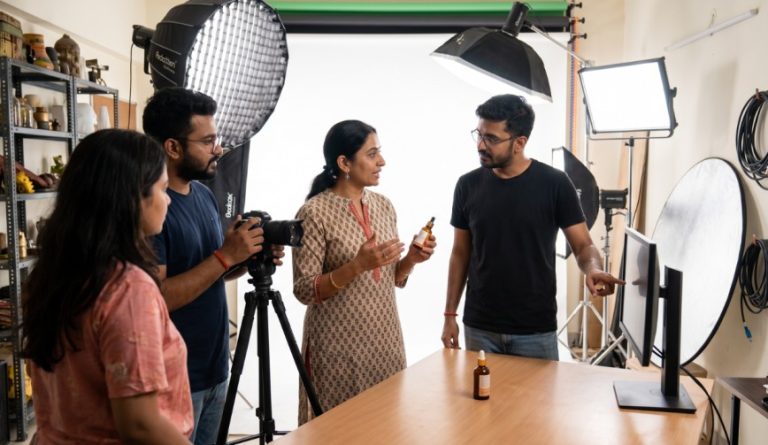
What Is UGC and How Does BossWallah Build a Brand’s UGC Pipeline?

Brands are no longer relying on polished advertisements to introduce their products. People also want to see how a product looks, works, and fits into everyday life. That brings us to an important question: What is UGC, and How Does BossWallah build a Brand’s UGC Pipeline?
Creating one creator video may sound simple. When a brand needs fresh content regularly across different creators, formats, platforms, and languages, the process becomes much bigger. This is where a strong UGC pipeline can make a difference.
What Is UGC?

(Source – OpenAI)
UGC stands for User-Generated Content.
In simple terms, UGC is content created by a person around a brand, product, service, or experience. It can be a product review, unboxing, tutorial, demonstration, testimonial, first impression, or even a simple video showing how someone uses a product.
Think about a skincare product.
A traditional advertisement may show the product in a planned setup with professional lighting, models, scripts, and multiple takes. UGC can show someone holding the product in their bedroom, explaining how they used it and what they noticed.
The second version can feel like a recommendation from a real person.
That does not mean traditional advertising is no longer useful. It simply means brands now have another type of content that can make the product feel more relatable.
👉Click here to see how Boss Wallah works with brands and what we can build for you
UGC Does Not Always Mean Customer Content
There is an important distinction when talking about UGC today.
Traditionally, User-Generated Content means content genuinely created by customers or users. A customer might:
- Post a review after buying a product
- Share an unboxing video
- Upload a video showing how they use a service
However, brands also work with creators to produce UGC-style content.
A creator may receive a product and talking points and then create a video that feels natural and personal rather than like a highly polished advertisement.
So, while customer UGC and creator-made UGC-style content are not the same thing, both can help brands present products in a more social and relatable format.
For brands, this creates opportunities to produce content that looks native to social media.
How Is UGC Different From Traditional Advertising?
The difference is not simply about whether a camera or professional studio was used.
It is more about how the content feels and how the product is presented.
Question | Traditional Ad | UGC / UGC-Style Content |
| Who usually appears? | Models, actors, or brand representatives | Customers or creators |
| How does it feel? | Polished and planned | Personal and conversational |
| Typical setting | Studio or controlled location | Home, workplace, outdoors, or everyday setting |
| Main focus | Brand message and product presentation | Experience, demonstration, or opinion |
| Content style | Advertisement-first | Social-media-first |
| Creative approach | Carefully controlled | More natural and flexible |
| Best use | Brand campaigns and polished promotions | Social content, demonstrations, testimonials, and ad creatives |
This is why UGC can feel different from a traditional advertisement. It can sound closer to the kind of content people are already watching on social platforms.
Read More | UGC Ads vs Influencer Ads: What Happens When People Recognise the Face in the Ad?
Why Do Brands Need More Than One UGC Video?
One UGC video can be useful.
But one video is rarely enough for a brand that wants to keep producing social content.
Imagine a brand launches a product and creates one UGC video. The creator explains the product, shows how it works, and gives an opinion.
Now ask a simple question: what happens next week?
The brand still needs content.
It may need:
- Another creator with a different personality
- A shorter version for Reels
- A product demonstration for YouTube
- A testimonial-style video for an advertisement
The challenge is not simply finding one person to make one video. It becomes a question of how a brand can keep producing content without making every video feel like a copy of the previous one.
This is where the idea of a UGC pipeline becomes important.
Instead of treating UGC as one video created for one campaign, brands can think about it as an ongoing content system.
The goal is not to make videos for the sake of making more videos. It is to create creative angles that help a brand keep its content fresh and understand what type of content connects with its audience.
What Is a UGC Pipeline?
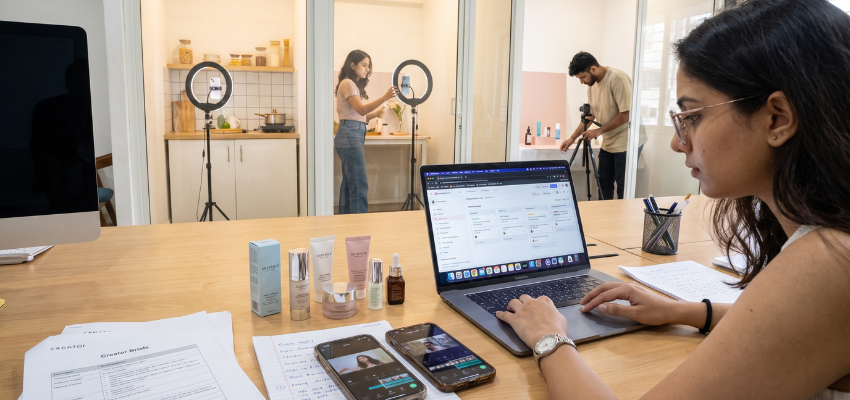
(Source – OpenAI)
A UGC pipeline is the process of moving from a brand requirement to creator selection, content production, review, testing, and new content creation.
Think of it like a content assembly line, hopefully with fewer people shouting about missing files.
A brand may start with one product and several content ideas.
From there, it can:
- Work with different creators
- Experiment with different formats
- Produce content in different languages
- Create multiple versions for different social platforms
The important part is that the process is repeatable.
Instead of asking, “Who can create our next UGC video?” every time a campaign starts, the brand can have an organised system for creating content regularly.
This makes UGC less of a one-time campaign activity and more of an ongoing creative process.
How Does BossWallah Build a Brand’s UGC Pipeline?
BossWallah’s role is not limited to connecting a brand with one creator and waiting for a video to arrive.
The broader approach brings together creator access, production capabilities, content formats, regional-language production, and social content workflows.
That gives brands more than an individual content asset. It creates the foundation for producing different types of creator-led content as their requirements grow.
It Starts With the Brand’s Content Requirement
Every brand has a product, audience, and communication style.
For example:
- A beauty brand may need tutorials and product demonstrations.
- A food brand may need reactions, recipes, or everyday-use videos.
- A finance product may need simple explainer content.
The first step is understanding what the brand actually needs.
This helps shape the creator selection and content direction instead of simply choosing a creator because they have a large following.
The creator should make sense for the content requirement.
A Large Creator Network Creates More Options
BossWallah works with a network of 1,000+ creators.
This gives brands room to look for different creator personalities and content styles.
One creator may be comfortable with talking-head videos. Another may be better at demonstrations. Someone else may naturally create casual or story-driven content.
That variety matters because every product does not need to sound the same.
The right creator can bring a different way of explaining the same product, which gives brands more creative routes to explore.
The Creator Adds the Human Element
Once the right creator is selected, the creator brings something that a brand script alone cannot always provide: personality.
The creator can explain the product in a way that feels natural to their style.
For example, instead of saying:
“Experience the advanced benefits of our innovative formula.”
A creator might simply say:
“I tried this for a week, and this is what I noticed.”
The second line sounds like something a person might actually say.
That is one of the reasons creator-led content can work naturally on social platforms.
The production should support the creator, not completely replace the creator’s personality.
Production Support Helps Turn Ideas Into Content
UGC does not mean production quality has to be poor.
BossWallah has access to six full-scale studios, which can support different types of content production.
This becomes useful when brands need more than casual creator videos. Some campaigns may require:
- Better lighting
- Controlled setups
- Multiple shooting formats
- A higher volume of content
The idea is not to make every UGC video look like a television advertisement.
Instead, production support can help brands maintain consistency while allowing creators to retain the style that makes the content useful for social platforms.
Regional Languages Expand the Content Pipeline
India is not one single-language market.
A message that works in English may not have the same impact when presented to another audience.
BossWallah supports production across seven languages: English, Hindi, Telugu, Tamil, Kannada, Malayalam, and Marathi.
This allows brands to think beyond one version of a UGC video.
The same product idea can potentially be adapted for regional audiences while keeping the core brand message consistent.
That can be especially useful for brands trying to build a presence beyond English-speaking audiences.
Read More | UGC Marketing in 2026: The Complete Guide to Building a Creator Content Engine.
One Product Can Become Multiple Content Ideas
A strong UGC pipeline does not simply repeat the same video with a different creator.
The same product can be approached from different angles.
For example, a fitness product could have:
- A first-impression video
- A daily-use demonstration
- A problem-and-solution video
- A creator testimonial
- A beginner-focused explanation
- A comparison-style video
- A social-media ad
The product has not changed.
The story around the product has.
This gives brands creative options while helping them avoid making their social content feel repetitive.
What Does BossWallah Actually Give a Brand?
The value of a UGC pipeline becomes easier to understand when the different pieces are put together.
| Brand Requirement | What BossWallah Brings |
| Creator variety | Access to 1,000+ vetted creators |
| Production support | Six full-scale studios |
| Regional content | Production across seven languages |
| Social content | Creator-led content for major social platforms |
| Creative variety | Different creators, formats, styles, and content angles |
| Production | AI-supported production workflows |
| Scale | A system designed to support ongoing content requirements |
| Wider content ecosystem | Creator, production, and social media capabilities working together |
The important point is that the brand is not simply getting a single UGC video.
It can get access to a content system where creators, production resources, regional capabilities, and creative formats can work together.
Why Does an Ongoing UGC Pipeline Matter?
Social media does not wait for a brand to finish its campaign.
A video may perform well today and become less interesting after several weeks. Audiences also see a huge amount of content every day, which means brands need new creative ideas to keep their content fresh.
An ongoing UGC pipeline gives brands a way to keep creating without starting the process from zero every time.
It can also make the creative process more flexible.
For example:
- If one type of video does not connect with the audience, the brand can try another format.
- If a particular creator style works well, similar content can be explored.
- If a regional audience responds differently, the brand can create content specifically for that market.
This makes UGC more useful as a content process rather than a one-time campaign asset.
UGC Should Still Feel Human
There is one problem brands need to avoid.
When UGC becomes too scripted, it can start looking like an advertisement.
The creator may be speaking directly to the camera, but if every sentence sounds like it came from a corporate presentation, the human element disappears.
Good UGC does not have to be perfect.
A natural pause, a simple explanation, an everyday setting, or a creator speaking in their own style can sometimes make the content feel more believable.
The production should support the creator, not completely replace the creator’s personality.
That balance is important. The content still needs to communicate the product, but it should not lose the human quality that made the format useful in the first place.
What Makes BossWallah’s UGC Approach Different?
BossWallah brings together parts of the content process instead of treating UGC as an isolated creator transaction.
There is:
- The creator network
- Production infrastructure
- Regional-language capabilities
- Media and content-production capabilities
- AI-supported workflows that can help with the speed and scale of content production
Together, these pieces allow brands to think about UGC as a content engine rather than something they create once and forget.
That can be useful when a brand needs content across multiple platforms, audiences, and creative formats.
From One UGC Video to a Content Pipeline

(Source – OpenAI)
The biggest shift is in how brands think about UGC.
The old question might be:
“Can we get a creator to make one video for us?”
The more useful operational question is:
“How can we keep producing useful creator-led content every month?”
That change sounds small, but it changes the entire process.
Instead of one creator, there can be multiple creators.
Instead of one format, there can be several.
Instead of one language, there can be regional versions.
Instead of one campaign, there can be an ongoing content pipeline.
This is where BossWallah’s broader creator and production ecosystem becomes relevant for brands that want to keep their content moving.
Need Videos, Creators, or Regional Content for Your Brand?
Boss Wallah helps brands plan and execute video content at scale, without managing multiple vendors.
We work with companies to:
- Shoot large volumes of short-form videos using real creators and studio setups, suitable for social media, websites, campaigns, and launches
- Adapt the same videos for different languages, regions, and platforms, so one shoot works across India and global markets
- Launch products or campaigns through dozens or hundreds of creators, all managed, tracked, and reported in one system
- Support brands with ongoing content, launches, regional expansion, and performance-focused campaigns
Whether you need videos for a new launch, content for multiple markets, creator-led visibility, or a steady content pipeline, Boss Wallah acts as a single partner handling production, creators, and execution end-to-end.
👉Click here to see how Boss Wallah works with brands and what we can build for you
Final Thoughts
UGC is not simply about asking someone to hold a product in front of a camera.
It is about creating content that feels natural enough to belong on the platform where people are already spending their time.
For brands, the bigger challenge is producing that content consistently.
What Is UGC and How Does BossWallah Build a Brand’s UGC Pipeline? is therefore not just a question about a content format. It is also a question about how brands can build a system around creators, production, regional content, and different creative ideas.
With its creator network, production studios, regional-language capabilities, and content-production workflows, BossWallah can help brands move from creating individual UGC videos to building a more organised UGC content pipeline.
If your brand needs more than one-off creator videos, the next step is to think about how those creators, formats, and production resources can work together as an ongoing content system.
FAQs
1. What does UGC mean?
UGC means User-Generated Content. It is content created by users or customers around a product, service, brand, or experience. Brands can also work with creators to produce UGC-style content.
2. Is UGC the same as influencer marketing?
Not always. Influencer marketing usually focuses on the creator’s audience and influence. UGC-style content focuses more on the content itself and how naturally it presents the product.
3. Why do brands need multiple UGC videos?
Multiple videos give brands different creators, formats, messages, and creative angles to work with instead of depending on one piece of content.
4. How does BossWallah support UGC production?
BossWallah brings together a network of 1,000+ creators, six full-scale studios, seven-language production capabilities, and content-production workflows to support different brand requirements.
5. Can UGC be used for paid advertising?
Yes. UGC-style videos can be created in formats that work for social media advertising, product demonstrations, testimonials, and other paid content requirements.