UGC Ads vs Influencer Ads: What Happens When People Recognise the Face in the Ad?
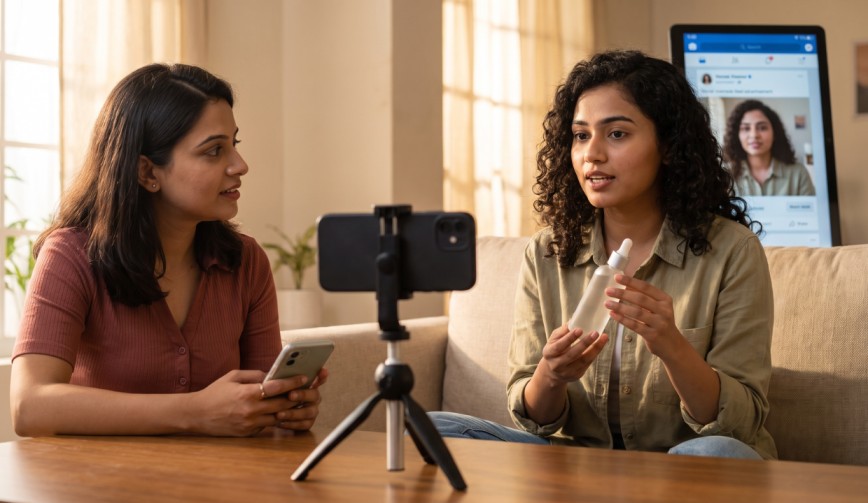
UGC Ads and Influencer Ads may, on the surface, appear very similar since both can show a person talking directly to the camera, using a product, giving their opinion, or explaining why they like something. However, there is one important difference in the case where the person in the ad is already known to the audience.
People’s reactions vary when they see a familiar face.
A person who has been keeping up with a creator for months will probably already be familiar with the way that person speaks, the kind of recommendations they typically give, and even the sort of jokes they tell. Because of this, when the creator appears in a brand advertisement, the audience might not view it simply as yet another ad.
The manner in which the message is received is then altered.
Why Do Familiar Faces Matter in UGC Ads as Compared to Influencer Ads?

(Source – OpenAI)
UGC, which is known as user-generated content, is typically intended to appear as if it has been created by an ordinary customer or creator and usually has a less refined look than professional content, resembling the kind of things people would naturally come across when scrolling.
Influencer advertisements differ since the individual already has an audience who knows them.
That level of familiarity can make a great deal of difference.
Suppose you saw a skincare product being used by a person whom you had never before seen. You could watch the video, get an understanding of the product, and then move on.
What if you saw the same product being used by a creator that you’ve been following for two years?
You know what they look like. It’s possible you’ll know their voice before they make their introduction. You could even have heard them talking about similar products previously.
What makes the second advertisement different from the first is that it includes a sense of familiarity.
👉Click here to see how Boss Wallah works with brands and what we can build for you
People Do Not Simply Recognise a Face. They Recognise the Person.
The same creator provides an advertisement with more than just a face.
Their audience may recognise:
- Their way of speaking
- Their usual style of content
- Their sense of humour
- Their opinions
- Their past recommendations
- Their relationship with followers
As a result, the advertisement may come across as though the brand is not suddenly joining the discussion.
Just because something is familiar doesn’t mean that it is trustworthy.
People will also notice if a creator suddenly promotes something that has nothing at all to do with their normal content.
For instance, a person who has a reputation for doing cheap travel could make viewers question what has changed if they suddenly start promoting expensive business software.
The face is familiar. Yet there is no connection.
Read More | UGC Ad Creators India: How to Turn Customer Content Into High-Converting Ads.
When UGC Feels More Natural Than an Influencer Ad
A reason why brands use UGC ads is that they can fit in naturally with social media feeds.
The person may say something like:
“I tried it because I kept seeing it everywhere. To be honest, I didn’t really expect much.”
An opening of that sort may simply seem like an ordinary recommendation rather than a formal advertisement.
The creator has no need to act like a celebrity. They can just describe the things they tried, the things they liked, and the things they didn’t like.
It is one of the reasons why advertising using user-generated content has become useful for companies that want their advertisements to seem more relatable.
On the other hand, there is a different aspect to this.
The viewer might never have seen the UGC creator before, so there would be no preexisting relationship. The audience can only assess the content on the basis of the video.
In the case of an influencer, a certain aspect of the relationship is already in place.
The Familiar Face Can Also Make the Ad More Noticeable
Going through Instagram or YouTube at times is similar to speed-running through advertisements.
One video.
Another video.
Someone else asking you to “take a look at this.”
All of a sudden, you come across a creator that you already know.
Take a second.
That pause matters.
Since someone the viewer knows is involved, the advertisement is more likely to catch attention because the person already has a reason to be paying attention. They might want to find out what the creator is saying even before realising that the content is sponsored.
There is one area in which influencer marketing and paid advertising can combine.
The brand has the existing audience to work from, and the paid advertisement then provides an opportunity for the content to reach people outside of that audience.
But Familiarity Can Become a Problem
To acknowledge someone does not mean that you have to believe all that they say.
Actually, it is sometimes possible for regular viewers to notice a forced promotion more easily than new viewers.
They are familiar with the creator’s typical style.
People might notice if the creator usually talks in a casual way but all of a sudden sounds as though they are reading from a company brochure.
That is the reason why creator-brand partnerships should make sense.
The person in charge should know about the product and be given sufficient freedom to be able to present their own version of it. Although the brand still needs to make its main points clear, the final content must not give the impression that the creator’s personality has been replaced by a script.
People do not follow a creator just because they enjoy seeing advertisements that are put together by five people in a meeting room.
Read More | Product Video Shoot for E-commerce in India: Why UGC-Style Ads Are Beating Traditional Product Shoots.
What Takes Place After the Advertisement Ends?
What’s interesting is that the influence of a familiar face can carry on even after a person has seen the ad.
A viewer might not make a purchase right away.
Instead, they may:
- Search for the product later
- Visit the creator’s profile
- Look at comments
- Watch another video from the creator
- Ask a friend about the product
- Remember the brand when they need it later
This is the point at which advertising initiated by creators can turn into more than just a paid promotion.
The creator might already be part of the audience’s daily social media routine, and the brand is using some of that attention for the campaign.
Then Should Brands Opt for User-Generated Content or Influencer Advertisements?

(Source – OpenAI)
There is not one correct answer.
UGC ads are suitable when a brand wants content that appears relatable, is simple, and is native to the platform.
It is useful to use influencer advertisements when the creator’s prior relationship with their audience is an important element of the campaign.
The real issue is not just whether or not this person has followers.
It is:
Does this individual succeed in making the audience care enough to keep watching?
A face that is easily recognised can attract attention. A message that is believable can retain it.
And at times, it is that difference which transforms a video from one that people just scroll past into one that they actually remember.
Need Videos, Creators, or Regional Content for Your Brand?
Boss Wallah helps brands plan and execute video content at scale, without managing multiple vendors.
We work with companies to:
- Shoot large volumes of short-form videos using real creators and studio setups, suitable for social media, websites, campaigns, and launches
- Adapt the same videos for different languages, regions, and platforms, so one shoot works across India and global markets
- Launch products or campaigns through dozens or hundreds of creators, all managed, tracked, and reported in one system
- Support brands with ongoing content, launches, regional expansion, and performance-focused campaigns
Whether you need videos for a new launch, content for multiple markets, creator-led visibility, or a steady content pipeline, Boss Wallah acts as a single partner handling production, creators, and execution end-to-end.
👉Click here to see how Boss Wallah works with brands and what we can build for you
Final Thoughts
The appearance of a person in an advertisement can affect the way people experience the message.
In the case of user-generated content, it is often necessary for the video itself to create interest. With an influencer, however, the audience may already be familiar with the person who is appearing on screen.
Yet being familiar with something does not provide a shortcut to a successful advertisement.
The creator has to match the brand. The message has to seem believable, and the content must still offer people a reason to care.
For brands, the real opportunity does not consist merely in having a well-known creator in front of a camera. It is about achieving the correct balance between the creator’s personality and the brand’s message.
If the balance is achieved, the advertisement can seem less like an intrusion and more like something the audience actually wants to watch.
FAQs
1. What Is the Key Difference Between User-Generated Content Advertisements and Influencer Advertisements?
UGC advertisements mainly stress relatable content and the experience of using the product, while influencer advertisements make use of the creator’s existing audience and their relationship with their followers.
2. Is It More Trustworthy to Have Ads From Influencers Than Ads From User-Generated Content?
It doesn’t happen automatically. Trust is based on the creator, the product, the content, and whether the promotion comes across as genuine.
3. In an Advertisement, Why Is It Important to Recognise the Creator’s Face?
A well-known person can attract attention more quickly since the audience is already familiar with both the person and their style of content.
4. May Brands Use Influencer Content as Paid Advertisements?
Yes. As long as they have the necessary permission and usage rights, brands can include creator content in their paid campaigns.
5. Should Each Brand Use a Well-Known Creator in Its Advertisements?
Not necessarily. The creator should be chosen with the product and the audience in mind. A well-known figure is useful only if the connection appears to be natural.