UGC Content Licensing Explained: What Happens to Your Video After You Hand It Over
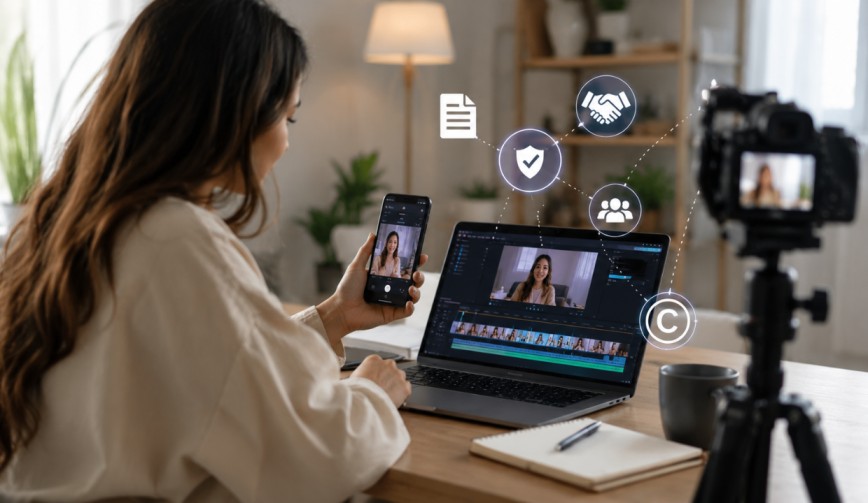
So you made a video. You filmed it, edited it, picked the perfect trending sound, and now a brand wants to use it. Exciting, right? Then someone sends you a content licensing agreement, and suddenly you are staring at words like “perpetual,” “sublicensable,” and “in all media now known or hereafter devised.” Your first reaction might be to close the laptop and go make a sandwich instead.
Take a breath. UGC licensing (short for user-generated content licensing) is not as scary as it sounds. It simply means someone is asking for permission to use your video. In return, you usually get paid, credited, or both. But what actually happens to your video after you sign that paper? Let us break it down in simple words that even a school kid could follow.
What Is UGC Licensing, Really?
(Source – stock.adobe.com)
At its core, UGC licensing is just a permission slip. You made the video, you own it, and a brand or company wants to legally use it somewhere, maybe in an ad, on their website, or across social media. Licensing is the proper way of saying, “Yes, you can use my video, but only under these conditions.”
It is different from selling your content completely. When you license something, you are not giving away ownership. You are only letting someone else use it for a certain purpose, for a certain time, in a certain way. Think of it like renting out a house instead of selling it. The brand gets to live in it (use your content), but you still hold the keys (you still own it). This is the whole idea behind video usage rights.
👉Click here to see how Boss Wallah works with brands and what we can build for you
The Key Terms You Will Actually See
Every licensing agreement has a few repeating characters. Here is a simple table so you are not left confused halfway through reading one.
| Term | What It Actually Means |
|---|---|
| Usage rights | Where and how your video can be used, such as only on Instagram or also in a TV ad |
| Exclusive licensing | Only one brand can use your video during the agreed time |
| Non-exclusive licensing | You can let other brands use the same video too |
| License duration | How long the brand is allowed to use your video, from a few months to forever |
| Territory | The countries or regions where your video can be shown |
| Sublicensing rights | Whether the brand can pass your video to other companies as well |
| Moral rights or attribution | Whether you get credited as the creator every time the video is used |
Let us look at a few of these a bit closer, because they matter the most.
Usage rights are basically the boundaries of the whole deal. Always read this part carefully, since it decides exactly where your face and voice might show up next.
Exclusive versus non-exclusive licensing is one of the biggest decisions you will make. Exclusive deals often pay more, but they also mean you cannot license the same video to anyone else during that period. Non-exclusive deals pay less per brand, but you keep more freedom.
License duration matters more than people expect. Shorter durations are easier to negotiate and can be repriced later once your following grows. Longer or unlimited durations, sometimes called “in perpetuity,” basically mean there is no end date at all.
Territory decides where your video can travel. Some agreements only allow use within one country, while others allow the whole world. Wider territory usually comes with a bigger paycheck, so it is worth asking about.
Sublicensing rights often trip people up the most. If a brand has sublicensing rights, they can hand your video over to other companies or partners to use as well, not just themselves. Always check this box before you sign, because it changes how far your creator content can spread without your direct say.
Read More | UGC Ad Creators India: How to Turn Customer Content Into High-Converting Ads.
So What Actually Happens After You Sign?
Once the content licensing agreement is signed, your video usually goes through a simple journey.
- Step one: Review and editing. Brands often trim your video, add captions, or reshape it for different formats like stories, reels, or website banners. This is normal, but if you care about keeping creative control, add that condition to the agreement before signing.
- Step two: Distribution. Your video gets shared based on the usage rights you agreed to. This could mean it shows up on the brand’s official pages, inside paid ad campaigns, or even in printed materials if the terms allow it.
- Step three: Living out its license. Depending on the duration you agreed to, your video might stay active for a few months or stick around indefinitely. Once the license period ends, the brand is supposed to stop using it, though this is exactly where reading the fine print really pays off.
This whole process is part of what is generally called brand content licensing, and understanding each step helps you avoid unpleasant surprises later.
Why People Get Confused (And Sometimes Regret Signing)

(Source – prabhatkhabar.com)
Most confusion around video licensing rights comes from skimming instead of reading properly. These agreements are not written to trick you on purpose, but they are usually written by lawyers who love long, twisty sentences. A little patience goes a long way here.
The most common regret creators mention is not clarifying exclusivity and duration before signing. Imagine giving a brand full, forever, exclusive rights for a single small payment, and then realising you cannot use or repost that same video anywhere else, ever. That sandwich break suddenly feels well deserved.
A Few Tips Before You Sign Anything
- Read the entire document, not just the payment section
- Ask questions if any term feels unclear; brands genuinely do not mind explaining
- Negotiate duration and exclusivity if the payment does not match what is being asked
- Keep a saved copy of the signed agreement for your own records
- For big or long-term deals, let someone with legal knowledge take a quick look before you sign
Content licensing does not have to feel intimidating once you understand the basic vocabulary. At the end of the day, it is simply a fair exchange between two sides. You want recognition and payment, and the brand wants great creator content licensing they can legally and safely use. Once both sides understand the terms clearly, everyone walks away happy, and your video gets a nice, well-documented second life.
Read More | Product Video Shoot for E-commerce in India: Why UGC-Style Ads Are Beating Traditional Product Shoots.
A Simple Real Life Example
Let us say you post a cooking video and a food brand loves it. They offer you a payment to use your video in their Instagram ads for six months, only within your country. That is your license duration and territory right there. If the agreement also says “non-exclusive,” you are free to let another brand use the same video too, maybe even a kitchen appliance company. But if it says “exclusive,” you cannot let anyone else touch that video until the six months are over.
This is why UGC video licensing is really about reading small details carefully rather than just looking at the payment amount. A bigger number does not always mean a better deal if it comes with unlimited duration and full exclusivity attached to it.
Need Videos, Creators, or Regional Content for Your Brand?
Boss Wallah helps brands plan and execute video content at scale, without managing multiple vendors.
We work with companies to:
- Shoot large volumes of short-form videos using real creators and studio setups, suitable for social media, websites, campaigns, and launches
- Adapt the same videos for different languages, regions, and platforms, so one shoot works across India and global markets
- Launch products or campaigns through dozens or hundreds of creators, all managed, tracked, and reported in one system
- Support brands with ongoing content, launches, regional expansion, and performance-focused campaigns
Whether you need videos for a new launch, content for multiple markets, creator-led visibility, or a steady content pipeline, Boss Wallah acts as a single partner handling production, creators, and execution end-to-end.
👉Click here to see how Boss Wallah works with brands and what we can build for you
Final Thoughts
At the end of the day, UGC content licensing is not something to be scared of; it is just something to understand before you sign. Once you know what usage rights, exclusivity, duration, territory, and sublicensing actually mean, the whole process feels a lot less confusing and a lot fairer. You made the video, so you deserve to know exactly where it is going and for how long.
The next time a brand slides into your inbox with a licensing agreement, you will not need to run off for a sandwich break. You can read it calmly, ask the right questions, negotiate the parts that matter, and sign with confidence knowing your creator content is being used the way you actually agreed to.
Frequently Asked Questions
1. Do I lose ownership of my video once I license it?
No, licensing only gives permission to use it, not ownership.
2. What is the difference between licensing and selling content outright?
Licensing is like renting out usage rights, while selling outright means the brand owns it completely.
3. Can I refuse sublicensing if I am not comfortable with it?
Yes, you can always ask for that clause to be removed or limited before signing.
4. How long do UGC licensing deals usually last?
It varies, ranging from a few months to a year or even an unlimited period, depending on the agreement.
5. What happens if a brand uses my video after the license expires?
That would break the agreement, so you can contact the brand or seek legal advice if needed.