The D2C Video Metrics That Actually Predict Sales in India 2026
If you’re running a D2C (direct-to-consumer) business in India, you’ve probably made tons of videos but have no idea which ones actually make you money. Maybe you got a million views but sold nothing. Or maybe you got just a few thousand views but made serious cash. Confusing, right?
Here’s the truth: most business owners watch the wrong numbers. They get excited about subscriber growth and view counts, but these are like checking your car’s paint job when you should be checking if it has fuel.
This article will teach you the real video metrics that predict actual sales. Not the fancy-looking stuff. Just the numbers that matter.
Why Video Matters (But Only If It Sells)
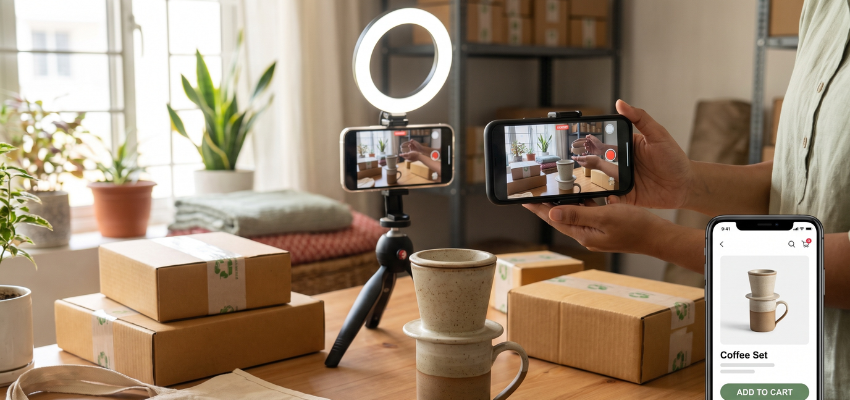
(Source – OpenAI)
Let me ask you something: if you make an amazing video that gets 50,000 views but sells zero products, did the video work? No way.
Video content is everywhere in 2026. Instagram Reels, YouTube everywhere. But here’s the secret: most videos don’t sell anything. They just get views.
The D2C video metrics that actually predict sales in India in 2026 are different from regular metrics. They show you real money, not just numbers that look good.
👉Click here to see how Boss Wallah works with brands and what we can build for you
The Four Numbers That Actually Matter
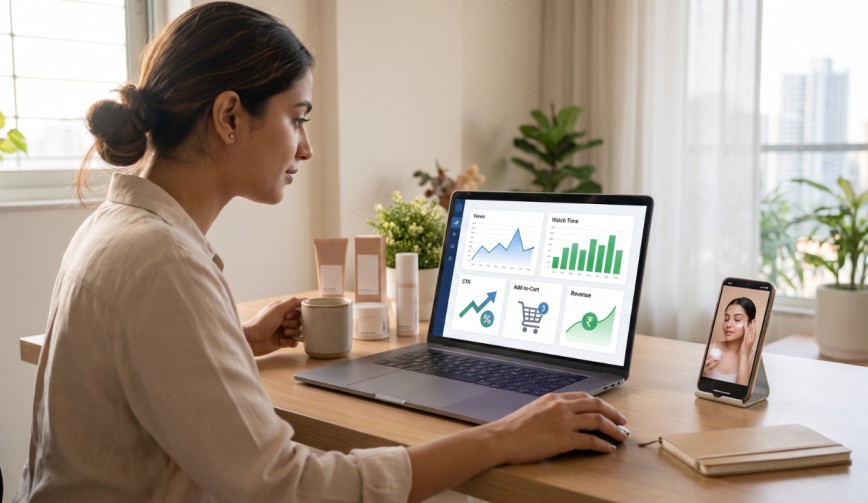
1. Watch Time and Average View Duration
Imagine you make a 3-minute video. Watch time is how many total hours people spend watching it. Average view duration is how long each person watches on average.
Why does this matter? If people leave your video in the first 10 seconds, they definitely won’t buy your product.
Here’s a simple example:
- Your video is 2 minutes long
- If people watch 1 minute 24 seconds on average, that’s 70 percent
- That’s good enough to predict sales
| Video Length | Good Average Duration | What It Means |
|---|---|---|
| 1 minute | 45 seconds | You’re keeping people interested |
| 2 minutes | 1 min 20 sec | People see most of your message |
| 3 minutes | 2 min 6 sec | Very engaged audience |
How to check: YouTube Studio and Instagram show you this in “Audience Retention.”
Read More | D2C Video Marketing Agency India: The Secret Behind High-Converting Video Ads.
2. Click-Through Rate (CTR)
This is the magic number that predicts sales better than anything else.
Click-through rate means: out of 100 people who watch your video, how many click to your product page?
If 1,000 people watch and 50 click through, your CTRis 5%.
Here’s why it matters:
- Clicking = Interest
- A person who clicks is much more likely to buy than someone who just watches
- Higher click-through rate = more potential customers
Healthy CTR targets by industry:
- Fashion & Beauty: 6-10%
- Electronics: 1-3%
- Home & Kitchen: 3-5%
- Health & Wellness: 4-7%
Pro tip: Try different calls-to-action. “Shop now” vs. “See how it works” vs. “Check this out” can change your engagement completely.
3. Conversion Rate (The Real Money Metric)
This is where videos actually become money.
Conversion rate = How many video watchers actually buy?
Let’s say:
- 10,000 people watch your video
- 50 people buy
- Your conversion rate is 0.5%
That sounds small, but it’s actually pretty good. Most Indian D2C brands see conversion rates between 0.3% and 2%.
Real-world numbers:
- Higher-priced products (Rs. 10,000+): 0.3-0.8% conversion rate
- Mid-priced products (Rs. 1,000-10,000): 0.8-1.5% conversion rate
- Lower-priced products (under Rs. 1,000): 1-2.5% conversion rate
The reason: expensive products need more thinking. Cheap products sell faster.
4. ROAS (Return on Ad Spend)
If you’re spending money on ads, ROAS is your scoreboard.
ROAS means: for every rupee you spend, how many rupees do you get back?
Example:
- You spend Rs. 10,000 on video ads
- You make Rs. 40,000 in sales
- Your ROAS is 4:1 (that’s really good)
What you need:
| ROAS | Status |
|---|---|
| 5:1 or higher | Amazing (keep doing this) |
| 3:1 to 5:1 | Good (solid strategy) |
| 2:1 to 3:1 | Okay (time to improve) |
| Below 2:1 | Stop and rethink |
Other Numbers Worth Watching (But Don’t Obsess)
Engagement rate (likes, comments, shares) shows if people like your video. But likes don’t buy products.
Audience retention on YouTube tells you when people drop off. Use this to improve your videos.
Subscriber growth is nice, but only if they actually watch and buy.
Read More | UGC Whitelisting in 2026: How Small Brands Run Creator Videos as Paid Ads the Right Way.
How to Track Everything (Simple Steps)
Step 1: Use UTM Parameters
Add this to your video links: ?utm_source=youtube&utm_medium=video&utm_campaign=product_launch
Your analytics will automatically track which video made which sales.
Step 2: Connect Your Platforms
- YouTube connects to Google Analytics
- Instagram Business shows conversion data
- TikTok has built-in analytics
- Shopify tracks everything automatically
Step 3: Keep a Simple Spreadsheet
Track every week:
- Video title
- Total views
- Average view duration %
- Click-through rate %
- Customers who bought
- Money earned
After one month, patterns will appear.
Real Numbers from Real Indian Brands
Here’s what actually works in 2026:
Fashion Brand:
- Watch time: 65-75% of video
- CTR: 6-8%
- Conversion rate: 1-1.5%
- ROAS: 4:1 to 6:1
Electronics Brand:
- Watch time: 70-80% (people think longer)
- CTR: 2-3%
- Conversion rate: 0.4-0.8%
- ROAS: 2:1 to 3:1
Beauty Brand:
- Watch time: 60-70%
- CTR: 7-10%
- Conversion rate: 1.2-2%
- ROAS: 5:1 to 8:1
Compare your numbers to these. If you’re lower, fix it. If you’re higher, celebrate.
The Biggest Mistakes
Mistake 1: Counting Views Instead of Sales
100,000 views with a 0.1% conversion rate = 100 customers.
10,000 views with a 2% conversion rate = 200 customers.
The second video is actually better. Stop counting views.
Mistake 2: Forgetting About Customer Lifetime Value
Some videos bring customers who buy once. Others bring customers who buy five times. The second type is worth more.
Mistake 3: Changing Strategy Every Week
Give each video type at least 5-10 tries before deciding it works or doesn’t. One video doesn’t prove anything.
Mistake 4: Ignoring Your Video Traffic Source
Your email list converts better than YouTube. Your followers convert better than strangers. Track conversion rate by source, not just overall.
Quick Checklist
Before you publish your next video, ask:
- Will this video content make people want to buy?
- Does it explain your product clearly?
- Is there a clear button or link to shop?
- Will I be able to track sales from this video?
- Is my target customer likely to watch this?
If you answer yes to all five, publish it. If you answer no to any, fix it first.
Why You Need to Start Now

(Source – OpenAI)
Videos are the future of D2C business in India. But only videos that sell matter. The brands winning in 2026 aren’t making the most videos. They’re making the smartest videos.
Start measuring the right video metrics today. Stop guessing. Start winning.
Need Videos, Creators, or Regional Content for Your Brand?
Boss Wallah helps brands plan and execute video content at scale, without managing multiple vendors.
We work with companies to:
- Shoot large volumes of short-form videos using real creators and studio setups, suitable for social media, websites, campaigns, and launches
- Adapt the same videos for different languages, regions, and platforms, so one shoot works across India and global markets
- Launch products or campaigns through dozens or hundreds of creators, all managed, tracked, and reported in one system
- Support brands with ongoing content, launches, regional expansion, and performance-focused campaigns
Whether you need videos for a new launch, content for multiple markets, creator-led visibility, or a steady content pipeline, Boss Wallah acts as a single partner handling production, creators, and execution end-to-end.
👉Click here to see how Boss Wallah works with brands and what we can build for you
Final Thoughts
Here’s what we’ve learned: the D2C video metrics that actually predict sales in India 2026 aren’t complicated. They’re just four numbers: watch time, click-through rate, conversion rate, and ROAS.
Every other metric is just extra information. Nice to have, but not essential.
The biggest difference between brands that grow and brands that struggle is simple. The winners measure the right things. They track consistently. They improve based on data, not feelings.
You don’t need to make perfect videos. You just need to make videos that sell. And you can’t know if they sell unless you measure.
So here’s my challenge to you: pick one video you made last month. Find its watch time, click-through rate, and conversion rate. Write those numbers down. Now make a new video with the goal of improving those numbers.
Do this every month, and in one year, your video traffic will be completely different. Better quality customers. Higher sales. Less guessing.
That’s how winners build their D2C business in 2026.
Frequently Asked Questions
Q1: How long should my video be?
A: Make it as long as needed to explain your product clearly, but not a second longer; YouTube works with 3-5 minutes, Instagram Reels under 60 seconds.
Q2: Should I focus on organic or paid video traffic?
A: Use both: organic for long-term discovery (costs nothing), paid ads for quick sales at scale (measure ROAS on these).
Q3: What’s a realistic conversion rate for video traffic?
A: Most brands see 0.3-2% depending on product price; premium products = lower %, cheap products = higher %.
Q4: How do I track which video made which sale?
A: Add different UTM parameters to each video link, then check your Google Analytics or Shopify to see which videos made sales.
Q5: Is subscriber growth important?
A: It’s useful, but quality matters more than quantity; 10,000 active subscribers who buy beats 100,000 who never watch your videos.