How Revenue-Driven Companies Use Video Across the Entire Sales Funnel
There was a time when video marketing was treated like a branding accessory. Companies made one impressive brand film, shared it everywhere, and hoped sales would magically follow. That phase did not last long. Today, revenue-driven companies use video with a clear purpose at every stage of the sales funnel. Each video is designed to move the customer one step closer to a purchase, and then keep them coming back.
Let us walk through how this actually works in practice, using simple language and real business thinking.
Understanding the Sales Funnel in Simple Terms

( Source – test.net )
A sales funnel explains how a stranger becomes a customer.
At the top, people are just discovering your brand.
In the middle, they are evaluating whether you are the right choice.
At the bottom, they are deciding to buy.
After the purchase, they decide whether to stay loyal or leave.
Revenue-focused companies plan videos for each of these stages instead of relying on one generic video to do everything.
👉 Click here to see how Boss Wallah works with brands and what we can build for you
Top of the Funnel: Awareness Videos
Introducing the Brand Without Selling
At this stage, your audience does not know you. They are not searching for your product. They are simply consuming content online. The job of video here is visibility, not conversion.
Types of videos used
Short social media videos
Educational content related to the problem you solve
Brand story or culture videos
These videos focus on the audience’s problem rather than your product. The aim is to be useful, relatable, or entertaining enough to be remembered.
How this drives revenue indirectly
When people recognise your brand later during a buying decision, they are more likely to trust it. Familiarity reduces resistance, which improves future conversion rates.
Jargon explained:
Brand awareness means people know who you are and what you stand for.
ALSO READ | From Awareness to Conversion: Where Video Actually Drives Revenue.
Middle of the Funnel: Consideration Videos
Building Trust and Clarity
Once people are aware of your brand, they start asking serious questions. They want to know how you can help them and whether you are credible.
This is where many companies either win or lose potential customers.
Types of videos used
Product explainer videos
How-it-works videos
Comparison videos
Customer testimonial videos
These videos explain features, benefits, and real-life use cases in a clear and honest way.
How this drives revenue
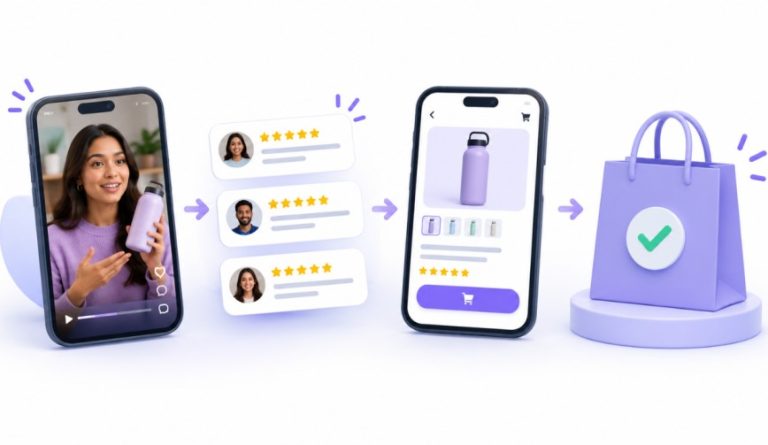
Clear explanation reduces confusion. Customer stories reduce risk. When people understand what they are buying and see proof that it works, they move faster toward a decision.
Jargon explained:
Consideration is the stage where customers actively compare options before choosing one.
Bottom of the Funnel: Conversion Videos
Helping the Customer Say Yes
At this point, the customer is interested but cautious. Small doubts can still stop the purchase. Revenue-driven companies use video to remove these final barriers.
Types of videos used
Detailed product demos
Case study videos showing measurable results
FAQ videos answering common objections
Personalised sales videos for high-value leads
These videos focus on reassurance. They answer questions about pricing, results, support, and risk.
How does this drive revenue directly
Videos at this stage reduce hesitation and shorten the decision cycle. When doubts disappear, purchases increase.
Jargon explained:
Conversion means turning a potential customer into a paying customer.
After the Purchase: Retention and Growth Videos
Maximising Customer Lifetime Value
The sale is not the end of the funnel. For revenue-driven companies, it is the beginning of a longer relationship.
Types of videos used
Onboarding and welcome videos
Training and usage tutorials
Feature update videos
Customer success and community videos
These videos help customers get value quickly and use the product correctly.
How this drives revenue
Customers who understand the product stay longer, recommend it to others, and are more likely to upgrade or buy additional services.
Jargon explained:
Retention means keeping customers for a longer period.
Upselling means encouraging customers to buy a higher-value product or service.
Why Video Works Across the Entire Funnel
Video combines visuals, sound, and storytelling. It explains complex ideas faster than text and builds trust more naturally than static content.
More importantly, video feels human. Seeing real people, real screens, and real results creates confidence. That confidence directly influences buying decisions.
The Key Difference Between Random Video and Revenue Video

( Source – questline.com )
Revenue-driven companies do not create videos for the sake of content calendars. They create videos with clear intent.
Each video has a defined role:
To attract attention
To educate and build trust
To remove objections
To support long-term customer success
When video is planned this way, it stops being a marketing experiment and starts functioning like a predictable revenue system.
ALSO READ | How High-Intent Video Content Helps B2B Brands Drive Revenue Without Increasing Ad Spend.
Need Videos, Creators, or Regional Content for Your Brand?
Boss Wallah helps brands plan and execute video content at scale, without managing multiple vendors.
We work with companies to:
- Shoot large volumes of short-form videos using real creators and studio setups, suitable for social media, websites, campaigns, and launches
- Adapt the same videos for different languages, regions, and platforms, so one shoot works across India and global markets
- Launch products or campaigns through dozens or hundreds of creators, all managed, tracked, and reported in one system
- Support brands with ongoing content, launches, regional expansion, and performance-focused campaigns
Whether you need videos for a new launch, content for multiple markets, creator-led visibility, or a steady content pipeline, Boss Wallah acts as a single partner handling production, creators, and execution end-to-end.
👉 Click here to see how Boss Wallah works with brands and what we can build for you
Final Thoughts
If your videos are getting views but not sales, the issue is rarely the format. It is usually the strategy behind it.
Companies that grow consistently understand one simple principle. Video is not a single asset. It is a system that supports the entire sales journey.
When used thoughtfully at every stage of the funnel, video does not just look good. It quietly and steadily drives revenue.