How Marketing Teams Evaluate Creator Ads and Studio Ads Differently
If you ask a marketing team whether a campaign “worked”, you will rarely get a straight yes or no. You will get a spreadsheet, a dashboard, and a confident sentence that starts with “It depends”.
This confusion becomes even more interesting when the campaign involves creator ads and studio ads. On paper, both are videos. In reality, marketing teams judge them using very different yardsticks. Let us break this down in a simple, human way, without the marketing gymnastics.
First, What Are Creator Ads and Studio Ads?

( Source – freepik.com )
Before we compare how they are evaluated, let us get the basics right.
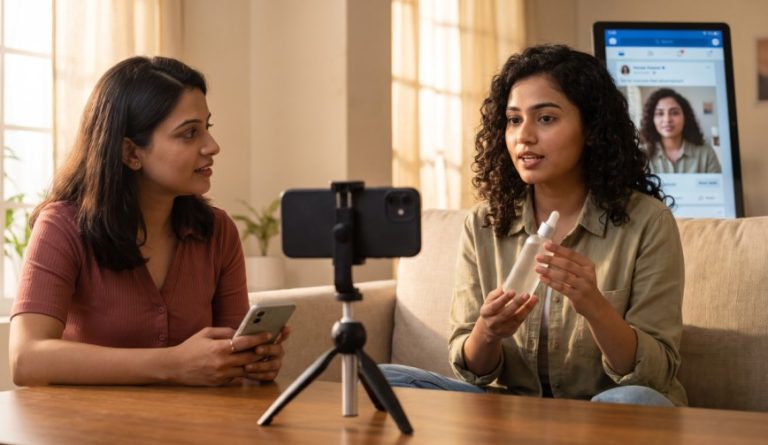
Creator ads are videos made by individual creators. These could be influencers, YouTubers, or social media personalities. The content usually feels casual, personal, and filmed in real-life settings. Think phone camera, natural light, and honest opinions.
Studio ads are professionally produced brand videos. These are shot with proper cameras, lighting, scripts, actors, and editing teams. They are polished, planned, and very brand-safe.
Both have value. But marketing teams do not judge them the same way.
The First Filter: Expectations Are Already Different
This is where things quietly diverge.
When a marketing team looks at a studio ad, expectations are high. The brand has invested time, money, and approvals. The ad is supposed to look perfect and perform predictably.
With creator ads, expectations are more flexible. Teams expect experimentation, inconsistency, and sometimes chaos. And oddly enough, that chaos is often welcomed.
In simple terms, studio ads are judged like final exams. Creator ads are judged like weekly tests.
👉 Click here to see how Boss Wallah works with brands and what we can build for you
How Marketing Teams Evaluate Creator Ads
Creator ads are not evaluated only on numbers. Context matters a lot.
Authenticity Comes First
Marketing teams ask a simple question first. Does this feel real?
Authenticity means the ad does not look forced or overly scripted. If a creator speaks like they normally do and the product fits naturally into their content, that is a win. Even if the video is not perfect, authenticity earns points.
Engagement Over Perfection
For creator ads, teams closely watch engagement. This includes likes, comments, shares, and saves.
Engagement shows whether people cared enough to react. A creator ad with average views but strong comments is often considered more valuable than a silent viral video.
Cost Per Result Is the Hero Metric
Cost per result means how much money was spent to get one desired action. This action could be a click, a sign-up, or a sale.
Marketing teams expect creator ads to be efficient. If a creator ad brings conversions at a lower cost, small flaws are forgiven very quickly.
Speed of Fatigue Is Accepted
Ad fatigue means people get bored with seeing the same ad repeatedly. Creator ads are expected to fatigue faster. That is normal.
Instead of panicking, teams simply rotate creators or refresh content. The evaluation focuses on how fast results came, not how long the ad survived.
ALSO READ | Why Meta Ads Stop Scaling for Brands That “Play It Safe” With Creatives.
How Marketing Teams Evaluate Studio Ads
Studio ads live in a very different world.
Brand Image Is Non-Negotiable
The first check is brand consistency. Does the ad match the brand’s tone, values, and visual style?
Even if a studio ad performs well, it can be rejected internally if it does not “feel on brand”. This may sound harsh, but brand teams take this very seriously.
View Quality Over Raw Engagement
Marketing teams look at metrics like view-through rate. This means how many people watched most of the video.
Studio ads are expected to hold attention longer because they are professionally made. A drop in the first few seconds raises eyebrows.
Predictable Performance Matters
Studio ads are judged on stability. Teams want consistent results over time. Sudden spikes or drops create discomfort.
If a studio ad performs well for one week and poorly the next, it is considered risky. Reliability is rewarded more than surprise success.
Longer Lifespan Is Expected
Studio ads are expensive to produce. Because of this, teams expect them to work for a longer period.
If performance drops quickly, the ad is seen as underperforming, even if the initial numbers were decent.
Same Metrics, Different Meanings
Here is where it gets interesting. Both creator ads and studio ads use the same metrics, but interpret them differently.
For example, a high comment count on a creator ad suggests trust and curiosity. On a studio ad, too many comments may signal confusion.
A slightly shaky video is acceptable for a creator ad. For a studio ad, it is a production failure.
Marketing teams do not consciously say this every time, but the bias exists.
Internal Conversations Are Very Different

( Source – forumnews-sl.com )
Creator ad reviews sound like this:
“This creator really connected with their audience. Let us try two more like this.”
Studio ad reviews sound like this:
“The messaging is strong, but the second frame needs refinement.”
Both are valid conversations. They just come from different mindsets.
Why This Difference Actually Makes Sense
Creator ads are built on people. Studio ads are built on systems.
People are unpredictable, emotional, and relatable. Systems are structured, controlled, and repeatable.
Marketing teams understand this. That is why they evaluate both formats differently instead of forcing one rulebook on both.
ALSO READ | Why View Counts Alone Cannot Decide Between Creator Ads and Studio Ads.
Need Videos, Creators, or Regional Content for Your Brand?
Boss Wallah helps brands plan and execute video content at scale, without managing multiple vendors.
We work with companies to:
- Shoot large volumes of short-form videos using real creators and studio setups, suitable for social media, websites, campaigns, and launches
- Adapt the same videos for different languages, regions, and platforms, so one shoot works across India and global markets
- Launch products or campaigns through dozens or hundreds of creators, all managed, tracked, and reported in one system
- Support brands with ongoing content, launches, regional expansion, and performance-focused campaigns
Whether you need videos for a new launch, content for multiple markets, creator-led visibility, or a steady content pipeline, Boss Wallah acts as a single partner handling production, creators, and execution end-to-end.
👉 Click here to see how Boss Wallah works with brands and what we can build for you
Final Thoughts
Creator ads and studio ads are not competing siblings. They are colleagues with very different job roles.
Marketing teams evaluate creator ads like conversations. They look for honesty, reaction, and efficiency.
They evaluate studio ads like presentations. They look for clarity, consistency, and long-term value.
When brands understand this difference, campaigns become less stressful and far more effective. And fewer meetings start with the sentence, “Why is this ad not working anymore?”
That alone is a small marketing miracle.