Ad Creatives: The Shift From “Good Looking” to “High Converting”

There was a time when brands believed a beautiful ad was enough to win customers.
A shiny product photo, fancy fonts, and a smiling model staring into the distance like they had solved all life problems. That was considered great advertising. If the ad looked premium, brands assumed customers would automatically buy the product.
But marketing does not work like that anymore.
Today, people scroll through social media at lightning speed. They skip ads without even thinking twice. Consumers now care less about whether an ad looks fancy and more about whether it feels useful, relatable, or interesting.
That is why the world of Ad Creatives has changed completely. Businesses are moving away from ads that are simply “good looking” and focusing more on ads that actually drive clicks, leads, and sales.
In simple words, companies no longer want ads that only impress people. They want ads that convert people into customers.
And that shift has changed digital marketing in a huge way.
What Are Ad Creatives?

(Source – magnific.com)
Ad Creatives are all the visual and written elements used in an advertisement. This includes:
- Images
- Videos
- Headlines
- Captions
- Ad copy
- Design layout
- Call-to-action buttons
Together, these elements create the complete advertising experience a customer sees online.
For example, when you see a social media ad for a skincare product, the product image, catchy headline, short video, colours, and “Buy Now” button are all part of the ad creative.
Many people think ad creatives are only about graphic design. But in reality, they are about communication. A successful ad creative tells a story, creates emotion, and pushes the customer toward taking action.
That action could be:
- Buying a product
- Filling out a form
- Downloading an app
- Registering for a webinar
- Booking a consultation
This action is called a conversion in digital advertising.
👉Click here to see how Boss Wallah works with brands and what we can build for you
The Era of “Pretty Ads”
For many years, businesses focused heavily on making ads look polished and professional.
Marketing teams spent large budgets on:
- Studio shoots
- Perfect lighting
- Expensive models
- Complex editing
- Fancy animations
The thinking was simple: if an ad looks expensive, people will trust the brand more.
And honestly, that strategy worked in the past because audiences had fewer ads competing for their attention. A visually attractive advertisement stood out easily.
But modern consumers behave differently.
Today, people see hundreds of ads every single day. Because of this overload, audiences have become extremely selective. They can instantly sense when an ad feels overly polished or too sales-driven.
Ironically, many beautiful ads fail because they focus more on appearance and less on connection.
A customer might say: “Nice ad.”
But never click on it.
And in marketing, compliments do not pay the bills.
Why High-Converting Ad Creatives Matter More Today
Modern businesses care deeply about results. Every rupee spent on advertising is expected to generate measurable returns.
That is why brands now focus on creating highly converting ad creatives.
A high-converting ad is designed to:
- Grab attention quickly
- Create curiosity
- Solve a customer problem
- Build trust
- Encourage immediate action
Instead of asking: “Does this ad look premium?”
Marketers now ask: “Will this ad increase conversions?”
This shift is mainly driven by performance marketing, where success is measured through data instead of opinions.
If an ad generates:
- More clicks
- More sales
- Better engagement
- Lower advertising costs
Then it is considered successful, even if the design looks simple.
Sometimes, a raw phone-shot video performs better than a professionally produced commercial. That may hurt a designer’s feelings slightly, but businesses care about performance first.
ALSO READ | Why Meta Ads Stop Scaling for Brands That “Play It Safe” With Creatives.
Social Media Completely Changed Advertising
Platforms like Instagram, YouTube, and TikTok changed how consumers interact with ads.
People now prefer content that feels natural inside their feed.
Highly polished advertisements often look too “corporate,” while simple videos feel more authentic and relatable.
This is why user-generated content has become so powerful in digital marketing.
User-generated content refers to videos, reviews, or posts created by actual customers instead of professional advertisers.
Consumers trust real experiences more than scripted marketing.
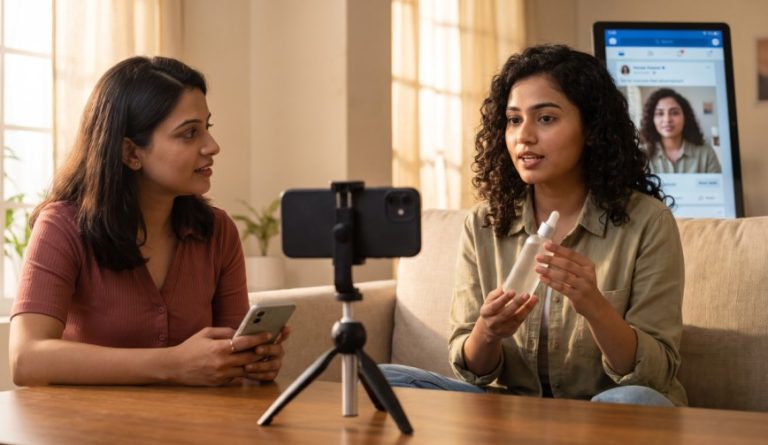
For example, a customer casually explaining how a product solved their problem can often outperform an expensive celebrity advertisement.
Why?
Because it feels believable.
The Power of the First Few Seconds
Attention spans online are becoming shorter every year.
Most users decide within seconds whether they want to continue watching an ad or scroll away.
This is why strong hooks are now one of the most important parts of ad creatives.
A hook is the opening line or visual that immediately grabs attention.
Examples include:
- “This mistake is ruining your Facebook ads.”
- “Nobody talks about this marketing trick.”
- “We tested 100 ad creatives, and this one won.”
These opening lines work because they create curiosity instantly.
Without a strong hook, even a beautifully designed ad can fail within seconds.
Why Simplicity Wins in Modern Ad Creatives
One major mistake brands still make is overdesigning ads.
Too many colours, effects, transitions, and text can confuse viewers.
Modern audiences prefer ads that are:
- Easy to understand
- Quick to consume
- Focused on one message
Simple ad creatives usually perform better because they reduce confusion.
Think about it this way.
If a customer needs ten seconds just to understand what the ad is about, the ad has already lost.
Good advertising is not about showing everything.
It is about showing the right thing clearly.
Data Is Now More Important Than Opinions
Earlier, marketing decisions were often based on personal opinions.
Someone in a meeting would say: “This design looks better.”
And that would be enough.
Today, data decides everything.
Brands constantly test different ad creatives to understand:
- Which headline gets more clicks
- Which video holds attention longer
- Which thumbnail improves engagement
- Which call-to-action increases sales
This process is called A/B testing.
A/B testing simply means comparing two versions of an ad to see which one performs better.
For example:
- One ad may use a funny headline
- Another may use an emotional headline
The business then studies which version gets better results.
This approach helps brands improve conversion rates continuously.
Real People Are Replacing Perfect Models
Modern advertising is becoming more human.
Consumers are tired of unrealistic perfection.
They want honesty, personality, and relatability.
This is why brands now use:
- Customer testimonials
- Founder videos
- Employee stories
- Behind-the-scenes content
- Casual product demonstrations
People connect more with authenticity than perfection.
A simple video recorded on a smartphone can sometimes outperform a luxury commercial because it feels real.
And in today’s digital world, “real” sells.
The Rise of Performance Marketing
Performance marketing has become one of the biggest reasons behind this shift in ad creatives.
Performance marketing focuses entirely on measurable business results such as:
- Leads
- Purchases
- Website clicks
- App installs
- Sign-ups
In this system, every advertisement must prove its value through numbers.
If an ad does not convert, it gets replaced quickly.
This has forced brands to think differently about creativity.
Modern ad creatives are now built using:
- Consumer psychology
- Data analysis
- Audience behaviour
- Conversion tracking
- Creative testing
So creativity is still important, but now it must work together with performance.
ALSO READ | Why View Counts Alone Cannot Decide Between Creator Ads and Studio Ads
Trends Shaping Ad Creatives in 2026
Short-Form Video Content
Short videos dominate almost every major platform today.
Fast-paced storytelling, captions, and relatable content perform strongly because audiences prefer quick entertainment and information.
Educational Advertising
People are responding more positively to ads that teach something useful instead of directly selling products.
Brands now create:
- Quick tutorials
- Marketing tips
- Problem-solving videos
- Industry insights
Education builds trust before asking for a sale.
Creator-Led Advertising
Influencers and creators now play a huge role in advertising because audiences trust them more than traditional ads.
Consumers often feel creators are more honest and relatable than large brands.
AI-Assisted Creative Testing
AI tools are helping marketers test multiple ad creatives faster than ever before.
Businesses now use AI to experiment with:
- Headlines
- Ad copy
- Video styles
- Audience targeting
But even with AI, human storytellingstill matters the most.
Because data can improve ads, but emotions still drive buying decisions.
How Small Businesses Can Create Better Ad Creatives

(Source – magnific.com)
Small businesses often believe they need huge budgets to compete with big brands.
That is not always true.
Some of the highest converting ad creatives are surprisingly simple.
A small business can improve results by focusing on:
- Clear messaging
- Strong customer pain points
- Simple visuals
- Mobile-friendly videos
- Real customer experiences
Consistency also matters a lot.
The first ad may fail.
The second ad may fail too.
But continuous testing helps businesses understand what their audience truly responds to.
Marketing is rarely about getting it perfect on the first attempt.
It is usually about learning faster than competitors.
Final Thoughts
The world of Ad Creatives has moved far beyond just looking attractive.
Today, successful advertising is about creating connection, trust, and action.
Good design still matters, but performance matters more.
Modern consumers want:
- Authenticity
- Simplicity
- Fast communication
- Relatable storytelling
- Clear value
The brands winning in 2026 are not always the ones with the fanciest advertisements.
They are the ones creating ad creatives that genuinely connect with people and drive conversions.
Because at the end of the day, businesses do not grow from people saying, “Nice ad.”
They grow when customers actually click, buy, and come back again.
Need Videos, Creators, or Regional Content for Your Brand?
Boss Wallah helps brands plan and execute video content at scale, without managing multiple vendors.
We work with companies to:
- Shoot large volumes of short-form videos using real creators and studio setups, suitable for social media, websites, campaigns, and launches
- Adapt the same videos for different languages, regions, and platforms, so one shoot works across India and global markets
- Launch products or campaigns through dozens or hundreds of creators, all managed, tracked, and reported in one system
- Support brands with ongoing content, launches, regional expansion, and performance-focused campaigns
Whether you need videos for a new launch, content for multiple markets, creator-led visibility, or a steady content pipeline, Boss Wallah acts as a single partner handling production, creators, and execution end-to-end.
👉Click here to see how Boss Wallah works with brands and what we can build for you
FAQs
1. What are Ad Creatives?
Ad Creatives are the visual and written elements used in advertisements, including images, videos, headlines, captions, and call-to-action buttons.
2. What makes an ad creative highly converting?
A high-converting ad creative grabs attention quickly, solves a problem clearly, builds trust, and encourages users to take action, like purchasing or signing up.
3. Why are simple ads performing better today?
Simple ads feel more authentic and easier to understand. Modern audiences trust relatable content more than overly polished advertisements.
4. What is A/B testing in digital advertising?
A/B testing is the process of comparing two versions of an advertisement to identify which one performs better based on clicks, engagement, or conversions.
5. How can small businesses improve their ad creatives?
Small businesses can improve ad creatives by using clear messaging, customer testimonials, mobile-friendly content, and regular creative testing to understand audience preferences.