Ad Creatives: Stop Designing Ads That Look Good but Don’t Convert

If you have ever launched an ad campaign that looked absolutely stunning but delivered almost no clicks, welcome to the club. Many businesses spend hours perfecting colours, animations, fonts, and layouts only to discover that their audience simply scrolls past the ad without caring.
This is one of the biggest problems in modern digital marketing. Brands often focus so much on making ads look beautiful that they forget the real purpose of advertising: getting results.
Good ad creatives are not just decoration. They are sales tools. A successful ad should stop people from scrolling, make them curious, create trust, and encourage action. Whether you are running Facebook ads, Instagram ads, YouTube campaigns, or display advertising, your creative plays a major role in determining whether your campaign succeeds or fails.
The truth is simple. Customers do not reward ads for being artistic. They reward ads for being clear, relatable, and useful.
In this blog, we will explore why many ad creatives fail, what high-converting creatives actually look like, and how businesses can improve their online advertising strategy without wasting money on visuals that only look impressive.
What Are Ad Creatives?

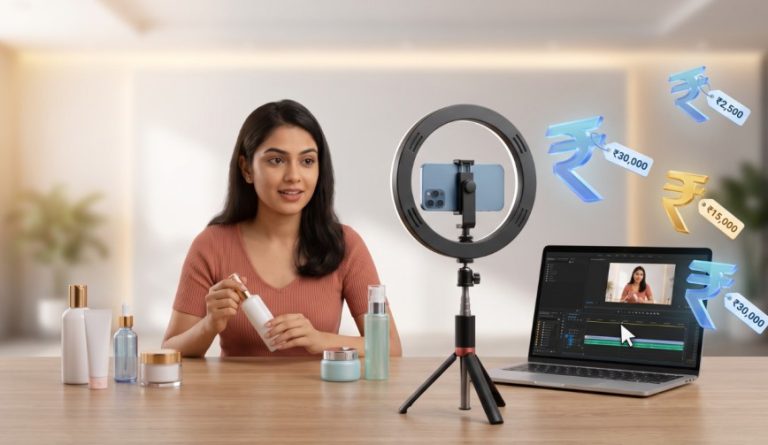
(Source – magnific.com)
Ad creatives are the visual and written elements used in an advertisement. This includes:
- Images
- Videos
- Headlines
- Captions
- Design layout
- Call-to-action buttons
In simple words, ad creatives are everything a customer sees in an ad before deciding whether to click or ignore it.
Think of ad creatives as the “first impression” of your business. Just like people judge restaurants by their appearance before tasting the food, audiences judge brands by the quality and clarity of their ads.
However, there is an important difference between attractive ads and effective ads.
An attractive ad may receive compliments.
An effective ad receives conversions.
And trust me, conversions pay the bills, not compliments.
👉Click here to see how Boss Wallah works with brands and what we can build for you
Why Most Ad Creatives Fail to Convert
One of the biggest mistakes businesses make is designing ads based on personal taste instead of customer behaviour. A business owner may love a certain colour palette or trendy design style, but that does not mean the audience will respond positively.
Many low-performing ad creatives fail because they prioritise style over communication.
For example, some ads are overloaded with effects, transitions, and complicated graphics. While they may look “premium,” they often confuse viewers. Customers should understand your offer within seconds. If people need to work hard to understand your message, they usually leave.
This is especially important in social media advertising, where attention spans are extremely short. Users scroll through hundreds of posts daily. Your ad has only a small window to grab attention before disappearing into the endless sea of content.
Another major issue is weak messaging. Many brands use vague lines like:
- “Experience the future”
- “Transform your journey”
- “Unlock innovation”
These sound dramatic but say very little.
A stronger advertising strategy focuses on clarity. Compare the vague message above with something specific, like:
- “Get More Leads With Better Ad Creatives”
- “Increase Sales Using High-Converting Instagram Ads”
Now the audience immediately understands the benefit.
Clear messaging almost always beats fancy wording.
Read More | Ad Creatives: Why the First 3 Seconds Decide Whether You Win or Lose.
The Psychology Behind High-Converting Ad Creatives
People rarely click ads because they admire the design alone. They click because the ad creates an emotional reaction.
This is where marketing psychology becomes important.
Great ad creatives usually trigger emotions like:
- Curiosity
- Excitement
- Fear of missing out
- Relief from a problem
- Confidence
- Trust
For example, a skincare brand showing a real customer transformation creates emotional engagement because people can imagine achieving similar results themselves.
A fitness ad showing someone struggling before achieving progress feels relatable. A business growth ad showing rising revenue charts creates aspiration and excitement.
Humans naturally respond to stories and emotions more than polished graphics.
That is why many user-generated content ads now outperform highly produced commercials. Customers trust authenticity more than perfection.
Ironically, sometimes the ad filmed casually on a smartphone performs better than the expensive studio production.
Painful news for production teams, but excellent news for smaller businesses with limited budgets.
Why Simplicity Wins in Digital Marketing
Many businesses assume better design automatically means better performance. That is not always true.
In reality, some of the highest-converting ad creatives online are surprisingly simple.
Why?
Because simplicity helps people process information faster.
A clean ad with:
- One strong headline
- One clear image
- One focused message
- One simple CTA
often performs better than a crowded design filled with distractions.
Modern consumers are overwhelmed with information daily. Complicated ads increase mental effort, and customers avoid effort whenever possible.
This is especially important in mobile advertising. Most Facebook ads, Instagram ads, and TikTok campaigns are viewed on smartphones. Small screens demand simple communication.
Tiny text, overloaded layouts, and cluttered visuals damage conversion rates quickly.
A good rule in content marketing and paid advertising is this:
“If your message cannot be understood quickly, it probably will not work.”
The Biggest Mistakes Businesses Make With Ad Creatives
Focusing Too Much on Branding
Brand consistency matters, but some companies become obsessed with making every ad look perfectly polished.
As a result, the message becomes secondary.
Customers do not care whether your gradient background took three days to design. They care whether your product solves their problem.
Strong branding should support the message, not overpower it.
Ignoring Audience Pain Points
Many ads spend too much time talking about the company instead of the customer.
Customers are asking:
- What problem does this solve?
- Why should I care?
- How does this help me?
Effective ad creatives focus on customer benefits instead of company achievements.
For example:
- Weak approach: “We are an award-winning agency.”
- Strong approach: “We help businesses lower advertising costs.”
The second message directly addresses a business need.
Using Generic Stock Images
Everyone has seen those fake-looking office photos where people laugh while staring at blank laptops.
Customers recognise these instantly.
Authentic visuals usually perform much better because they feel more relatable and trustworthy.
This is why user-generated content and behind-the-scenes marketing are growing rapidly in social media marketing.
People trust people more than polished corporate visuals.
Not Testing Different Versions
One of the biggest mistakes in online advertising is assuming the first ad version is automatically the best.
Even experienced marketers test multiple versions of ad creatives regularly.
This process is called A/B testing.
A/B testing means comparing different versions of ads to see which performs better.
Small changes can create huge improvements:
- Different headlines
- Different images
- Different CTA buttons
- Different video hooks
- Different colours
Sometimes changing just one sentence can improve conversion rates dramatically.
Digital marketing success often comes from testing and improving consistently, not guessing.
What Makes Ad Creatives Convert Better?
High-converting ad creatives usually follow a few important principles.
First, they grab attention immediately. This is often done through a strong hook.
A hook is the opening line or visual that makes people stop scrolling.
Examples include:
- “Most businesses waste money on bad ads.”
- “Your creatives may be killing your sales.”
- “Why do beautiful ads fail to convert?”
These lines create curiosity instantly.
Second, successful ad creatives communicate benefits clearly. Customers want results, not complicated explanations.
Instead of saying: “Advanced AI-powered advertising solutions”
say: “Create ads faster and improve conversions.”
Simple language improves communication.
Third, strong creatives include a clear call to action. People need direction.
Good CTA examples include:
- Shop Now
- Learn More
- Book a Demo
- Start Free Trial
Without a CTA, users may simply continue scrolling.
Why Video Ad Creatives Are Dominating in 2026

(Source – magnific.com)
Video marketing continues to dominate because it communicates information faster than static images.
Short-form videos are especially effective on:
- Instagram Reels
- TikTok
- YouTube Shorts
- Facebook Reels
Video ad creatives work well because they combine:
- Motion
- Audio
- Emotion
- Demonstration
- Storytelling
Businesses using video advertising often see better engagement and stronger brand awareness compared to static ads.
However, videos still need clarity. Fancy editing alone is not enough.
A confusing video is still confusing, even with cinematic transitions.
The Role of Storytelling in Ad Creatives
People remember stories far more than promotional messages.
That is why storytelling has become a powerful marketing strategy in advertising campaigns.
Instead of directly pushing products, many brands now tell relatable stories:
- Customer struggles
- Personal transformations
- Business journeys
- Everyday situations
Stories create emotional connection and help customers imagine themselves using the product.
This increases trust and improves conversions naturally.
Even short ads can tell mini-stories effectively.
Read More | How Performance Marketing Creatives Impact ROAS More Than Ad Spend.
Need Videos, Creators, or Regional Content for Your Brand?
Boss Wallah helps brands plan and execute video content at scale, without managing multiple vendors.
We work with companies to:
- Shoot large volumes of short-form videos using real creators and studio setups, suitable for social media, websites, campaigns, and launches
- Adapt the same videos for different languages, regions, and platforms, so one shoot works across India and global markets
- Launch products or campaigns through dozens or hundreds of creators, all managed, tracked, and reported in one system
- Support brands with ongoing content, launches, regional expansion, and performance-focused campaigns
Whether you need videos for a new launch, content for multiple markets, creator-led visibility, or a steady content pipeline, Boss Wallah acts as a single partner handling production, creators, and execution end-to-end.
👉Click here to see how Boss Wallah works with brands and what we can build for you
Final Thoughts
Ad creatives are not meant to win design awards. Their real job is to grab attention, communicate clearly, and encourage people to take action. In today’s fast-moving digital marketing world, customers care more about relevance and clarity than fancy visuals.
Businesses that focus on simple messaging, emotional connection, and audience needs usually see better results from their Facebook ads, Instagram ads, and online advertising campaigns. A clean and relatable ad often performs better than a complicated design packed with effects.
At the end of the day, successful ad creatives are not about looking perfect. They are about helping customers quickly understand why your product or service matters.
FAQs
1. What are ad creatives?
Ad creatives are the visuals and written content used in advertisements to attract and convert customers.
2. Why are ad creatives important?
Ad creatives help businesses grab attention, improve engagement, and increase sales through better advertising performance.
3. What makes an ad creative successful?
A successful ad creative is clear, simple, emotionally engaging, and includes a strong call to action.
4. Which ad creative format works best in 2026?
Short-form video ads and user-generated content are currently the best-performing ad creative formats.
5. How can I improve my ad creatives?
You can improve ad creatives by understanding your audience, simplifying your message, and testing multiple ad versions.