Product Marketing: 7 Simple Ways to Reach the Right Customers

A mate of mine actually started a home pickle business in Pune. Spent her first months budget on Instagram ads and got loads of clicks, but virtually no orders. It turned out she was showing her mango pickle to people who simply don’t like pickle. The pickle itself was fine. The problem was the audience. If that sounds like something you’ve been there with, then Product Marketing: 7 Simple Ways to Reach the Right Customers is for you. Product marketing is just the job of getting the right people to know about your product and why it’s relevant to them. No MBA required.
7 Simple Ways to Reach the Right Customers, Explained

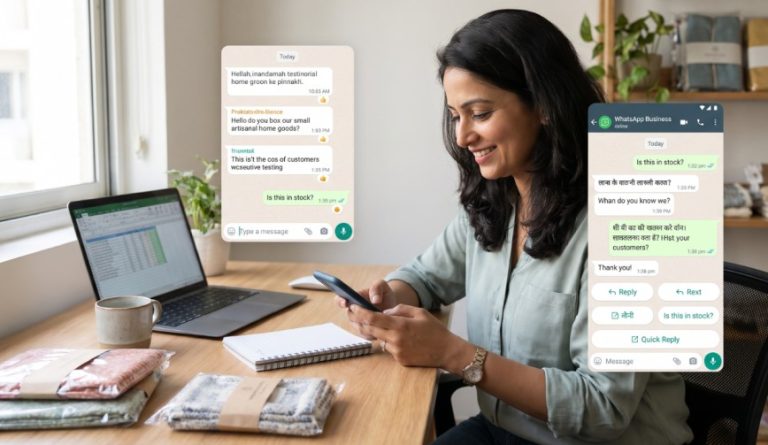
(Source – OpenAI)
Whether you’re running a small shop, you’re selling online or you’re still in the process of working out your very first business, these seven habits will help you find people who actually want what you’re selling. You don’t have to do all of them this week. Pick one, try it and come back next week.
1. Decide Who You Are Not Talking To
This seems odd but it actually works. Your target market is the people who are most likely to buy from you. Everybody else we can safely ignore.
Write down their:
- Age
- Job
- Location
- Biggest problems or frustrations
A tiffin service in Bengaluru isn’t for ‘everyone”. It’s for the working professional who is sick of ordering the same biryani every single day. The smaller the group you can target, the more loudly your message will resonate with them.
👉Click here to see how Boss Wallah works with brands and what we can build for you
2. Invent One Imaginary Customer
A customer persona is a fictional person who represents your ideal buyer. Give them a name and a life. Mine is Priya, 29, a designer from Hyderabad who absolutely hates complicated apps and is always got 40 tabs open.
It’s utterly silly for about five minutes. After that it’s your cheat code. Before you post anything at all, just ask yourself “Would Priya care?” If the answer is no, delete it and try again.
3. Snoop a Little (Politely)
Market research is all about working out what people want and what your competition are doing. Don’t go straight for the expensive tools. Start by:
- Reading the reviews of similar products on Amazon and Google Maps.
- Going through the comments under your competitor’s posts.
- Asking ten friends or family members a quick question.
Watch out for the complaints. If customers are consistently saying that a competitor is slow, too expensive or just won’t pick up the phone, you’ve got your gap.
Read More | Meta AI for Facebook Ads: What Can Marketers Actually Automate?
4. Say What You Do in One Sentence
Your value proposition is a short line that explains why you should pick you. It answers the question that every customer is asking themselves in their minds: “What do I get out of this?”
“We help small shops to track their stock in five minutes a day” is a good one. “We deliver innovative inventory solutions” is just going to make people’s eyes glaze over. Say it out loud to someone who knows absolutely nothing about what you do. If they’re confused then you’ve got a problem.
Extra tip: If the majority of your customers are Tamil, Hindi or Telugu speakers, say it in their language. People will trust something that sounds familiar.
5. Show Up Where Your Buyers Already Hang Out
Social media marketing is about promoting your product on social media platforms (Instagram, LinkedIn, YouTube, WhatsApp etc). You don’t need to be on all of them. In fact, please don’t. You’ll be absolutely gutted by Thursday.
- Selling to office workers? LinkedIn is a good place to start.
- Selling sneakers to students? Short videos on Instagram are probably your best bet.
- Local customers? A WhatsApp Business account with a well put together product catalogue is going to be excellent.
Be helpful, be a bit cheeky and write like a human. No one is going to follow a page that reads like a washing machine manual.
6. Be Useful Before You Ask for Money
Content marketing is about creating useful things (blog posts, videos, guides etc) that solve a small problem for free. When they finally do need to buy, who’s name do they remember?
Pair it with email marketing (i.e. sending useful messages directly into people’s inboxes). Offer a little something in return to get their email addresses, such as:
- A discount.
- A free checklist.
- A useful guide.
Then you send things that people will actually want to open. Emailing every single day is the quickest way to get yourself into the spam folder.
Also keep an eye on SEO (search engine optimisation). In simple terms that means writing in such a way that Google will show your page when someone searches for that. Use the words that your customer will actually type in, not the words that only your own team would understand.
If you’re a local business then set up a free Google Business Profile so that people in your area can find you.
7. Ask, Listen, Fix, Repeat

(Source – OpenAI)
Your buyers are your best teachers. Find out what they love, what irks them and what they’d like to see you sell. A short survey or a simple message after a purchase is all you need.
Real customer feedback is the best way to spot problems early on. It also gives you a real insight into your conversion rate (the % of visitors who actually go on to buy). If you’ve got a lot of traffic to your page and very little conversion then something is definitely amiss. The price might not be clear, the buy button might be hiding in plain sight (it might be playing hide and seek).
Happy customers also generate word of mouth (people telling their friends and family about you). It’s free and is better than most advertising. Over time it builds brand awareness so that more people know you’re around and they trust you.
Read More | AI Productivity Stack: How Teams Finish Weeks of Work in a Single Day.
Need Videos, Creators, or Regional Content for Your Brand?
Boss Wallah helps brands plan and execute video content at scale, without managing multiple vendors.
We work with companies to:
- Shoot large volumes of short-form videos using real creators and studio setups, suitable for social media, websites, campaigns, and launches
- Adapt the same videos for different languages, regions, and platforms, so one shoot works across India and global markets
- Launch products or campaigns through dozens or hundreds of creators, all managed, tracked, and reported in one system
- Support brands with ongoing content, launches, regional expansion, and performance-focused campaigns
Whether you need videos for a new launch, content for multiple markets, creator-led visibility, or a steady content pipeline, Boss Wallah acts as a single partner handling production, creators, and execution end-to-end.
👉Click here to see how Boss Wallah works with brands and what we can build for you
Final Thoughts
You don’t need any luck at all to get to the right customers. You need to have a clear picture of who they are, you need to be able to communicate in plain English and you need the patience to keep on learning. Start with step one this week. Your future customers (and probably a few pickle lovers) will thank you.
Want to learn from people who have actually built businesses? Take a look at the practical entrepreneur-led courses on Boss Wallah and learn marketing skills at your own pace.
Frequently Asked Questions
1. What is product marketing in simple terms?
It’s about telling the right people about your product and why they should buy it. It’s all about the research, the messaging and the promotion.
2. How do I work out who my target audience is as a complete beginner?
Look at who buys from the similar brands, read their reviews and talk to a few real people. Start small and tweak as you go.
3. Do I need a large budget in order to get to the right customers?
No. Social media, WhatsApp, email and blog posts are all very cheap. You can always add a small ad budget later to see what works.
4. How long before I see results?
Most small businesses notice early changes in two to three months. Trust takes time, so keep going.
5. Which marketing channel is best for beginners?
Choose the one where your customers already spend time. For many Indian small businesses, that is Instagram or WhatsApp, because both are easy to start.