Creator-Led Commerce: When Creators Become Part of the Shopping Experience
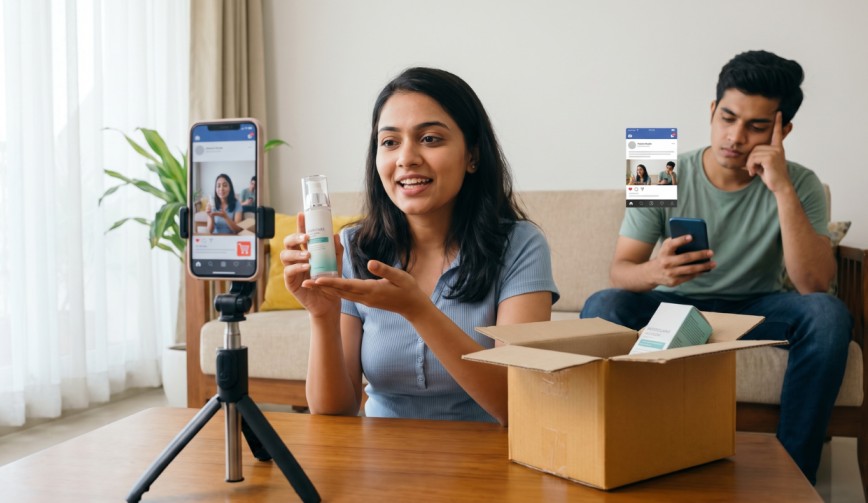
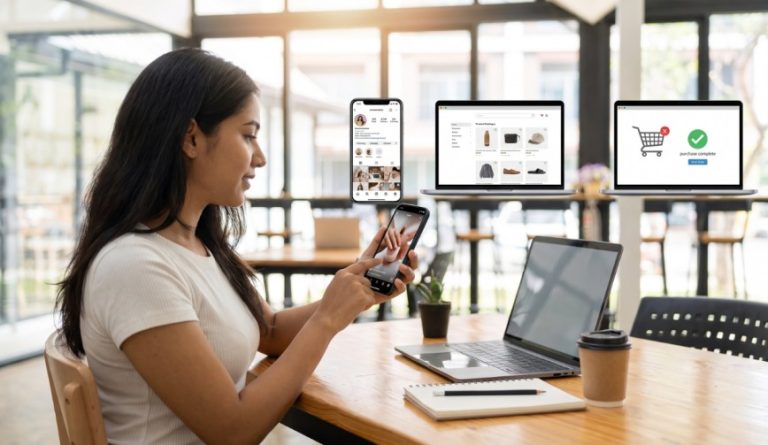
People don’t always go looking for products. Sometimes they see a creator using something in a Reel, talking about it in a video, or answering a question in the comments. That’s when Creator-Led Commerce happens. When a creator promotes a product, they’re not just showing it. They’re part of the shopping journey. They help people find it, understand it, and sometimes even decide to buy it.
What Is Creator-Led Commerce?
(Source – OpenAI)
Creator-Led Commerce is a way of selling where the creator is involved in the customer’s journey from start to finish.
In influencer marketing, a creator talks about a product and sends followers to a website. Then the brand takes over. But in Creator-Led Commerce, the creator can do more:
- Introduce the product
- Show how it works
- Use it in real life
- Answer questions
- Share a link
- Encourage people to buy
The person selling the product isn’t the only one holding it up on camera anymore. The creator also helps people discover and understand it.
👉Click here to see how Boss Wallah works with brands and what we can build for you
Why Are People Getting Involved in Shopping This Way?
Most people want to see a product in action before they spend money on it.
A product page might list all the features. A creator can show how it fits into everyday life. That makes buying feel more personal.
For example, when someone is thinking about a skincare product, they may trust the creator’s routine more than a list of ingredients. When looking for a gadget, they may rather see it used in a home than in a staged photo from the brand.
This is why social commerce is so important for brands. It helps them reach customers where they already are.
Creator Content Can Help at More Than One Stage
Creator-Led Commerce isn’t just about getting the final sale. Creators can help at different points in the customer journey:
- Product discovery: A creator shows a product to people who might not know about it.
- Product education: They explain how it works and show how to use it.
- Building trust: Demos and personal stories help people understand the product better.
- Making a decision: People can read reviews, compare products, and watch tutorials.
- Making the purchase: When they’re ready to buy, they can do it easily through links, product tags, or the creator’s own store.
- After the purchase: The creator can still help by sharing tips, routines, or different ways to use the product.
Content from creators can be more useful than a single promotional post because it can continue helping people throughout the shopping journey.
Read More | ‘LLM Visibility is no Longer Optional’: Boss Wallah CEO Sanju Pillai Weighs in on Growing AI Trends.
Creator-Led Commerce vs Influencer Marketing
The two are similar but not the same.
Influencer marketing uses a creator’s audience and influence to promote a product.
Creator-Led Commerce goes further. It lets the creator actually become part of the shopping experience.
For example, an influencer campaign might involve one sponsored Instagram Reel. A creator-led approach could include:
- A product demo
- A shopping link
- Answers to questions in the comments
- More videos showing how the product is used
- Follow-up content based on audience questions
It’s not about how many posts are made. It’s about how the creator helps someone go from being interested in a product to actually buying it.
Why Authentic Creator Content Matters
People can usually tell when a creator is just reading from a brand script.
That doesn’t mean all posts need to be casual. The content should still sound like it comes from the creator and feel real and honest.
A genuine creator can explain:
- What they liked about the product
- What surprised them
- Who the product may be good for
- How they actually use it
That makes the product easier to understand.
Honesty is especially helpful for products that need more explanation before someone buys them.
The Role of Shoppable Content
Shoppable content also lets creators become part of the shopping process.
With this type of content, people can go from seeing a product to buying it in just a few steps. On different platforms, this can be done through:
- Product tags
- Shopping links
- Creator storefronts
- Affiliate links
- Live shopping features
The idea is simple. If someone likes what they see, they shouldn’t have to search for it for ten minutes.
Making the steps between discovery and purchase shorter can create a smoother shopping experience.
Brands Need the Right Creators, Not Big Creators
Having millions of followers doesn’t mean a creator is the right fit for every product.
A smaller creator might have an audience that’s deeply interested in a specific topic. Their followers may already trust their opinion. That can lead to more genuine conversations.
In this case, creator partnerships can be more useful than simply buying reach.
Brands can look at:
- Whether the creator’s audience matches the target customer
- How naturally the creator can talk about the product
- The quality of their content
- How people react to their posts
- Whether they can explain products clearly
- Whether they can make content regularly
The goal isn’t just to get attention. It’s to help the right people understand why the product might be worth buying.
How Brands Can Build a Creator-Led Commerce Strategy

(Source – OpenAI)
Brands don’t need to change everything at once.
A good start is to pick a product that’s easy to show and find creators who are already talking about related topics.
Instead of asking for just one promotional post, brands can think about the full customer journey.
A creator might:
- Introduce the product
- Show it in use
- Answer questions
- Share a shopping link
- Make follow-up content based on what the audience wants to know
Along with tracking views, brands can also watch:
- Website visits
- Product page activity
- Link clicks
- Conversions
- Sales
- Comments
- Saves
- Repeat purchases
These numbers can help brands understand how well the campaign is working beyond just views and likes.
Read More | What Is UGC and How Does BossWallah Build a Brand’s UGC Pipeline?
Need Videos, Creators, or Regional Content for Your Brand?
Boss Wallah helps brands plan and execute video content at scale, without managing multiple vendors.
We work with companies to:
- Shoot large volumes of short-form videos using real creators and studio setups, suitable for social media, websites, campaigns, and launches
- Adapt the same videos for different languages, regions, and platforms, so one shoot works across India and global markets
- Launch products or campaigns through dozens or hundreds of creators, all managed, tracked, and reported in one system
- Support brands with ongoing content, launches, regional expansion, and performance-focused campaigns
Whether you need videos for a new launch, content for multiple markets, creator-led visibility, or a steady content pipeline, Boss Wallah acts as a single partner handling production, creators, and execution end-to-end.
👉Click here to see how Boss Wallah works with brands and what we can build for you
Final Thoughts
Creator-Led Commerce is changing how creators are used in marketing. They’re not just raising awareness anymore. They’re helping people discover, understand, compare, and buy products.
For brands, the opportunity is to partner with creators based on useful content instead of treating them as another advertising space. Creators can become a part of the customer experience as long as the content feels natural and the shopping process is easy.
FAQs
1 . What is the idea of Creator-Led Commerce?
Creator-Led Commerce is a type of shopping where creators help customers discover, understand, and buy products using content, recommendations, links, and shopping features.
2 . Is Creator-Led Commerce the same as influencer marketing?
No. Influencer marketing mainly focuses on promoting products. Creator-Led Commerce includes the creator in more steps of the shopping journey.
3 . What is the benefit of content created by creators for brands?
Creators can show products in real-life situations and explain them in a way that feels familiar. This can help customers understand the product before buying.
4 . What is shoppable content?
Shoppable content lets people browse or buy products directly through features like product tags, shopping links, creator storefronts, or affiliate links.
5 . Is it necessary to have big creators for Creator-Led Commerce?
No. Creators with an engaged and relevant audience can be valuable, especially when their content feels natural and fits the product.