How Product Unboxing Evolved into UGC Storytelling: The New Age of E-commerce Video
Remember when YouTube was full of people simply opening boxes? That’s right, those oddly satisfying unboxing videos where someone gently peeled off plastic, lifted flaps, and revealed a shiny new gadget or pair of shoes. It was simple. It was pure. It was strangely addictive.
Fast forward to today, and those same videos have transformed into something much more layered and emotionally charged: User-Generated Content (UGC) storytelling. What used to be just “Look what’s inside the box” has become “Here’s how this product fits into my life.”
So, how did we go from bubble wrap to emotional narratives? Let’s find out.
1. The Humble Beginnings of Unboxing

( Source – b2w.tv )
Back in the 2010s, unboxing videos were a goldmine of views. Whether it was an iPhone, a pair of sneakers, or even a mystery snack box, creators built entire channels around the simple joy of opening things.
It worked because it felt authentic. No big-budget sets. No marketing scripts. Just raw reactions and curiosity. People loved watching others experience the “new product” feeling they craved themselves.
But like all trends, the novelty wore off. When every other video started with “Hey guys, today I’m unboxing,” viewers started yawning. The internet needed something fresh, something with a story.
Check Out
Boss Wallah Studios empowers entrepreneurs and brands to produce high-quality content with ease.
2. The Shift: When “What’s in the Box” Became “Why It Matters”
Enter UGC storytelling, the upgraded version of unboxing, where creators don’t just show products but weave them into their real lives.
Instead of saying, “This is a smartwatch,” a creator now says, “This smartwatch helped me get back on track with my fitness goals after lockdown.”
It’s not about the features anymore; it’s about feelings. The focus moved from product utility to human experience.
Brands realised this too. A simple reveal video no longer converted viewers into buyers. But a story that made them feel something? That’s what triggered purchases.
ALSO READ | Crafting Corporate Storytelling Videos for Indian Companies: Techniques That Resonate
3. Why Audiences Wanted More Than Just Packaging
There’s only so much excitement one can get from cardboard boxes and user manuals. Today’s audiences want proof of impact, not just presentation.
They want to know:
Does that skincare product actually reduce acne?
Does that new camera perform well in low light?
Does that vacuum cleaner really work on pet hair, or is it just another gadget that ends up in the storage room?
This curiosity pushed creators to show the product in action, in their actual lives. That’s how the simple unboxing video turned into UGC storytelling, where products became characters in a relatable, ongoing story.
4. The Formula Behind UGC Storytelling
Every good story has structure, and UGC videos are no exception. The magic lies in blending authenticity with emotion and a pinch of marketing genius.
Here’s how creators usually do it:
| Step | What Happens | Why It Works |
|---|---|---|
| Hook | The first few seconds show a problem or curiosity (“I didn’t think this product would actually work…”) | Grabs attention fast |
| Relatability | The creator talks about a personal problem | Builds emotional connection |
| Solution | The product enters as the hero | Feels natural, not forced |
| Results | They show how life improved after using it | Creates trust and inspiration |
| Call to Action | Soft mention of brand or link | Converts viewers without sounding pushy |
This structure mimics storytelling in films or short videos. It just happens to include a product in the plot.
5. From Directors to Collaborators: How Brands Adapted
Brands used to control everything: lighting, camera angles, and even the script. But with UGC, that approach backfires. People can spot scripted videos from a mile away.
Now, smart brands collaborate instead of controlling. They let creators infuse their own personality and creativity.
For example, instead of giving a line like, “Our coffee makes your mornings better,” brands now say, “Show us how our coffee fits into your chaotic morning routine.”
This gives authenticity room to breathe. And authenticity, in the age of social media, is priceless.
6. Technology Joins the Party
With the rise of AI tools, creating UGC content has become faster and more efficient. Creators use AI to:
Auto-edit their clips and remove awkward pauses.
Add subtitles in multiple languages.
Test different video versions to see which performs best.
This blend of human creativity and AI efficiency means UGC storytelling is now scalable without losing its emotional touch.
Brands can analyse what kind of story resonates more: a humorous one, a heartfelt one, or a how-to tutorial, and then refine their campaigns accordingly.
7. The Power of Relatability
The biggest reason UGC storytelling works is simple: people trust people.
Consumers today skip traditional ads, scroll past influencer promotions, and ignore anything that looks too perfect. But when they see a real person talking about how a product solved their problem, it feels genuine.
It’s not about big words or perfect lighting. It’s about real moments. A creator filming in a messy kitchen with bad lighting still sells better if the story connects emotionally.
8. Unboxing vs. UGC Storytelling
| Element | Traditional Unboxing | UGC Storytelling |
|---|---|---|
| Focus | Product features | User experience |
| Setting | Studio or desk | Everyday life |
| Tone | Informative | Conversational |
| Goal | Show what’s inside | Show why it matters |
| Audience Impact | Curiosity | Emotional connection |
Unboxing introduced the product. UGC storytelling introduces the reason to buy it.
ALSO READ | 5 E-commerce Niches Where UGC Videos Outperform Traditional Product Shoots
9. What This Means for the Future of E-commerce Videos

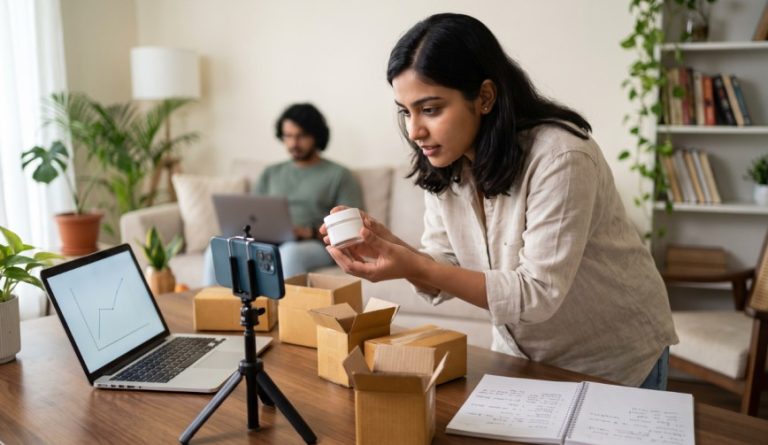
( Source – freepik.com )
We’re now entering a time where every customer can be a micro-creator. You don’t need fancy equipment, just a smartphone and a good story.
Future e-commerce videos will focus on:
Micro-stories that show genuine moments of use.
Interactive storytelling with polls, replies, and challenges.
Community-driven marketing, where users inspire each other.
Brands that understand this shift will not just sell products. They’ll build loyal communities around their values.
Check Out
BossWallah enables you to create, optimise, and grow social media video channels effortlessly from scratch.
Final Thoughts
The unboxing trend was the spark that lit up the digital marketplace, but UGC storytelling is the fire that keeps it burning.
It’s not about watching someone peel off plastic anymore. It’s about watching how that product changes their day, mood, or even confidence. The power of storytelling lies in its ability to turn ordinary purchases into meaningful experiences.
So the next time you see someone unbox a product online, look closer. You’re not just watching a review. You’re watching a story unfold. And who knows, maybe your next purchase will become part of your own little UGC story too.