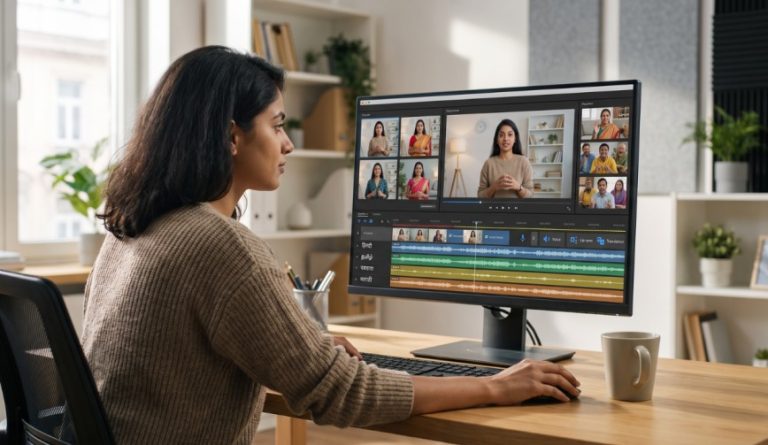
Digital Ad Campaigns Workflow: From Brief to Final Ad Launch
Running a digital ad campaign sounds exciting. People imagine viral ads, big numbers, and instant results. But behind every successful campaign is a clear workflow that keeps things from turning into chaos. This workflow takes an idea from a simple brief to a fully launched ad that actually performs.
Let us break it down step by step, in plain language, without overcomplicating things.
1. The Brief, Where Everything Starts

( Source- apploye.com )
The brief is the foundation of the entire campaign. It explains what the brand wants and why.
A good brief usually covers:
Campaign goal, such as sales, leads, installs, or awareness
Target audience details
Budget range
Timeline
Think of the brief as instructions for cooking a dish. If the instructions are unclear, even the best chef will struggle.
ALSO READ | Digital Ad Campaigns With Video Ads: What Actually Improves Performance.
2. Understanding the Target Audience
Before creating ads, teams try to understand who they are talking to.
This includes:
Age group and location
Interests and online behaviour
Problems they want to solve
This process is called audience research. It simply means learning about the people you want to reach so the ad feels relevant and not random.
3. Strategy Planning
Strategy is the bridge between goals and execution.
At this stage, decisions are made about:
Which platforms to use, like Google, Instagram, or YouTube
What type of ads to run, such as video or image ads
How the budget will be distributed
Strategy answers one key question. What is the smartest way to reach the right people with the available budget?
4. Creative Ideation
This is where ideas are born.
Creative ideation means thinking about:
The main message
The story or angle
How to grab attention quickly
The first few seconds of an ad are called the hook. The hook decides whether someone keeps watching or scrolls away.
5. Script and Copywriting
Once the idea is finalised, writing begins.
This includes:
Script for video ads
Ad copy, like headlines and captions
Good copywriting is clear and direct. It explains what the product does, why it matters, and what the viewer should do next. That final instruction is called a call to action, such as Buy now or Learn more.
6. Design and Video Production
Now ideas turn into actual ads.
This stage includes:
Designing visuals
Shooting or editing videos
Adding subtitles and branding
Subtitles are important because many people watch ads without sound. If your message depends only on audio, it may not reach anyone at all.
7. Internal Review and Feedback
Before launch, ads are reviewed carefully.
Teams check:
Brand guidelines
Grammar and spelling
Platform policies
Feedback is shared, changes are made, and sometimes more changes are requested. It can feel slow, but it prevents expensive mistakes later.
8. Ad Setup and Tracking

( Source – exafutures.com )
After approval, the ad is set up inside the ad platform.
This includes:
Selecting the audience
Setting budgets and schedules
Uploading creatives and copies
Tracking tools are also added here. Tracking means measuring what users do after clicking the ad, such as purchasing or signing up. Without tracking, ads are just expensive guesses.
9. Final Checks Before Launch
Before going live, everything is checked one last time:
Links are working
Targeting is accurate
Budget limits are correct
This step saves campaigns from awkward situations like ads running to broken pages or wrong audiences.
10. Ad Launch and Monitoring
The campaign goes live, but the work is not over.
Performance is monitored using metrics like:
Click-through rate, which shows how many people clicked
Conversion rate, which shows how many took action
Cost per result, which shows efficiency
Based on these numbers, changes are made. This improvement process is called optimisation.
ALSO READ | The Hidden Cost of Poor Performance Marketing Creatives on Paid Campaigns.
What This Workflow Looks Like in Real Life
In real life, this workflow is rarely perfect. Briefs change, creatives underperform, and unexpected results appear. A campaign that looks great on paper may struggle after launch, while a simple idea may outperform expectations.
This is completely normal.
The real value of a digital ad campaign workflow is structure. When something goes wrong, teams know exactly where to look. If clicks are high but sales are low, messaging or landing pages are reviewed. If reach is poor, targeting or creatives are adjusted. The workflow keeps decisions logical instead of emotional.
Most successful campaigns are not built on one big idea. They succeed because small improvements are made at every stage of this workflow.
Need Videos, Creators, or Regional Content for Your Brand?
Boss Wallah helps brands plan and execute video content at scale, without managing multiple vendors.
We work with companies to:
- Shoot large volumes of short-form videos using real creators and studio setups, suitable for social media, websites, campaigns, and launches
- Adapt the same videos for different languages, regions, and platforms, so one shoot works across India and global markets
- Launch products or campaigns through dozens or hundreds of creators, all managed, tracked, and reported in one system
- Support brands with ongoing content, launches, regional expansion, and performance-focused campaigns
Whether you need videos for a new launch, content for multiple markets, creator-led visibility, or a steady content pipeline, Boss Wallah acts as a single partner handling production, creators, and execution end-to-end.
👉 Click here to see how Boss Wallah works with brands and what we can build for you
Final Thoughts
A digital ad campaign is not about luck or magic. It is about following a clear process from brief to launch and beyond. When each step is handled carefully, ads feel less like interruptions and more like useful messages shown at the right time.
And when that happens, both brands and audiences win, which is the real goal of any digital campaign.