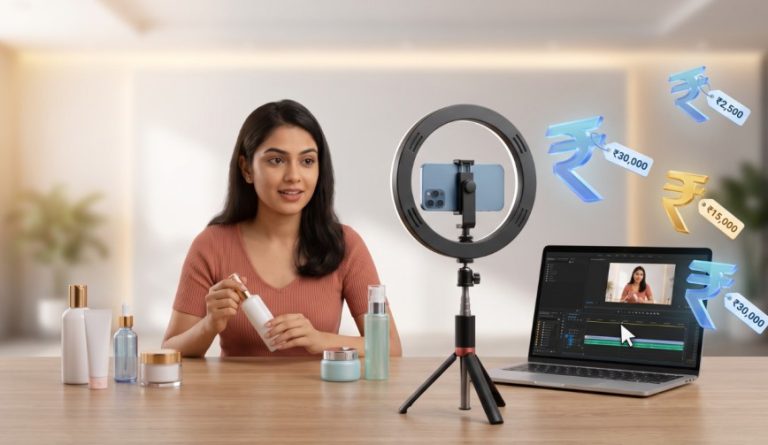
Digital Ad Campaigns for Indian Audiences: Creative Challenges Explained
Running a digital ad campaign in India often feels less like marketing and more like crowd management. You are speaking to millions of people at once, all with different languages, cultures, habits, and expectations. On paper, digital advertising looks easy. In practice, it is full of creative challenges that demand careful thinking.
India is one of the fastest-growing digital markets, but it is also one of the most complex. Let us break down the key creative challenges brands face while running digital ad campaigns for Indian audiences and why solving them is not as simple as it sounds.
1. One Country, Multiple Audience Mindsets

( Source – godaddy.com )
India is not one audience. There are many audiences living under one internet connection.
When brands create a single ad and push it across the country, they often miss the mark. People consume content differently based on region, age, profession, and lifestyle.
Key challenges here include:
Urban and rural audiences have very different needs
Metro users prefer polished visuals, while smaller towns prefer relatable settings
Cultural references change every few hundred kilometres
To solve this, brands need localisation. Localisation means adapting ads to suit regional language, culture, and behaviour rather than using one generic creative everywhere.
👉 Click here to see how Boss Wallah works with brands and what we can build for you
2. Language Is More Than Just Words
India’s language diversity is both a strength and a challenge.
Simply translating an ad from English to another language rarely works. Literal translations often sound awkward and lose emotional impact.
Creative teams face issues such as:
Jokes not making sense in another language
Brand tone is becoming unnatural after translation
Local phrases are being ignored in favour of textbook language
This is why transcreation matters. Transcreation means recreating the message so it feels natural in the local language while keeping the original emotion and intent. Indian audiences can instantly sense when language feels forced, and once they do, trust drops.
3. Capturing Attention in the First Few Seconds
Indian audiences scroll quickly, especially on platforms like Instagram and YouTube Shorts.
If an ad does not grab attention immediately, it is skipped without mercy.
Common creative mistakes include:
Slow openings with logos and introductions
Trying to explain too many things at once
Weak visuals in the first three seconds
Strong digital ads focus on:
A powerful opening visual
One clear message per ad
A smooth flow instead of cluttered information
The goal is simple. Stop the scroll first. Explain later.
ALSO READ | How Short-Form Videos Are Powering Modern Digital Ad Campaigns.
4. Using Humour Without Causing Trouble
Humour works extremely well in India, but it comes with risks.
What one group finds funny, another may find offensive or disrespectful. Cultural sensitivity plays a huge role in how humour is received.
Creative challenges include:
Avoiding regional stereotypes
Being careful with gender and family-related jokes
Managing social media backlash if humour is misunderstood
Successful ads use humour that feels inclusive and relatable. They laugh with the audience, not at them. When humour is handled well, it builds a strong emotional connection.
5. Building Trust in a Sceptical Market
Indian audiences have seen enough exaggerated claims to last a lifetime.
Words like best, guaranteed, and number one no longer impress. Instead, they raise suspicion.
Brands struggle with:
Proving credibility without sounding boring
Explaining complex offerings clearly
Standing out in a market full of bold promises
Using real people, genuine testimonials, behind-the-scenes visuals, and simple explanations works better than flashy claims. For example, ROI means return on investment, which tells people how much they earn compared to how much they spend. Explaining such terms builds confidence.
6. Platform-Specific Creative Pressure
Each digital platform behaves differently, and Indian users adapt quickly.
Creative teams must constantly adjust content based on platform behaviour.
Key platform challenges include:
Longer storytelling works better on YouTube
Short, fast-paced videos are performing better on Instagram
Clear offers and messaging are still important on Facebook
This means one ad cannot fit all platforms. Vertical videos, subtitles for sound-off viewing, and mobile-first visuals are now essential, not optional.
7. Limited Budgets vs High Audience Expectations
Not every brand has a celebrity or studio-level budget.
However, Indian audiences compare your ad with everything else they see, including big-budget campaigns.
This creates challenges such as:
Wanting premium output with limited resources
Competing visually with large brands
Balancing quality and quantity of content
Smart campaigns focus on strong storytelling, relatable settings, and clear messaging. Often, a simple but honest ad performs better than an expensive one that feels disconnected from reality.
8. Measuring Creativity Is Not Straightforward
Performance metrics matter, but creativity does not always show results instantly.
Common metrics include:
CTR, which means click-through rate and shows how many people clicked the ad
Conversion rate, which shows how many people actually took action
The challenge is that some ads are meant to build awareness and trust over time. Indian audiences often need repeated exposure before making a decision. Killing a creative too early can sometimes do more harm than good.
9. Consistency Across Campaigns Is Often Overlooked

( Source – psychologs.com )
One important challenge that brands face is maintaining creative consistency.
Many campaigns look good individually but fail to connect as a series. Visual style, tone of voice, and messaging keep changing, which confuses the audience.
This leads to problems such as:
The brand is not being easily recognisable
Messages feel disconnected across ads
Difficulty building long-term recall
Consistency does not mean repeating the same ad. It means maintaining a familiar look, feel, and voice so that audiences start recognising the brand even before the logo appears. In a crowded Indian digital space, familiarity builds comfort and comfort builds action.
ALSO READ | When Brands Should Outsource Creative Work for Digital Ad Campaigns.
Need Videos, Creators, or Regional Content for Your Brand?
Boss Wallah helps brands plan and execute video content at scale, without managing multiple vendors.
We work with companies to:
- Shoot large volumes of short-form videos using real creators and studio setups, suitable for social media, websites, campaigns, and launches
- Adapt the same videos for different languages, regions, and platforms, so one shoot works across India and global markets
- Launch products or campaigns through dozens or hundreds of creators, all managed, tracked, and reported in one system
- Support brands with ongoing content, launches, regional expansion, and performance-focused campaigns
Whether you need videos for a new launch, content for multiple markets, creator-led visibility, or a steady content pipeline, Boss Wallah acts as a single partner handling production, creators, and execution end-to-end.
👉 Click here to see how Boss Wallah works with brands and what we can build for you
Final Thoughts
Creating digital ad campaigns for Indian audiences is not about following global templates or copying what worked elsewhere. It is about understanding people, their habits, their humour, and their expectations from brands. Indian audiences are quick to judge, but they are also quick to reward content that feels genuine.
The biggest creative advantage today is clarity. Clear messaging, honest storytelling, and relatable visuals often perform better than complicated ideas. When brands respect cultural diversity, use language naturally, and stay consistent across campaigns, their ads feel less like interruptions and more like conversations.
In a market as dynamic as India, creativity is not a one-time effort. It is an ongoing process of learning, testing, and adapting. Brands that treat digital advertising as a long-term relationship rather than a quick sale are the ones that truly stand out and succeed.