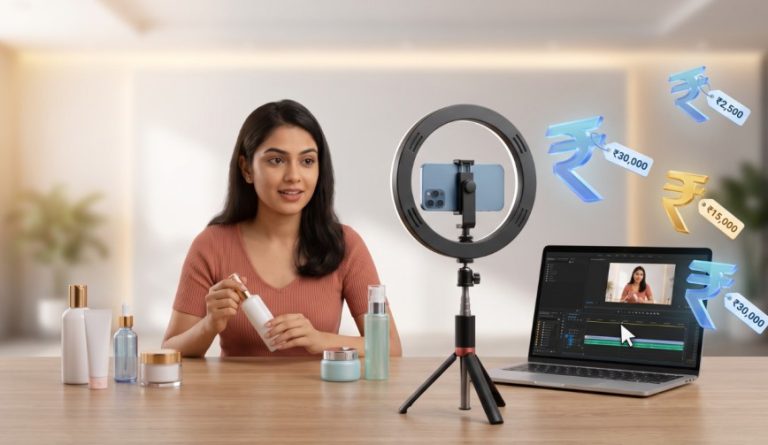
AI-Generated UGC vs. Real People: What Works Better for E-commerce Conversions?
Let’s be honest. Every time you open Instagram or scroll through YouTube Shorts, you’re hit with product videos that look authentic, someone trying out a skincare brand or showing how comfy those new sneakers are. But here’s the twist: not all of them are real people anymore. Some are AI-generated.
This shift is shaking up the e-commerce world. Brands are now wondering, should they rely on real creators who bring authenticity, or AI-generated UGC that saves time and cost? Let’s break it down.
What is UGC and Why It Works So Well

( Source – shutterstock.com )
UGC (User-Generated Content) is basically content created by real customers or influencers, not the brand itself. It could be a selfie, a product review, or even a short unboxing video. The beauty of UGC lies in its realness.
People trust other people. When someone sees a real person using a product, they relate to it, and that emotional connection often drives them to click “Add to Cart.”
But with AI tools getting more advanced, brands can now create realistic people who can do the same thing… or can they?
Check Out
BossWallah enables you to create, optimise, and grow social media video channels effortlessly from scratch.
The Rise of AI-Generated UGC
AI-generated UGC is content created entirely using artificial intelligence, from the model to the voice, even to the gestures. These virtual humans look real, sound real, and can talk about your product 24/7 without asking for coffee breaks or a paycheck hike.
Why brands love AI-generated UGC:
Time-saving: You can create dozens of videos in a day without scheduling shoots.
Cost-effective: No need to pay influencers, rent studios, or hire editors.
Scalable: AI allows you to make localised versions (different languages, tones, or styles) for global campaigns.
Consistent quality: No bad lighting, no missed deadlines, no retakes.
Sounds like a marketer’s dream, right? But there’s a catch.
ALSO READ | Cost of Authenticity: Breaking Down UGC Video Production Budgets for E-commerce Brands
Where AI-Generated UGC Falls Short
1 . Lack of Emotional Connection
AI-generated models can smile, speak, and pose, but they can’t feel. And audiences can sense that. The warmth, laughter, or little human errors in real UGC are what make people connect emotionally with a product.
2 . Overly Perfect Appearance
Ever noticed how some AI models just look too perfect? The spotless skin and symmetrical features can make the content feel more like an ad and less like a genuine review.
3 . Trust Factor
People trust recommendations from real humans. When audiences realise a video is AI-generated, it can create scepticism. If the product is really good, why didn’t a real person talk about it?
4 . Limited Engagement
AI can’t comment back, reply to DMs, or participate in live discussions. Real creators, on the other hand, interact with followers and build communities that brands benefit from.
Comparison: AI-Generated UGC vs. Real UGC
| Aspect | AI-Generated UGC | Real UGC |
|---|---|---|
| Authenticity | Feels polished and controlled, often lacks emotional depth | Raw, genuine, and relatable |
| Trust Factor | Limited trust, as audiences know it’s computer-made | High trust due to real human experience |
| Cost & Time | Cheaper and faster to produce | Requires creator payments and coordination |
| Scalability | Highly scalable, easy to generate multiple versions | Limited by creator availability |
| Engagement | No real interaction with the audience | Can respond, engage, and build relationships |
| Emotional Connection | Artificial or flat | Strong emotional impact on viewers |
| Best Use Case | Product demos, A/B testing, multilingual ads | Reviews, testimonials, and community building |
This table makes one thing clear: AI UGC is great for quantity and speed, while real UGC wins when it comes to authenticity and conversions.
Why Real People Still Win for E-commerce Conversions
When it comes to actually driving sales, real people hold the upper hand. Let’s see why:
Authenticity Sells: Viewers can relate to human creators who share real stories or experiences with a product.
Social Proof Matters: Seeing a genuine customer using a product increases credibility.
Emotions Influence Purchases: Buyers often make emotional decisions, and human creators trigger those emotions better.
Word-of-Mouth Power: Real people create ripple effects. One honest review can influence hundreds of others.
According to marketing studies, consumers are 2.4 times more likely to trust UGC from real users than branded or AI-created content.
ALSO READ | Rise of AI-Driven Social Media Growth: What It Means for Brand Campaigns in 2026
When AI-Generated UGC Actually Works

( Source – freepik.com )
Now, this doesn’t mean AI-generated UGC is useless. In fact, it can be a powerful tool if used smartly.
Ideal use cases for AI-generated UGC:
Product Demos: Showing features, usage steps, or 360° views.
A/B Testing: Quickly testing different ad versions to see what performs best.
Multilingual Ads: Generating the same content in different languages for global audiences.
Filler Content: Maintaining posting frequency on social media without overloading human creators.
Basically, AI UGC is great for scalability and speed, but not for emotional depth or authentic connection.
A Smart Strategy: Combine Both
The best brands are not choosing between AI and real creators; they’re combining both.
Here’s how that looks:
AI creates prototypes or drafts for UGC content (for speed).
Real creators personalise those videos with genuine reactions and experiences.
AI assists with editing, voiceovers, and localisation.
Human creators engage with followers, adding that final layer of authenticity.
This hybrid approach saves time and money while keeping the brand’s content emotionally appealing and trustworthy.
Check Out
Boss Wallah Studios empowers entrepreneurs and brands to produce high-quality content with ease.
Final Thoughts
AI-generated UGC is fast, affordable, and futuristic, but it can’t replace the warmth and trust of real human creators.
Real people bring emotion, credibility, and community, all of which are crucial for e-commerce conversions. AI, on the other hand, brings scalability, consistency, and efficiency.
The best marketing strategy isn’t about choosing sides but blending both worlds. Let AI handle the volume and let humans handle the connection. After all, algorithms can mimic a smile, but only humans can make you believe it.