AI for Customer Support: What Small Businesses Can Automate Today
Running a small business often feels like wearing five hats before lunch. You are the owner, the accountant, the marketer, and somehow also the person answering “where is my order” for the tenth time this week. If that sounds familiar, you are not alone. The good news is that you do not need a big budget or a tech team to fix it.
Artificial intelligence (AI) has quietly become one of the most useful tools for customer support. And no, this does not mean replacing your team with robots that talk like machines. It means taking the repetitive, boring tasks off your plate so your team can focus on the conversations that actually need a human touch.
In this article, we will explain, in very simple words, what small businesses can automate today. No confusing tech terms, no complicated setup, just plain and clear ideas you can actually use.
👉Click here to see how Boss Wallah works with brands and what we can build for you
Why Customer Support Automation Matters
(Source – startuptalky.com)
Customers today want fast answers. Most people expect a reply within a few minutes, not hours. That is a hard target to hit if you are a small team handling emails, phone calls, and social media messages all at the same time.
This is where customer service automation helps. It simply means using software and AI tools to handle repeated support tasks automatically, so your business can reply quickly even when your team is small or asleep.
Here is a quick look at the difference automation can make:
| Task | Without Automation | With Automation |
|---|---|---|
| Answering FAQs | Staff replies each time manually | Chatbot answers instantly, any time of day |
| Order updates | Staff sends emails one by one | Automated emails go out on their own |
| Sorting messages | Staff reads and forwards each ticket | AI sorts and sends tickets to the right person |
| Spotting unhappy customers | Noticed only when someone complains loudly | AI flags upset tone early |
Think of automation like having a very reliable helper who never takes a coffee break, never forgets to reply, and never complains about answering the same question for the hundredth time.
1. AI Chatbots for Instant Replies
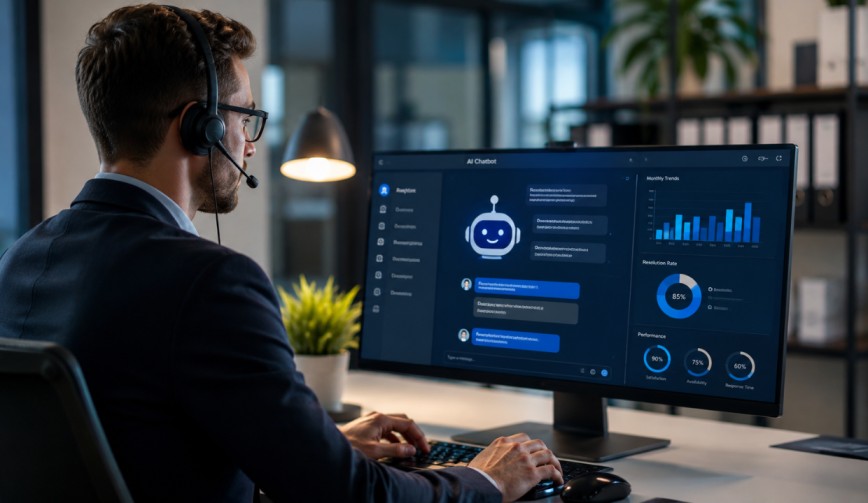
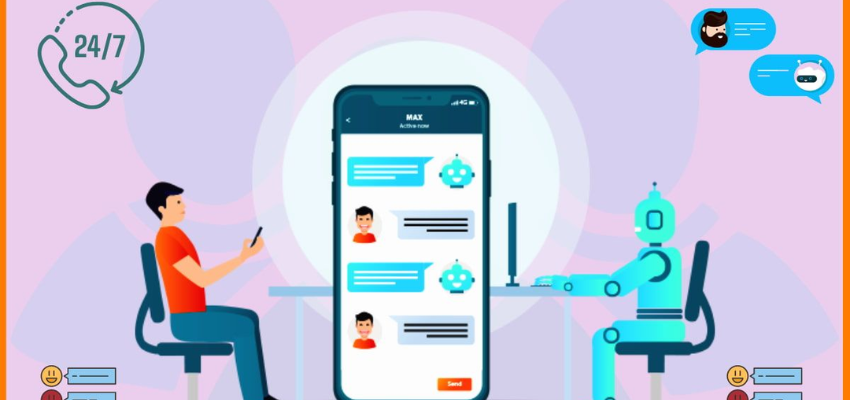
AI chatbots are probably the best-known type of support automation, and for good reason. A chatbot is a small computer program that can talk to your customers in real time. It can answer simple questions like store hours, return policy, or delivery time.
Older chatbots were frustrating because they only understood exact words typed in a certain way. Today’s chatbots use something called natural language processing. This simply means they can understand normal sentences, even with small typing mistakes, and reply in a way that actually makes sense.
Benefits of chatbots for a small business:
- Customers get answers even at 2 a.m., without anyone losing sleep
- Simple questions get solved right away, so your team can focus on harder problems
- You get fewer “just checking in” emails filling up your inbox
Most website builders and help desk software now let you add a chatbot in a single afternoon. No coding needed.
2. Automated Email Responses
Not every email needs a reply typed from scratch. Order confirmations, shipping updates, and answers to common questions can all be handled using automated email templates.
For example, when someone places an order, a confirmation email can go out right away. When the order ships, another email can follow with tracking details. Your team does not have to do anything, yet the customer still feels informed the whole time.
This might sound small, but it builds trust. Customers like knowing what is happening with their order, and automation makes sure that happens every single time, without anyone forgetting.
3. Smart Ticket Routing
If your business gets messages from email, social media, live chat, and a contact form all at once, things can get messy fast. Smart ticket routing uses AI to read incoming messages and send them straight to the right person or team.
For example, a message about a payment problem can go straight to whoever handles billing, while a technical question goes to your support expert. This is often part of a help desk system, and many affordable tools now include this sorting feature by default.
The result is fewer messages getting lost and faster replies overall, without anyone having to sort through a crowded inbox every single morning.
4. AI-Powered FAQ and Knowledge Base Tools
Every business gets the same questions again and again. “Do you ship internationally?” “What is your refund policy?” “How do I reset my password?”
Instead of typing out the same answer every time, you can build a knowledge base. This is simply a collection of help articles that customers can search on their own. AI tools can now make this even smarter, suggesting the right article to a customer as they start typing their question, sometimes before they even hit send.
This kind of self-service support helps everyone. Customers get instant answers, and your team gets fewer repeated tickets to handle.
5. Sentiment Analysis to Spot Unhappy Customers Early
Here is a lesser-known but very useful tool. Sentiment analysis is a type of AI that reads customer messages and figures out the emotional tone behind them, whether someone sounds happy, confused, or clearly annoyed.
This lets small businesses flag angry or urgent messages automatically, so a real person can respond quickly. Otherwise, that message might sit in a queue behind fifty “what are your store hours” emails. This one small feature can save a customer relationship before it turns into a bad review.
6. Voice Assistants and Automated Phone Support
If your business gets a lot of phone calls, AI voice assistants can help with the basics. They can answer common questions, direct callers to the right department, or even book appointments, all without a human answering the phone first.
This does not replace friendly human service. It simply handles the routine parts, like confirming business hours or taking a message, so your team can spend their time on calls that truly need a real conversation.
What Should Stay Human
As helpful as automation is, it does have a limit, and knowing where that limit sits makes all the difference. Complaints, refund arguments, emotional situations, or anything involving a genuinely upset customer should always involve a real person. Nobody wants to argue with a chatbot about a broken product while it cheerfully suggests they “try turning it off and on again.”
The goal of support automation is not to remove the human touch. It is to protect it by clearing away repetitive, boring work so your team has the time and energy to actually be human when it matters most.
Getting Started Without Overwhelming Yourself

(Source – edesk.com)
You do not need to automate everything at once. Start small. Pick the one task that eats up most of your time each week, whether that is answering the same five questions over and over or manually sorting support emails, and automate that first. See how it feels, adjust if needed, and then move to the next task.
A simple way to plan it out:
- Pick your biggest time-waster task
- Choose one easy AI customer support tool to handle it
- Test it for two weeks and see the results
- Add the next automation once you are comfortable
Most AI-powered support tools today are built with small businesses in mind. They are affordable, simple to set up, and do not need any technical background. You do not need to be a tech expert to use them. You just need to know where your time is being wasted.
Read More | Freelancer to Founder: When It Actually Makes Sense to Turn Your Freelance Work Into a Registered Business.
Need Videos, Creators, or Regional Content for Your Brand?
Boss Wallah helps brands plan and execute video content at scale, without managing multiple vendors.
We work with companies to:
- Shoot large volumes of short-form videos using real creators and studio setups, suitable for social media, websites, campaigns, and launches
- Adapt the same videos for different languages, regions, and platforms, so one shoot works across India and global markets
- Launch products or campaigns through dozens or hundreds of creators, all managed, tracked, and reported in one system
- Support brands with ongoing content, launches, regional expansion, and performance-focused campaigns
Whether you need videos for a new launch, content for multiple markets, creator-led visibility, or a steady content pipeline, Boss Wallah acts as a single partner handling production, creators, and execution end-to-end.
👉Click here to see how Boss Wallah works with brands and what we can build for you
Final Thoughts
AI for customer support is not about replacing people. It is about giving small businesses the same speed and consistency that big companies have, without needing a huge support team to do it. Chatbots answer the easy questions, automated emails keep customers informed, smart routing keeps things organised, and sentiment analysis makes sure no upset customer slips through the cracks.
Start with one tool, watch the difference it makes, and build from there. Your future self, the one who is not answering “where is my order” for the eleventh time this week, will thank you.
Have an idea but don’t know the first step?
BossWorks builds a step-by-step business plan tailored to your city and business type, with real costs, funding options, and launch tasks all in one place. Built for first-time founders, from idea to open.
Frequently Asked Questions
1. Is AI customer support expensive for small businesses?
No, many AI tools offer free or low-cost plans made just for small businesses.
2. Will an AI chatbot sound robotic and annoy my customers?
Not usually, since modern chatbots use natural language processing to sound more human and natural.
3. Do I need technical skills to set up customer support automation?
No, most tools are made for non-technical users and only need simple setup steps.
4. Can AI handle complicated customer complaints?
No, complex complaints and upset customers should always be handled by a real person.
5. What is the easiest place for a small business to start with AI support?
Start with an AI chatbot or automated order emails, since both are quick, cheap, and easy to set up.