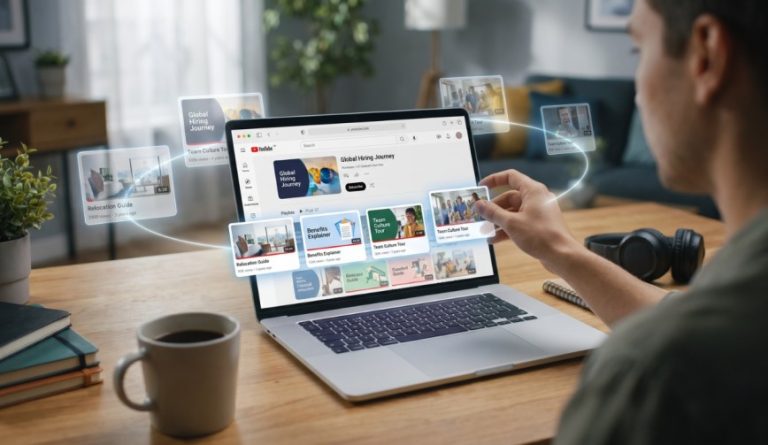
What Makes AI-Generated YouTube Videos Original Enough to Monetise?

AI tools have made creating YouTube videos easier than ever. You can generate scripts, voiceovers, images, subtitles and even complete video drafts with a few clicks.
But does using AI mean your videos can earn money on YouTube?
Not necessarily. AI-generated YouTube videos can be monetised, but simply creating videos with AI and uploading them regularly is not enough. Your content should offer something useful, original or entertaining to viewers.
YouTube’s monetisation policies focus on original content and now clearly identify repetitive or mass-produced content as inauthentic content. Let’s understand what this means for creators.
Can You Monetise AI-Generated YouTube Videos?
(Source – news18.com)
Yes. YouTube does not automatically reject videos just because they use AI.
You can use AI tools to help with:
- Writing and improving video scripts.
- Creating background images and visuals.
- Editing videos and removing unwanted sections.
- Generating subtitles and translations.
- Improving audio quality.
- Developing ideas and researching topics.
However, the final video should still show your creative contribution. It should not look like a mass-produced video with little original value.
For example, using AI to create visuals for a well-researched educational video can be useful. Uploading dozens of nearly identical AI-generated videos with the same narration and format is a different matter.
👉Click here to see how Boss Wallah works with brands and what we can build for you
What Makes an AI-Generated Video Original?
You do not have to create every part of a video manually. What matters is the value you add to the final content.
Here are some ways to make your videos more original.
1. Add Your Own Ideas and Opinions
Do not depend entirely on AI-generated scripts.
Research your topic, include your own observations and explain things in a way your audience can understand.
For example, if you create a video about smartphone features, include your own comparisons, practical examples and opinions instead of simply reading an AI-generated list.
2. Give Your Videos a Clear Story
A video should have a purpose.
Instead of combining random AI images and clips, create a clear beginning, middle and ending.
For example, an AI-assisted storytelling video can introduce a character, show a problem and explain how the situation develops.
3. Use AI Visuals With a Creative Direction
AI-generated images and videos can make your content more interesting.
But avoid using random visuals that have little connection to your topic.
Choose visuals that support your explanation, match your story and help viewers understand the subject.
4. Include Meaningful Commentary
Voiceovers should do more than read basic information.
Explain the topic, share useful examples, compare different options or answer questions your audience may have.
Your commentary helps make the content more informative and distinct.
5. Make Every Video Different
Using the same intro, outro or editing style is not automatically a problem.
However, the main content should offer something different in every video.
For example, creating 20 videos using the same template with only the topic name changed may make your channel look repetitive.
Read More | Free Instagram Followers: Why Your Profile Isn’t Converting Visitors.
AI YouTube Videos That May Not Qualify for Monetisation
Some types of content can create problems during YouTube’s monetisation review.
| Content type | Why it may be a problem |
|---|---|
| Repetitive AI videos | Videos offer almost the same content with very little variation |
| AI slideshows | Images appear with little or no useful narration or explanation |
| Automatically generated stories | Videos use similar scripts and storylines repeatedly |
| Copied AI scripts | Content repeats information from other sources without adding value |
| Reused videos | Existing videos are uploaded with minimal changes |
| Mass-produced content | Videos appear to be created using the same template at scale |
These examples are not automatic decisions for every individual video. YouTube reviews whether the content meets its monetisation policies, including the overall originality and value of the channel.
Do You Need to Disclose AI-Generated Content?
Sometimes, yes.
YouTube requires creators to disclose altered or synthetic content when it is realistic and could make viewers believe that something happened when it did not.
For example:
- Making a real person appear to say something they never said.
- Creating realistic footage of an event that never happened.
- Changing a real person’s actions or appearance using AI.
- Generating realistic scenes that could be mistaken for actual events.
YouTube does not require disclosure for every use of AI. Routine assistance such as script ideas, captions, or minor editing generally does not require this disclosure.
When disclosure is required, select the altered or synthetic content option during video upload.
How to Make AI Content Safer for YouTube Monetisation
Before publishing your next AI-assisted video, follow these simple checks:
- Review the script: Check facts and add your own explanation.
- Check the visuals: Make sure they match the topic and do not mislead viewers.
- Improve the narration: Avoid repeating the same generic voiceover format.
- Add original value: Include examples, comparisons, research or personal insights.
- Avoid bulk uploads: Do not publish large numbers of nearly identical videos.
- Check disclosure requirements: Label realistic altered or synthetic content when required.
- Review copyright and licences: Make sure you have the necessary rights to use your music, visuals and other assets.
These steps can help improve content quality, but they do not guarantee monetisation approval.
What If Your YouTube Channel Is Rejected for Monetisation?

(Source – careeraddict.com)
If YouTube rejects your channel for monetisation, first check the reason given in YouTube Studio.
Then:
- Review the videos that may have caused the issue.
- Read the relevant monetisation policy.
- Identify repetitive, reused or low-value content.
- Improve videos by adding meaningful original contributions.
- Follow YouTube’s appeal or reapplication instructions.
Do not simply change video titles or thumbnails and expect the problem to disappear. You need to address the actual content issue.
Read More | Instagram Growth Tips 2026: Why Your Page Is Quiet While Others Explode.
Need Videos, Creators, or Regional Content for Your Brand?
Boss Wallah helps brands plan and execute video content at scale, without managing multiple vendors.
We work with companies to:
- Shoot large volumes of short-form videos using real creators and studio setups, suitable for social media, websites, campaigns, and launches
- Adapt the same videos for different languages, regions, and platforms, so one shoot works across India and global markets
- Launch products or campaigns through dozens or hundreds of creators, all managed, tracked, and reported in one system
- Support brands with ongoing content, launches, regional expansion, and performance-focused campaigns
Whether you need videos for a new launch, content for multiple markets, creator-led visibility, or a steady content pipeline, Boss Wallah acts as a single partner handling production, creators, and execution end-to-end.
👉Click here to see how Boss Wallah works with brands and what we can build for you
Final Thoughts
Using AI to create YouTube videos is not a problem by itself. The bigger question is whether your videos offer something original and useful to viewers.
Use AI to support your ideas, editing and storytelling. Do not let it replace the creative thinking that makes your channel different.
A simple rule to remember: AI can help you create a video, but your creative contribution gives people a reason to watch it.
FAQs
1. Can AI-generated YouTube videos be monetised?
Yes. AI-assisted videos can be monetised if they follow YouTube’s policies and provide original value to viewers.
2. Does YouTube reject videos made entirely with AI?
Not automatically. However, mass-produced, repetitive or low-value content may not qualify for monetisation.
3. Do AI voiceovers affect YouTube monetisation?
AI voiceovers are not automatically a problem. The overall originality and value of the video matter.
4. Do I need to disclose AI-generated videos on YouTube?
You need to disclose realistic altered or synthetic content when it could mislead viewers. Ordinary AI assistance does not always require disclosure.
5. Can I use AI images in monetised YouTube videos?
Yes. You can use AI-generated images, provided your content follows YouTube’s monetisation policies and you have the necessary rights to the assets you use.