How YouTube RPM Works: The Hidden Metric That Decides Your Earnings

Many creators focus only on views, but the real earnings on YouTube depend on something deeper called RPM. It is one of the most important yet often misunderstood metrics that directly affects how much money you actually make from your channel.
While views show popularity, RPM shows real income efficiency. Two channels with the same views can earn very different amounts because of this single metric.
In this guide, you will understand what YouTube RPM is, how it works, what affects it, and how you can improve it to increase your earnings in 2025.
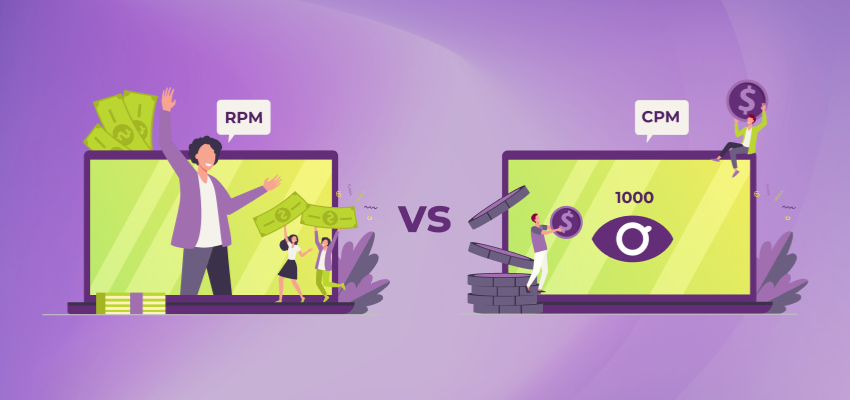
Understanding RPM vs CPM: What creators need to know
(Source – reacheffect.com)
What are RPM and CPM in YouTube?
YouTube RPM (Revenue Per Mille) shows how much money you make from 1,000 video views on. This creator-focused metric has:
- Your ad revenue after YouTube’s cut
- Money from channel memberships
- Revenue from YouTube Premium
- Income from Super Chat and Super Stickers
- For Shorts, we calculate RPM based on 1,000 engaged views
CPM (Cost Per Mille) tells you what advertisers pay for 1,000 ad impressions on your videos. This advertiser-focused metric:
- Shows what advertisers will pay to reach your viewers
- Gets calculated before YouTube takes its share
- Counts each ad separately (videos can have multiple ads)
- Shows how much advertisers value your audience
The simple way to look at it: CPM shows what advertisers pay, while RPM reveals what ends up in your pocket.
How are they calculated differently
The way we calculate these metrics highlights their key differences:
RPM Formula: RPM = (Total earned revenue / Total number of views) × 1,000
Let’s say you earned ₹12,657 from 30,000 total video views: RPM = (₹12,657 / 30,000) × 1,000 = ₹421.90
CPM Formula: CPM = (Total ad revenue / Number of ad impressions) × 1,000
Here’s an example: advertisers paid ₹16,876 for 50,000 ad impressions: CPM = (₹16,876 / 50,000) × 1,000 = ₹337.52
The main difference lies in how RPM shows your actual earnings after YouTube takes its 45% share of ad revenue, while CPM reflects the advertiser’s payment before this split. On top of that, RPM takes into account all your revenue sources, not just ads.
Not every view will have ads. Some videos might not qualify for monetisation, or certain views might skip ads due to limited advertiser inventory. These factors make RPM a better measure of your channel’s earning potential.
Which metric should you focus on?
You should keep your eyes on RPM for several good reasons:
- More accurate earnings picture – RPM shows you exactly what you make after YouTube’s cut, which helps with financial planning
- Complete revenue tracking – RPM tracks all your money streams, like memberships and Super Chats, unlike CPM, which only looks at ad impressions
- Better performance indicator – You’ll learn which videos make more money, no matter how many impressions they get
- Realistic expectations – Recent data shows average RPM ranges from ₹105 to ₹211, with ₹168 or higher being a solid target
In spite of that, CPM matters because it shows how much advertisers value your audience. Higher CPMs often lead to higher RPMs, especially if your content attracts premium advertisers in areas like finance, tech
Note that both these numbers change based on your content type, who watches your videos, seasonal patterns, and how many advertisers want to spend money. By watching both metrics while focusing on RPM, you’ll learn more about how well your channel makes money.
👉Click here to see how Boss Wallah works with brands and what we can build for you
How to check and track your RPM in YouTube Studio
Your channel’s financial performance depends on tracking revenue metrics. I’ll explain how to find, monitor, and analyse your RPM in YouTube Studio to make informed decisions about your content strategy
Step-by-step guide to finding RPM
You can easily find your YouTube RPM when you know the right place to look:
- Sign in to your YouTube account and open YouTube Studio
- The Analytics section appears in the left-hand menu
- Click on the Revenue tab at the top of the screen
- The RPM metric appears among your other revenue data
Your RPM appears on this screen with other key metrics like CPM, total revenue, and estimated monetised playbacks. This complete view shows how your channel performs financially.
Using analytics to monitor trends
YouTube Studio’s revenue analytics help you understand your earning patterns:
- Track month-to-month performance to spot seasonal trends or high-performing content
- Compare video formats (long-form, Shorts, live streams) to find which brings the highest RPM
- Analyse content performance to learn which videos earn more revenue
This information helps optimise your content strategy. You can compare underperforming videos with those raising your average when your RPM drops. This analysis shows what strikes a chord with viewers and advertisers.
Tools and calculators to estimate RPM
Several online tools complement YouTube Studio to estimate potential earnings:
- Social Blade has a YouTube Money Calculator that estimates earnings based on views using an RPM range of ₹21.10 to ₹337.52
- TunePocket offers a calculator that considers your niche and audience location for better accuracy
- TubeBuddy uses 2024 research data on CPM/RPM ranges by content category for reliable estimates
These calculators provide estimates based on public data. Your actual RPM varies based on your niche, audience location, and content quality.
Finance and business content creators in high-tier countries like the US or Germany see RPMs between ₹843.80 to ₹1856.37. General entertainment content in mid-tier countries averages around ₹42.19 to ₹337.52.
These differences help set realistic earnings expectations and growth opportunities. Regular checks of your actual RPM in YouTube Studio, combined with estimation tools, give you valuable insights into your channel’s monetisation potential and help shape your content strategy.
Read More | Free Instagram Followers: Why Your Profile Isn’t Converting Visitors.
What affects your RPM and how to control it
Your YouTube RPM changes based on many factors that you can control with good planning. A solid grasp of these elements helps you earn more money even if your views stay the same.
Geographic location of viewers
Your earnings depend heavily on where your audience watches from:
- High-RPM regions: United States, Canada, Australia, and the UK generate RPMs between ₹421.90–₹1265.71+
- Mid-tier regions: Germany, Norway, and the Netherlands deliver strong RPMs thanks to high e-commerce advertiser competition
- Lower-RPM regions: India averages only ₹59.07 CPM despite its 491 million YouTube users, while Latin American and African countries range from ₹33.75 to ₹210.95
Creators based in lower-RPM countries can boost their earnings by creating content that connects with international English-speaking audiences.
Content category and advertiser demand
The topic of your video plays a big role in what advertisers will pay:
- Finance and “make money online” content leads the pack with RPMs of ₹1265.71-₹4219.02. Luxury content targeting high-net-worth viewers comes next. Educational videos bring in ₹843.80-₹2109.51, while entertainment content earns ₹168.76-₹675.04.
- Gaming content earns moderate RPMs between ₹337.52-₹1265.71 despite its huge popularity. Music content sits lower at about ₹114.76.
Ad blockers and copyright claims
These technical issues can cut deeply into your earnings:
Ad blockers prevent ads from showing up, which means zero revenue from those views. This issue has grown so big that YouTube now uses anti-adblock measures.
Copyright claims send your earnings to the content owner—even if you use just a tiny clip of copyrighted music or footage. Your RPM calculation takes a hit since these views count but don’t make you any money.
Shorts long-form content
The difference in earnings between these formats is huge:
- Long-form videos earn between ₹253.14 and ₹506.28 RPM, with some creators getting up to ₹563.66. Shorts, however, bring in just ₹4.22-₹5.91 RPM, and most creators see less than ₹16.88.
- Let’s put this in perspective: a regular 20-30 minute video earning ₹464.09 RPM might see its Short version make just ₹15.19 RPM. That’s 30 times less money per view. Videos longer than 8 minutes can include mid-roll ads, which means more earning potential.
- These factors help explain why two channels with similar views might earn very different amounts. Understanding them gives you better control over your YouTube RPM.
Top 6 ways to increase RPM in 2025
Want to increase your YouTube earnings? Your RPM (Revenue Per Mille) can grow beyond just content creation with the right strategy. These six proven ways will help boost your YouTube RPM in 2025:
1. Monetise all eligible videos
- Make sure monetisation stays active for every video in your library
- Your revenue could double or triple with mid-roll ads in videos longer than 8 minutes
- Set up all qualifying monetisation features like Super Thanks and Channel Memberships
- Look again at previously demonetised videos that might meet current guidelines
2. Target high-RPM countries
- The “Big 4” English markets – US, UK, Canada, and Australia – offer RPMs ranging from ₹421.90 to ₹1265.71+
- High-earning European markets include Norway, Switzerland, Denmark, and Germany
- Your upload schedule should match your target region’s peak times (avoid UK uploads at 2am GMT)
- Your content should resonate with high-RPM countries whenever possible
3. Create advertiser-friendly content
- Keep profanity minimal, especially in titles, thumbnails, and video openings
- Stay away from topics that might restrict ad placements
- Speed up monetisation by using YouTube’s self-certification questionnaire during upload
- Sensitive topics need a proper educational or journalistic context
4. Use mid-roll ads in longer videos
- Your videos should exceed 8 minutes to qualify for mid-roll ads
- Place ads at logical breaks instead of disrupting key moments
- YouTube’s ad breaks tool helps you preview and adjust ad spots
- The sweet spot lies between 3-4 ads per 10 minutes for viewers
5. Build stronger audience connections
- Better viewer retention leads to higher RPM
- Strong opening hooks in the first 15 seconds keep viewers watching
- More comments, likes, and shares help your content perform better with the algorithm
- Learn from your most-watched videos and apply their format
6. Add memberships and Super Chats
- Creators keep 70% of Channel membership revenue after deductions
- Live streams become more profitable with Super Chats and Super Stickers
- Regular videos can benefit from Super Thanks features
- These features now outperform traditional ad revenue for some creators, with membership earnings growing 4x from 2019-2020
Beyond RPM: Building a sustainable income on YouTube

(Source – freepik.com)
Building a steady income on YouTube requires more than just one revenue stream. Content creators who succeed know they can’t rely on RPM alone to thrive in the long run.
Why relying only on RPM is risky
- YouTube’s algorithm updates can slash your views and earnings overnight
- The platform’s demonetization policy makes many creators feel it’s too strict
- Ad rates go up and down with seasons, which makes your income hard to predict
- Your channel might lose Partner Program access, and your earnings could drop to zero
- You can’t choose which ads show up or control how much you earn per view
Adding brand deals and sponsorships
- These deals bring in the most money for channels that are more than 2 years old
- Most brands pay you once instead of giving commissions
- More companies are heading over to influencer marketing and spending their ad budgets on creators who have loyal fans
- Brands look for channels whose viewers align with their target audience
- Your engagement means more than your subscriber count—10,000 active fans could bring more value than 100,000 passive ones
Selling merch and digital products
- Your audience feels closer to your brand and becomes a walking advertisement
- Digital products like e-books and templates cost little to make but sell for good profits
- Online courses package your knowledge into content that keeps making money
- Print-on-demand makes it easier than ever to sell physical items
- Shopify lets you sell products right beneath your videos
Using affiliate links effectively
- You can start even if you’re not yet qualified for the YouTube Partner Program
- You earn money when people buy through your special links
- Your recommendations should fit naturally into your videos
- Your audience trusts you more when you only recommend products you actually use
- Put your links where they’re easy to find in descriptions and pinned comments, and mention them in your videos
Read More | Instagram Growth Tips 2026: Why Your Page Is Quiet While Others Explode.
Key Takeaways
Understanding YouTube RPM is essential for creators who want to maximise their earnings and build sustainable income streams on the platform.
- RPM shows your actual earnings per 1,000 views after YouTube’s 45% cut, making it more valuable than CPM for tracking real income
- Target high-RPM countries like the US, UK, Canada, and Australia, where creators earn ₹421-₹1,265+ per 1,000 views versus ₹59 in lower-tier markets
- Create videos longer than 8 minutes with mid-roll ads to potentially double or triple your revenue compared to shorter content
- Finance and educational content command the highest RPMs (₹1,265-₹4,219) while entertainment and gaming earn significantly less per view
- Diversify beyond ad revenue with brand deals, merchandise, and affiliate marketing, since relying solely on RPM creates income vulnerability
YouTube Shorts earn dramatically less (₹4-₹16 RPM) compared to long-form content, making format choice crucial for monetisation strategy
Need Videos, Creators, or Regional Content for Your Brand?
Boss Wallah helps brands plan and execute video content at scale, without managing multiple vendors.
We work with companies to:
- Shoot large volumes of short-form videos using real creators and studio setups, suitable for social media, websites, campaigns, and launches
- Adapt the same videos for different languages, regions, and platforms, so one shoot works across India and global markets
- Launch products or campaigns through dozens or hundreds of creators, all managed, tracked, and reported in one system
- Support brands with ongoing content, launches, regional expansion, and performance-focused campaigns
Whether you need videos for a new launch, content for multiple markets, creator-led visibility, or a steady content pipeline, Boss Wallah acts as a single partner handling production, creators, and execution end-to-end.
👉Click here to see how Boss Wallah works with brands and what we can build for you
Conclusion
YouTube RPM is a vital step to maximise creator earnings in 2025. This piece shows how RPM is different from CPM, what affects your revenue, and proven ways to boost your earnings per 1,000 views. RPM shows the real money that lands in your bank account after YouTube’s 45% cut.
Your content category, audience location, and video format affect your earning potential a lot. Videos about finance that target viewers in the US, UK, Canada, and Australia will, without doubt, earn more than gaming content watched mainly in lower-RPM regions. On top of that, longer videos with mid-roll ads generate higher RPM than Shorts.
FAQs
RPM (Revenue Per Mille) represents how much money a creator earns per 1,000 video views on YouTube. It’s important because it gives creators a clear picture of their actual earnings after YouTube takes its cut, making it more valuable than other metrics for tracking real income.
A good RPM typically ranges from ₹168 to ₹675, but this can vary significantly based on factors like content niche and audience location. For high-paying niches like finance or business, an RPM above ₹843 is considered excellent.
Longer videos (over 8 minutes) can significantly increase earnings potential. They qualify for mid-roll ads, which can potentially double or triple revenue compared to shorter content. However, it’s important to balance ad placement with viewer experience.
No, RPM varies greatly by country. High-tier markets like the US, UK, Canada, and Australia can generate RPMs of ₹421 to ₹1,265+ per 1,000 views. In contrast, lower-tier markets might average around ₹59 per 1,000 views.
Creators can increase RPM by targeting high-paying countries, creating advertiser-friendly content in lucrative niches, optimising video length for mid-roll ads, increasing audience engagement, and diversifying income streams beyond ad revenue with features like channel memberships and Super Chats.