What Happens Inside YouTube AdSense When a Video Gets Monetised
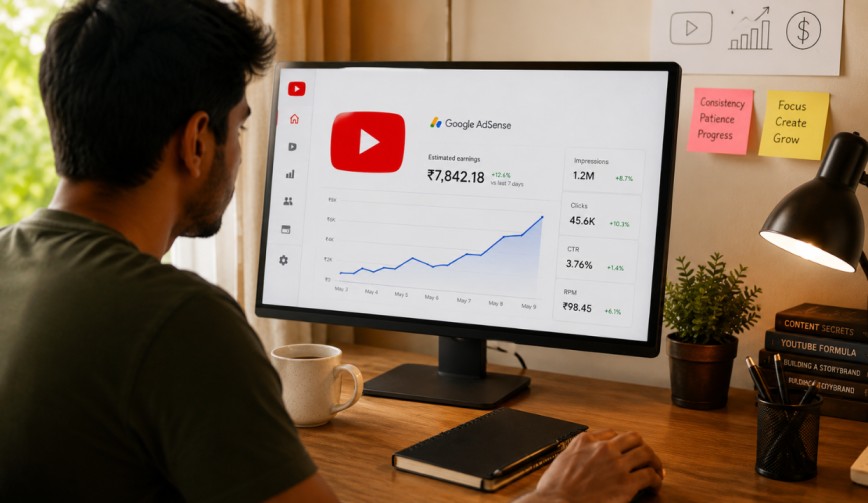
For many creators, getting monetised on YouTube feels like reaching a major milestone. After spending hours planning content, recording videos, editing footage, and trying to grow an audience, finally seeing that monetisation approval email can be exciting.
But have you ever wondered what actually happens after a video gets monetised?
Many people think that every time someone watches a monetised video, money immediately lands in the creator’s account. If that were true, YouTubers would probably refresh their earnings page every five minutes. The reality is a lot more interesting.
Behind every monetised video, YouTube AdSense is working continuously. It connects advertisers, viewers, YouTube, and creators through a sophisticated system that decides which ads appear, how much advertisers pay, and how much revenue creators receive.
Understanding this process can help creators make better decisions and improve their YouTube earnings over time.
What Is YouTube AdSense?

(Source – magnific.com)
YouTube AdSense is Google’s advertising payment system that allows creators to earn money from advertisements displayed on their videos.
When businesses want to promote their products or services, they pay Google to show ads to potential customers. Google then places those ads on eligible YouTube videos and shares part of the advertising revenue with creators.
In simple terms:
Advertisers pay Google → Google shows ads on YouTube → Creators receive a share of the revenue
Without YouTube AdSense, there would be no organised way for creators to earn money from YouTube monetisation.
👉Click here to see how Boss Wallah works with brands and what we can build for you
What Actually Happens When a Video Gets Monetised?
Once a creator joins the YouTube Partner Program and enables monetisation, a lot begins happening behind the scenes.
When a viewer clicks on a monetised video, YouTube quickly starts analysing several pieces of information before the video even begins playing.
Behind the scenes, YouTube performs several actions:
- Identifies the viewer
- Runs an ad auction
- Selects the best advertiser
- Displays the advertisement
- Tracks viewer engagement
- Calculates revenue
- Updates creator earnings
The entire process usually takes only a few seconds.
Let’s look at it more closely.
1. YouTube Identifies the Viewer
The moment someone opens your video, YouTube checks information such as:
- Viewer location
- Device type
- Language preferences
- Viewing habits
- Age restrictions
- Advertiser availability
This information helps YouTube decide which advertisements are most relevant.
For example, a viewer watching from the United States may see different ads than someone watching the same video from India.
2. Advertisers Compete for Ad Space
This is where things become interesting.
Many advertisers may want access to the same audience. A software company, an online course provider, and a finance app might all want their ads shown before a business-related video.
Instead of choosing randomly, YouTube runs an automated auction.
Advertisers submit bids, and the most valuable and relevant advertisement usually wins the placement.
This process happens so quickly that viewers never notice it.
3. The Advertisement Is Displayed
Once a winning advertiser is selected, the advertisement appears.
Depending on the video and viewer, different types of ads may be shown:
- Skippable video ads
- Non-skippable ads
- Display advertisements
- Overlay ads
- Bumper ads
Not every viewer sees the same ad, and not every view generates advertising revenue.
4. YouTube Tracks Viewer Activity
After the ad appears, YouTube begins collecting performance data.
The platform monitors:
- Ad impressions
- Ad views
- Ad clicks
- Watch time
- Viewer engagement
This information helps determine how much revenue is generated from the advertisement.
How the Monetisation Process Works
The following table summarises the journey from video view to creator earnings.
| Stage | What Happens |
|---|---|
| Viewer Opens Video | YouTube analyses viewer information |
| Ad Auction | Advertisers compete for placement |
| Ad Selection | The winning ad is chosen |
| Ad Display | Advertisement appears |
| Performance Tracking | Views and interactions are recorded |
| Revenue Calculation | Earnings are calculated |
| Creator Payment | Revenue is added to AdSense |
Although this process looks simple in a table, millions of calculations happen every day across YouTube’s platform.
Read More | How to Improve CTR on YouTube Videos and Get More Views Naturally.
How Does YouTube AdSense Calculate Earnings?
One of the biggest questions creators ask is, “How much does YouTube pay per view?”
Unfortunately, there is no fixed answer.
Several factors influence YouTube ad revenue.
Your earnings depend on:
- CPM (Cost Per Mille)
- RPM (Revenue Per Mille)
- Audience location
- Content niche
- Watch time
- Advertiser demand
- Viewer engagement
What Is CPM?
CPM refers to the amount advertisers pay for every 1,000 ad impressions.
For example, if a company pays ₹500 CPM, it means they spend ₹500 to show their advertisement 1,000 times on YouTube. A portion of that amount goes to the creator, while YouTube keeps the rest as its platform fee.
What Is RPM?
RPM represents what creators actually earn after YouTube takes its share.
This is often the more useful metric because it reflects real income rather than advertiser spending.
Why Some Videos Earn More Than Others
Imagine two creators each receive 100,000 views.
One earns $50.
The other earns $500.
Why?
Because not all views are equal.
Advertisers value some audiences more than others. A viewer searching for business software may be worth more to advertisers than someone casually watching entertainment clips.
The content category also plays a major role.
| Content Niche | Earning Potential |
| Finance | High |
| Business | High |
| Technology | Medium to High |
| Education | Medium |
| Lifestyle | Medium |
| Entertainment | Medium to Low |
| General Vlogs | Low to Medium |
This explains why some creators with fewer views can sometimes earn more money than channels with much larger audiences.
Common Myths About YouTube AdSense
There are many misconceptions about YouTube monetisation.
Myth 1: Every View Makes Money
Not true.
Some viewers may not see advertisements at all. Others may use YouTube Premium.
Myth 2: More Subscribers Mean More Earnings
Subscribers help, but they do not guarantee income.
A channel with fewer subscribers but highly engaged viewers can earn more.
Myth 3: Viral Videos Always Generate Huge Revenue
Not necessarily.
A finance video with 50,000 views can sometimes earn more than an entertainment video with 500,000 views.
Myth 4: Clicking Your Own Ads Helps
Definitely not.
Google has sophisticated systems that detect invalid activity. Attempting to manipulate ad clicks can lead to penalties or monetisation loss.
Read More | 5X Video Engine: How AI-Assisted Workflows Cut Brand Content Turnaround from Weeks to Hours.
How Creators Can Increase Their YouTube AdSense Earnings

(Source – designwizard.com)
While creators cannot control advertiser budgets, they can improve factors that influence earnings.
Some practical ways to increase YouTube revenue include:
- Creating advertiser-friendly content
- Improving audience retention
- Increasing watch time
- Publishing consistently
- Using YouTube SEO techniques
- Building audience engagement
- Targeting profitable niches
- Creating valuable content that solves problems
The most successful creators focus on helping viewers first. Higher earnings often follow naturally when content consistently provides value.
Need Videos, Creators, or Regional Content for Your Brand?
Boss Wallah helps brands plan and execute video content at scale, without managing multiple vendors.
We work with companies to:
- Shoot large volumes of short-form videos using real creators and studio setups, suitable for social media, websites, campaigns, and launches
- Adapt the same videos for different languages, regions, and platforms, so one shoot works across India and global markets
- Launch products or campaigns through dozens or hundreds of creators, all managed, tracked, and reported in one system
- Support brands with ongoing content, launches, regional expansion, and performance-focused campaigns
Whether you need videos for a new launch, content for multiple markets, creator-led visibility, or a steady content pipeline, Boss Wallah acts as a single partner handling production, creators, and execution end-to-end.
👉Click here to see how Boss Wallah works with brands and what we can build for you
Final Thoughts
When a video gets monetised, far more happens than most creators realise.
Behind every view, YouTube AdSense is running auctions, matching advertisers with audiences, tracking viewer behaviour, calculating revenue, and distributing payments. All of this happens within seconds, creating a system that benefits advertisers, viewers, YouTube, and creators.
For anyone building a monetised YouTube channel, understanding this process can be extremely valuable. It shows that earning more is not simply about chasing views. It is about attracting the right audience, creating quality content, and keeping viewers engaged.
The better your content serves viewers, the more opportunities YouTube AdSense has to generate revenue from it.
FAQs
1. What is YouTube AdSense?
YouTube AdSense is Google’s advertising payment system that allows creators to earn money from ads displayed on their videos.
2. How does YouTube AdSense pay creators?
Revenue earned from advertisements is calculated and transferred through the creator’s linked AdSense account.
3. Why do some YouTube videos earn more than others?
Factors such as audience location, niche, advertiser demand, watch time, and engagement affect earnings.
4. Do creators earn money from every view?
No. Not every view includes an advertisement, so revenue varies.
5. Can YouTube AdSense earnings increase over time?
Yes. Growing your audience, improving watch time, and creating advertiser-friendly content can increase earnings.