From Creator Content to Checkout: Why Product Discovery Does Not Always Lead to Sales
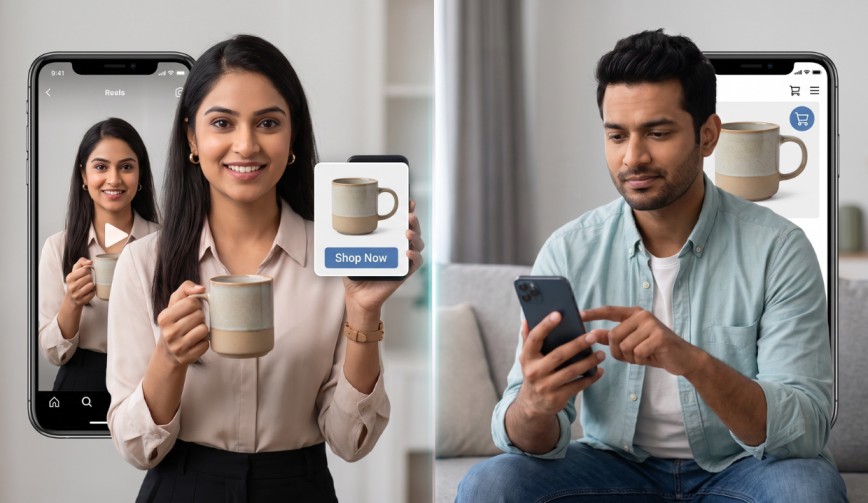
You watch a creator pull a nice water bottle out of her bag. You think, “I need that.” You save the video; you may even hit the like. Then dinner happens, life happens, and the bottle is completely forgotten. That’s the odd journey from creator content to checkout, and a whole lot of brands learn the hard way that views and sales are two very different things.
Let’s look at why shoppers fall in love online and then leave without buying, and what brands can do about it.
Product Discovery Is Just the First Date

(Source – OpenAI)
Product discovery is just the moment the customer realises the product exists. Social media has made that so easy. A funny review, a ‘get ready with me’ video, or a quick unboxing can get your product in front of thousands of people in the space of one afternoon.
But discovery is only the first date. You don’t get married after one coffee, do you? A shopper who has just met your product is inquisitive; they’re not committed. They’ll still have all sorts of questions about the price, the quality, the delivery time, and whether it will actually be something they’ll like. Until those questions are answered, the wallet remains firmly shut.
👉Click here to see how Boss Wallah works with brands and what we can build for you
Why the Journey From Creator Content to Checkout Is Not Straight
A lot of brands imagine the ideal journey is a straight line: watch the video, click the link, buy. In reality, it’s more like a maze. People will go from app to app, open ten tabs, ask a friend, have a think about it, and then sleep on it. Here are the most common reasons the journey falls to pieces.
Interest Is Not the Same as Buying Intent
Scrolling is a relaxed activity. You do it on the sofa, you do it in the queue, you do it on the loo (we all do). You’re in that relaxed state, and you’re just enjoying the content. You’re not necessarily in any kind of purchase mode.
Purchase intent (i.e., how ready someone is to buy) is generally quite low when you’re just casually scrolling. A customer may genuinely like your product and still have no intention of buying it today.
The Trust Gap
A creator can be absolutely charming and genuine, but the consumer still has to believe in the brand. Is it a real company? Will it get to them? Will it break?
That’s where social proof comes in. Social proof is simply evidence that other people have bought and used the product. It includes:
- Ratings and reviews.
- Written feedback from customers.
- Photos and videos from actual buyers.
You can have the most beautiful video in the world, and people will still be left in the dark without some form of social proof.
The Link Leads to a Messy Page
This one is a bit of a killer. The shopper is excited, clicks the link, and is then presented with a very slow or confusing landing page (the first page they see after clicking).
If the landing page doesn’t match the video or the product is very difficult to find, people are gone in seconds. They came for a water bottle and end up on a page that is absolutely reminiscent of a lost luggage office.
Too Many Steps at Checkout
Every extra step is a reason for the shopper to walk away. These are some common problems that can discourage customers from completing a purchase:
- Forced account creation.
- Surprise delivery charges.
- Long and complicated forms.
- Unnecessary checkout steps.
These issues can lead to cart abandonment (when a shopper adds an item to their cart and then leaves without checking out). A significant proportion of carts are abandoned, making it a problem that every online store will have to contend with.
Read More | Creator Marketing Attribution: How to Find Out Which Creators Drive Sales.
Where Social Commerce Fits In
Social commerce is about buying a product straight within the social media app, rather than going to a separate website. It’s a neat way of cutting the distance between creator content and the point of purchase, as the consumer doesn’t have to leave the app they’re already on.
It helps, but it’s not magic. If the product page within the app is thin, the price is obscure, or the customer just isn’t ready, then the sale is going to go elsewhere. Easy buying only works when the customer actually wants to buy.
How Brands Can Turn Browsers Into Buyers
(Source – OpenAI)
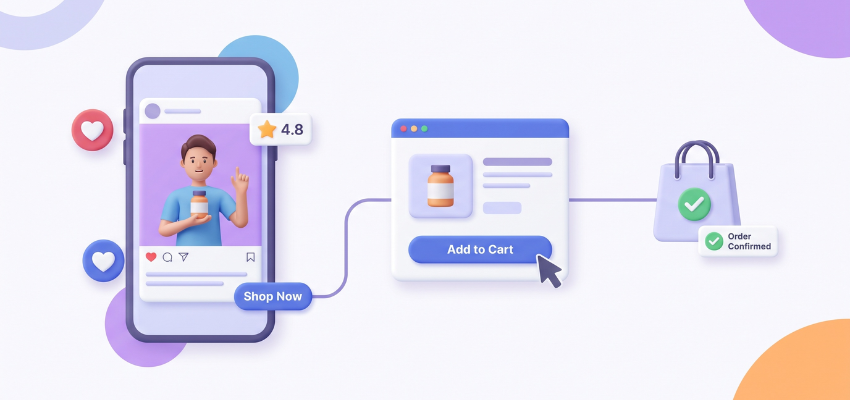
The good news is that this gap can be reduced. Here are some practical steps.
- Work with creators who match your buyers. A creator with a smaller but very loyal audience will often outperform a much larger account with a random following. That’s the fundamental principle of good influencer marketing: it’s all about reaching the right audience.
- Use real customer photos and videos. User-generated content (i.e., content created by customers rather than the brand) is the way to go. It’s authentic and relatable. A real person using your product can go a long way towards answering a whole host of questions.
- Make the next step as obvious as possible. Every post needs a clear call to action (a simple instruction such as ‘Shop now’ or ‘Tap the link to see sizes’). Don’t leave people guessing what they’re meant to do.
- Match the page to the content. If the video shows a blue jacket, the link should take you to a page with that blue jacket front and centre. Keep it quick, simple, and mobile-friendly, as the majority of people will be shopping on their phones.
- Follow up gently. Reminder emails, small discounts, and retargeting ads can bring people who were about to buy back into the shop. A gentle nudge is far better than a loud shout.
- Measure the right thing. Likes are nice, but the conversion rate (the percentage of visitors who actually buy) tells you whether the whole journey is working. Keep a close eye on that and fix the weak links one at a time.
Read More | Creator Commerce vs Influencer Marketing: How the Two Models Actually Make Money for a Brand.
Need Videos, Creators, or Regional Content for Your Brand?
Boss Wallah helps brands plan and execute video content at scale, without managing multiple vendors.
We work with companies to:
- Shoot large volumes of short-form videos using real creators and studio setups, suitable for social media, websites, campaigns, and launches
- Adapt the same videos for different languages, regions, and platforms, so one shoot works across India and global markets
- Launch products or campaigns through dozens or hundreds of creators, all managed, tracked, and reported in one system
- Support brands with ongoing content, launches, regional expansion, and performance-focused campaigns
Whether you need videos for a new launch, content for multiple markets, creator-led visibility, or a steady content pipeline, Boss Wallah acts as a single partner handling production, creators, and execution end-to-end.
👉Click here to see how Boss Wallah works with brands and what we can build for you
Final Thoughts
Great content can get people to notice your brand, and that’s a major achievement. But notice isn’t purchase. Shoppers need trust, information, and a clear path before they’re going to part with their hard-earned cash.
Treat discovery as the beginning of the relationship rather than the end of the job, and your sales will gradually come up to meet your views.
FAQs
1. Why do people like creator posts but not buy the product?
People may enjoy the content without intending to buy. Price, trust, and timing can also affect their decision.
2. What’s the difference between product discovery and a sale?
Product discovery is when customers first learn about a product. A sale happens when they decide to purchase it.
3. How can brands improve conversions from creator content?
Brands can work with relevant creators, show customer reviews, use clear calls to action, and simplify the buying process.
4. Does social commerce always result in more sales?
No. Social commerce simplifies purchasing, but customers still need trust, product information, and a reason to buy.
5. What is shopping cart abandonment, and how can it be reduced?
Shopping cart abandonment occurs when customers add products to their cart but leave without buying. Brands can reduce it through guest checkout, transparent delivery costs, and simple forms.