In-House vs Outsourced Video Production: The Hidden Challenges of Building an Internal Team

When businesses start investing in video content, the first big decision is often this: should we build our own team or outsource the work?
At a glance, building an internal team feels like the smarter option. You picture a dedicated group that understands your brand, works quickly, and is always available. It sounds efficient and cost-effective.
But the reality of in-house vs. outsourced video production is more complex. Many businesses step into in-house production expecting control and speed, but end up dealing with delays, rising costs, and creative limitations.
Let’s explore the hidden challenges in detail, while also comparing both approaches in a clear and practical way.
Why Businesses Lean Towards In-House Production

(Source – freepik.com)
The idea of an in-house team is attractive for a few simple reasons:
- You have direct control over content and messaging
- Communication is quicker since the team is internal
- You can produce content whenever needed
These benefits are real. However, they only work smoothly once the system is fully set up, and that setup phase is where most challenges begin.
👉Click here to see how Boss Wallah works with brands and what we can build for you
The Real Challenges of Building an Internal Team
1. Hiring Is Not Just One Decision
Building a video team is not about hiring one person. It usually involves multiple roles, each requiring a different skill.
| Role | What They Do | Why It Matters |
|---|---|---|
| Scriptwriter | Writes the video content | Ensures clarity and storytelling |
| Videographer | Shoots the video | Handles camera, lighting, and framing |
| Editor | Edits and finalises the video | Shapes the final output |
| Designer (optional) | Adds graphics or animation | Enhances visual appeal |
Trying to combine all these skills into one person often leads to average results. Hiring multiple people increases both time and cost.
2. Equipment Costs Go Beyond Expectations
Many assume buying a camera is enough. In reality, video production requires a full setup.
Basic equipment setup includes:
- Camera and lenses
- Lighting setup
- Microphones for clear audio
- Editing software
- High-performance computers
Now here is where it gets tricky:
| Expense Type | Nature of Cost |
|---|---|
| Equipment purchase | One-time but high |
| Maintenance | Ongoing |
| Software subscriptions | Recurring |
| Upgrades | Periodic but necessary |
This means the cost does not stop after the initial investment.
3. Time to Productivity Is Longer Than Expected
Even after hiring and setting up, your team does not start delivering perfect content immediately.
There is always a learning phase where the team:
- Understands your brand voice
- Tests different content styles
- Improves through trial and error
Typical timeline reality:
- Month 1–2: Setup and onboarding
- Month 3–4: Experimentation
- Month 5 onwards: Consistent quality
This delay can affect your marketing momentum if you were expecting quick results.
ALSO READ | In-House vs Outsourced Video Production: Why Your Current Setup Might Be Slowing You Down.
4. Creative Output Can Plateau
Creativity needs fresh input. When the same team works on the same brand continuously, ideas can become repetitive.
Common signs of creative fatigue:
- Similar video formats repeated
- Lack of new concepts
- Reduced audience engagement
External teams often avoid this because they work across industries and bring new ideas regularly.
5. Limited Flexibility in Skills
Your in-house team may be good at certain formats, but marketing needs change quickly.
| Video Type | Skill Requirement | In-House Challenge |
|---|---|---|
| Social media videos | Basic editing | Usually manageable |
| Ad films | High production quality | May need external help |
| Animation videos | Specialised tools and skills | Often missing |
| Corporate films | Strategic storytelling | Requires experience |
This creates gaps that slow down execution.
6. Management Becomes a Hidden Task
Video production is not just creative work. It involves planning, coordination, and revisions.
Key management responsibilities include:
- Scheduling shoots
- Managing deadlines
- Handling feedback loops
- Coordinating between marketing and production
Without proper management, even a talented team can struggle to deliver consistently.
7. The Cost Comparison Is Not Always Obvious
At first, in-house production may seem cheaper. But when you break it down, the numbers tell a different story.
Cost Comparison Table
| Factor | In-House Production | Outsourced Production |
|---|---|---|
| Initial cost | High (equipment + hiring) | Low |
| Ongoing cost | Fixed and continuous | Pay per project |
| Flexibility | Limited | High |
| Access to skills | Limited to the team | Wide range of experts |
| Scalability | Difficult | Easy |
This is why many businesses rethink their decision after a few months.
Where Outsourcing Gains an Advantage
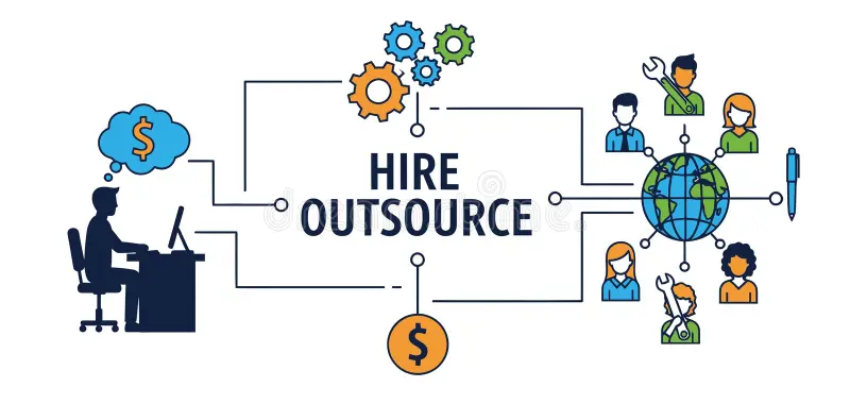
(Source – dreamstime.com)
In the discussion of in-house vs. outsourced video production, outsourcing stands out for its flexibility.
Instead of building everything from scratch, you work with professionals who already have:
- Skilled teams
- Advanced tools
- Experience across industries
This reduces the time to execution and improves overall quality.
Key advantages of outsourcing:
- Faster project turnaround
- Access to specialised skills
- No long-term commitments
- Fresh creative ideas
ALSO READ | What Reel Ads Production Agency Does Differently From Traditional Video Production Companies.
A Practical Approach That Works Today
Many businesses are no longer choosing just one option. Instead, they combine both.
Hybrid model example:
| Task Type | Best Approach |
|---|---|
| Daily social media content | In-house team |
| High-quality ads | Outsourced |
| Complex projects | Outsourced |
| Quick edits and updates | In-house |
This approach balances speed, quality, and cost.
Need Videos, Creators, or Regional Content for Your Brand?
Boss Wallah helps brands plan and execute video content at scale, without managing multiple vendors.
We work with companies to:
- Shoot large volumes of short-form videos using real creators and studio setups, suitable for social media, websites, campaigns, and launches
- Adapt the same videos for different languages, regions, and platforms, so one shoot works across India and global markets
- Launch products or campaigns through dozens or hundreds of creators, all managed, tracked, and reported in one system
- Support brands with ongoing content, launches, regional expansion, and performance-focused campaigns
Whether you need videos for a new launch, content for multiple markets, creator-led visibility, or a steady content pipeline, Boss Wallah acts as a single partner handling production, creators, and execution end-to-end.
👉Click here to see how Boss Wallah works with brands and what we can build for you
Final Thoughts
The debate around In-House vs Outsourced Video Production is not about choosing what sounds better. It is about understanding what actually works in the long run.
An in-house team gives you control, but it comes with hidden challenges in hiring, costs, management, and creativity. Outsourcing offers flexibility and expertise, but with less day-to-day control.
The smartest decision is to look at your goals, your budget, and your content needs. Once you do that, the right approach becomes much clearer.
FAQs
1. What is the biggest challenge in in-house video production?
The biggest challenge is managing multiple aspects at once, including hiring, equipment, creativity, and ongoing costs.
2. Is outsourcing video production expensive?
It can seem expensive per project, but it often saves money in the long run by avoiding fixed costs.
3. How do I decide between in-house and outsourced production?
Start by evaluating your content frequency, budget, and the level of quality you need.
4. Can I switch from in-house to outsourcing later?
Yes, many businesses start in-house and later move to outsourcing or a hybrid model.
5. What type of businesses benefit most from outsourcing?
Small to medium businesses and fast-growing brands benefit the most because they need flexibility and quick results.