Behind the Scenes Look: How Event Video Production Actually Works
If you have ever watched a beautifully edited event video and thought, “This must be easy. Just record everything and put some music behind it,” then welcome to the reality check. Event video production is like hosting a wedding. Everything looks smooth from the outside, but behind the curtains, there are ten people running around, three backup plans, and someone silently panicking about the audio.
This article gives you a simple and honest behind-the-scenes tour of how event video production really happens. No complicated words. No dramatic filmmaking jargon unless absolutely needed.
Let us begin.
1. The Discovery Call: Where Everyone Pretends They Know Exactly What They Want

( Source – dreamstime.com )
Every event video journey starts with a conversation. The client explains what kind of video they want, the type of event, the audience, and the purpose.
Half the time, the client says, “We want something cinematic.” This usually means they want the video to look fancy.
Here, the production team figures out the goals, timeline, budget, and how serious or chaotic the event might be.
Check Out
Boss Wallah Studios empowers entrepreneurs and brands to produce high-quality content with ease.
2. Pre-Production: The Homework Phase Nobody Sees
Pre-production is the planning stage. This is the part where the team makes sure nothing goes wrong during the actual shoot. It includes:
Planning the shots
The team decides what scenes to capture. For example, audience reactions, the chief guest entering, keynote speeches, wide shots of the crowd, and anything else that adds flavour to the final video.
Location recce
This is a fancy term for visiting the venue beforehand. The team checks lighting, background noise, stage layout, power supply, and potential problems such as bright backlights or echoey halls.
Script or Schedule
Not every event has a script, but almost all have a schedule. The team studies it like students preparing for an exam, because missing one important moment can ruin the entire video.
Here is where they also decide how many cameras are needed.
One camera means basic coverage.
Two cameras mean dynamic shots.
Three or more cameras give that big event look, where the video cuts between angles smoothly.
ALSO READ | Hidden Use Cases of Animated Video Production That Most Indian Brands Ignore
3. The Equipment Parade: When Expensive Gear Travels More Than Its Owners
Event video production involves a lot of equipment. Cameras, lenses, lights, tripods, microphones, gimbals (a tool that makes the camera stable while moving), backup storage, batteries, and sometimes even drones.
Every piece of equipment has a job.
Lights help when the venue insists on keeping everything dim for “ambience”.
External mics save the day when the speakers randomly walk away from the podium.
Backup memory cards are the true heroes because losing footage is every editor’s nightmare.
4. The Shoot Day: Controlled Chaos in Motion
Shoot day is where the magic and madness meet. The crew arrives early, sets up their gear, tests everything, and prepares for the event to begin.
What actually happens on the shoot
Camera operators take positions like cricket fielders.
Someone monitors audio levels with the seriousness of a scientist.
The director or coordinator keeps checking the schedule to ensure no important moment is missed.
The crew captures random but useful shots known as B-roll. These include guests chatting, the stage setup, decor, banners, and anything that adds context.
B-roll is the seasoning of the final video. Without it, the video looks dry and boring.
Throughout this process, the crew stays alert because events do not pause for retakes. If you miss it, it is gone.
5. Post Production: Where Everything Comes Together and Miracles Happen
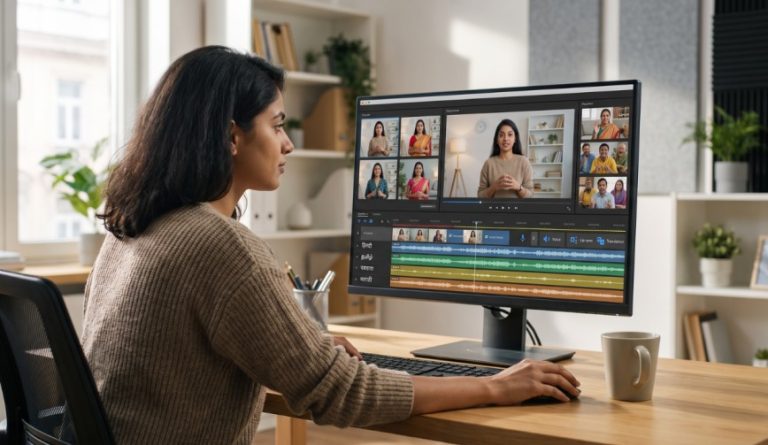
After the shoot, the footage goes to the editing room. This is where the real storytelling happens.
Sorting and organising
Editors sift through hours of footage to find the best moments. It is similar to finding good photos where you do not look awkward.
Editing and trimming
Clips are placed in order, unnecessary parts are removed, and the video starts taking shape.
Adding music
Choosing music is a delicate task. The wrong track can turn a serious conference into something that feels like a fitness video.
Colour correction
Colour correction is adjusting colours so the video looks balanced. If one clip looks yellowish and the other bluish, the editor fixes it so everything feels uniform.
Sound design
Here, the editor boosts voices, reduces background noise, and ensures the audio sounds clean.
Graphics and text
Lower thirds, titles, name tags, and logos are added. These small additions make the video look polished.
6. Revisions: The Gentle Tug of War
After the first draft, the client shares feedback. This sometimes includes notes like:
“Can you make the video look more energetic?”
or
“Please remove the clip where I blinked too slowly”
The editor makes changes until both sides are happy.
ALSO READ | Cost of Authenticity: Breaking Down UGC Video Production Budgets for E-commerce Brands
7. Final Delivery: The Moment Everyone Breathes Again

( Source – dreamstime.com )
Once everything is approved, the final video is exported in the required formats. It may go on social media, event websites, internal communication channels, or promotional campaigns.
The team finally relaxes, packs up, and mentally prepares for the next event.
Check Out
BossWallah enables you to create, optimise, and grow social media video channels effortlessly from scratch.
Conclusion
Event video production looks smooth from the outside, but behind the scenes, it is a mix of planning, coordination, technical skill, quick decision-making, and occasional panic. When done well, the final video makes the event look even better than people remembered it.
The next time you see a crisp and clean event highlight reel, know that a whole team worked silently in the background to make it look effortless.