Organic vs Paid Video Marketing: Why Most Brands Misread Their Own Data

If you have ever compared organic vs paid video marketing and felt like the numbers are arguing with each other, you are not alone. One dashboard says your organic content is winning hearts. Another insists your paid campaigns are driving results. Both seem right. Both feel incomplete. And somewhere in between, most brands end up misreading their own data.
This confusion is not about a lack of data. It is about how we interpret it.
Let us break this down in a way that actually makes sense.
The Real Problem with Organic vs Paid Video Marketing
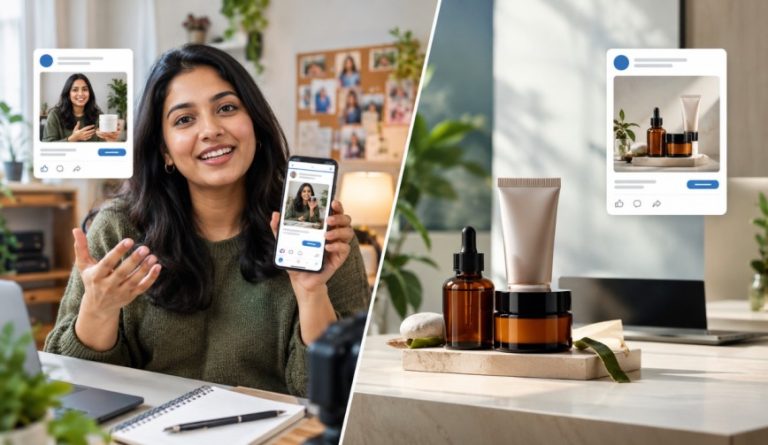
Most brands treat organic and paid video marketing as two separate games. Different teams, different goals, different expectations.
Organic is seen as “brand building.”
Paid is seen as “performance marketing.”
That sounds neat on paper, but in reality, both influence each other constantly.
Here is where the problem starts. Brands measure them in isolation.
- Organic videos are judged on likes, shares, and comments
- Paid videos are judged on conversions and cost per acquisition
So naturally, organic looks like it is doing well because engagement is high. Paid looks expensive because conversions are being tracked more strictly.
But this is like comparing apples to invoices.
Vanity Metrics Are Still Fooling You
Let us talk about the usual suspects.
- Views
- Likes
- Shares
- Watch time
These are often called vanity metrics. That does not mean they are useless. It means they are incomplete.
A video with one million views might look like a success. But if it does not influence purchase intent, it is just popular, not effective.
On the other hand, a paid video with fewer views but strong conversions might look expensive. But it could be doing the real heavy lifting.
The mistake is not in tracking these metrics. The mistake is stopping there.
👉 Click here to see how Boss Wallah works with brands and what we can build for you
Attribution Is Where Things Get Messy
Attribution simply means giving credit to the touchpoint that led to a sale.
Here is the catch. Video marketing rarely works in a straight line.
A typical journey looks like this:
- Someone watches your organic video on social media
- They follow your page but do not buy
- A week later, they see your paid ad
- They click and convert
Now, who gets the credit?
Most tracking systems will credit the paid ad because it was the last step. But the organic video did the groundwork.
This is why brands often undervalue organic content and over-scrutinise paid campaigns.
ALSO READ | Organic vs Paid Video Marketing Isn’t a Strategy. Creative Throughput Is
Organic Builds Demand. Paid Captures It.
This is the simplest way to understand organic vs paid video marketing.
- Organic video marketing creates awareness and interest
- Paid video marketing converts that interest into action
If your organic content is weak, your paid ads will struggle. They will have to work harder to convince cold audiences.
If your paid strategy is weak, your organic efforts will not translate into revenue.
Yet many brands expect paid campaigns to perform like magic without feeding them strong creative from organic channels.
That is like expecting a sales team to close deals without any brand awareness.
The Creative Fatigue Factor

(Source – Freepik)
Here is something most dashboards do not highlight clearly.
This happens when your audience sees the same video too many times and stops responding to it.
In paid campaigns, this shows up as rising costs and falling performance.
In organic content, this shows up as declining engagement.
If you are not producing enough fresh video content, both organic and paid performance will drop. But most brands blame targeting or budgets instead of creative volume.
The truth is simple. Video marketing today is a volume game.
More variations. More testing. More iterations.
Why Your Data Looks Contradictory
Let us connect the dots.
- Organic data looks strong because it captures attention metrics
- Paid data looks harsh because it captures revenue metrics
- Attribution models favour paid channels
- Creative fatigue affects both, but goes unnoticed
So you end up with conflicting conclusions:
“Organic is doing great but not driving revenue.”
“Paid is driving revenue but getting expensive.”
Both statements are technically true. But they are incomplete.
ALSO READ | Real ROI Equation: Video Ads vs Image Ads When Creative Volume Is the Bottleneck
What Brands Should Do Instead
The solution is not to choose between organic and paid. It is to connect them properly.
Here is what that looks like in practice:
1. Track Assisted Conversions
Do not just look at last-click conversions. Use tools that show how organic content contributes earlier in the journey.
2. Use Organic Content as a Testing Ground
Before putting money behind a video, see how it performs organically. High-performing organic videos often make strong paid creatives.
3. Increase Creative Output
Instead of betting big on a few videos, create multiple variations. Small tweaks in hooks, visuals, or messaging can lead to big performance differences.
4. Align Teams and Goals
Your organic and paid teams should not operate in silos. They should share insights, creatives, and learnings.
5. Focus on Blended Metrics
Look at the overall cost per acquisition, not just paid CPA. Consider how organic efforts are reducing paid costs over time.
The Hidden Opportunity Most Brands Miss
Here is the interesting part.
Brands that understand the connection between organic and paid video marketing often outperform competitors without increasing budgets.
Why?
Because they are not wasting money trying to fix the wrong problem.
Instead of blaming targeting, they improve the creative.
Instead of chasing vanity metrics, they focus on real outcomes.
Instead of separating channels, they build a system.
Where a Strong Video Partner Changes the Game
(Source – Freepik)
All of this sounds straightforward, but execution is where most brands struggle.
Creating high-quality videos consistently is not easy. Testing variations takes time, resources, and a structured approach.
This is where working with a dedicated video production and strategy partner makes a difference.
A good partner does not just shoot videos. They help you:
- Plan content aligned with business goals
- Produce multiple creatives efficiently
- Adapt videos for both organic and paid use
- Continuously test and improve performance
In short, they help you turn video marketing into a system rather than a series of random experiments.
Need Videos, Creators, or Regional Content for Your Brand?
Boss Wallah helps brands plan and execute video content at scale, without managing multiple vendors.
We work with companies to:
- Shoot large volumes of short-form videos using real creators and studio setups, suitable for social media, websites, campaigns, and launches
- Adapt the same videos for different languages, regions, and platforms, so one shoot works across India and global markets
- Launch products or campaigns through dozens or hundreds of creators, all managed, tracked, and reported in one system
- Support brands with ongoing content, launches, regional expansion, and performance-focused campaigns
Whether you need videos for a new launch, content for multiple markets, creator-led visibility, or a steady content pipeline, Boss Wallah acts as a single partner handling production, creators, and execution end-to-end.
👉Click here to see how Boss Wallah works with brands and what we can build for you
Final Thoughts
The debate around organic vs paid video marketing often misses the point. It is not about which one is better. It is about how well they work together.
If your data feels confusing, it is probably because you are looking at isolated pieces instead of the full picture.
Fix the way you interpret data. Increase your creative output. Connect your organic and paid strategies.
Do that, and the numbers will start making a lot more sense.