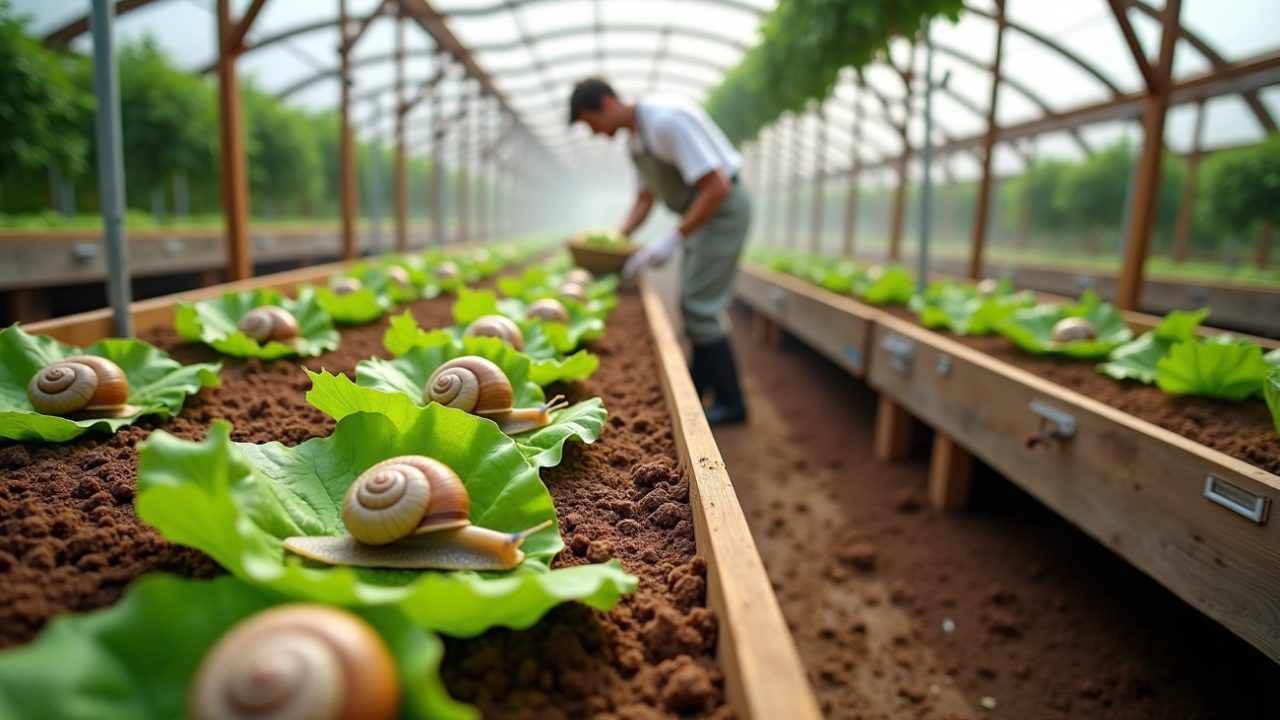
- Turn Backyard Space into a ₹50 Lakh+ Business Idea
- Profits Possible in Just 6–8 Months of Farming
- India Can Tap France’s 40,000-Ton Snail Demand
- Earn from Meat, Eggs & High-Value Cosmetic Slime
- Eco-Friendly Farming with Huge Export Potential
The escargot farming industry is booming, with the global snail market valued at about ₹4,930 crore in 2022 and projected to reach nearly ₹13,140 crore by 2032. France alone consumes 40,000 tons of snails yearly, importing up to 95% of them, while farms supply only 15% of global demand. This guide shows how you can tap into this lucrative niche, from small-scale setups to full commercial operations.
Note:
Since snail farming is still in its early stages in India, most examples are small-scale pioneers or part of agri-startup ecosystems. Their stories show that with the right knowledge and market access, snail farming can be a game-changer.
Understanding Escargot Farming Basics

Heliciculture, or escargot farming, is the science of raising snails in controlled environments to produce food, cosmetics, and pharmaceutical products. This green practice needs minimal space and resources while creating multiple revenue streams, unlike other livestock operations.
What is an escargot farm?
An escargot farm breeds and raises edible land snails in controlled settings. You can set up these farms indoors or outdoors. The enclosures must be escape-proof because many snail species could become invasive threats. My experience shows that a successful escargot farm needs:
- Secure pens with vertical barriers (usually 2.5 feet high)
- Moist, calcium-rich soil to help snails burrow and develop shells
- Controlled temperature and humidity levels
- Protection from predators like birds, rats, and ants
Popular edible snail species
Step 1: Choose the right species for your climate and market
- Helix aspersa (Garden Snail): Known as Petit Gris, it weighs 8-15g, is popular in Europe, and adapts well to different climates
- Helix aspersa maxima: A larger variant weighing 17-25g that grows faster
- Helix pomatia: The Roman snail or Burgundy snail, known for its premium meat quality
- Achatina fulica: Giant African land snail grows quickly but faces regulations in many countries
Step 2: Research market priorities. Helix pomatia’s flavour surpasses Helix aspersa’s taste for many consumers, though it takes longer to grow.
Step 3: Check regulations. Local regulations might restrict certain snail species, so check before making your choice.
Why escargot farming is gaining popularity
Step 1: Understand the economic benefits. Starting an escargot farm costs less than traditional livestock farming. You can earn from meat, caviar (snail eggs), and mucin for cosmetics.
Step 2: Recognise environmental advantages. Snail farming leaves a smaller carbon footprint—only 0.7 kg CO2 per kg of meat versus 3.7-32 kg CO2 for chicken, pork, and beef.
Step 3: Review market growth potential. The global escargot market keeps growing as people look for sustainable protein sources and new culinary experiences.
Snail farming in India vs. Europe
Step 1: Compare climate conditions. Species like Helix aspersa thrive in Europe’s temperate climate, especially in Ireland and France. India’s diverse climate supports different native species.
Step 2: Review market differences. France imports 25.3% the world’s snails, showing Europe’s established market. India’s market remains mostly untapped but growing.
Step 3: Think over cultural aspects. Escargot remains a traditional delicacy in Europe, particularly in France. Indian snail consumption stays regional, mainly in the North-East states, West Bengal, and Odisha.
Escargot Farming Comparison
| Factor | European Farming | Indian Farming |
|---|---|---|
| Popular Species | Helix aspersa, Helix pomatia | Native species, Achatina fulica |
| Market Maturity | Well-established | Emerging |
| Production Scale | Commercial & small-scale | Primarily wild harvesting |
| Climate Suitability | Temperate, ideal for Helix species | Tropical/subtropical, supports diverse species |
| Regulatory Framework | Structured | Developing |
How to Start an Escargot Farm from Scratch

Starting an escargot farm needs good planning, the right setup, and compliance with regulations. Pick your snail species first, then follow these steps to build a profitable escargot business.
Choosing the right location and climate
Step 1: Pick a sunny spot that doesn’t have many trees to let air flow freely.
Step 2: Make sure the climate suits your needs – snails do best in temperatures between 20°C and 30°C with humidity levels of 75-95%.
Step 3: You’ll need clean, non-saline water from a well, watercourse, or rainwater collection system.
Step 4: The location should shield snails from strong winds and loud noises since they’re sensitive creatures.
Setting up pens or enclosures
Step 1: Build secure enclosures using wooden boxes, concrete pens, or trench systems. The walls should go at least 5 inches into the ground and rise 2 feet above it.
Step 2: Set up fencing with galvanised metal, hard-plastic sheets, or 5mm mesh (finer mesh works better for baby snails).
Step 3: Add features to prevent escapes – you can use inward-curved tops, copper bands along the upper edge, or “V” shaped fence tops.
Step 4: Set up a sprinkler system that turns on at dusk. This keeps moisture levels right without forcing snails into hot sunlight.
Soil and moisture requirements
Step 1: The soil should be loose and friable with a pH between 6.5-7.5, avoiding extremes of clay or sand.
Step 2: Mix in 20-40% organic matter and enough calcium (add limestone if needed).
Step 3: Keep soil moisture at about 80% of field capacity without making it too wet.
Step 4: New soil should replace the old every three months to avoid mucus and dropping buildup.
Feeding and breeding essentials
Step 1: Feed them vegetables (cabbage, lettuce), fruits (mangoes, bananas), and calcium supplements (crushed eggshells).
Step 2: Set up specific feeding zones to reduce overcrowding and fighting for food.
Step 3: Place shallow water sources around the enclosure, but avoid puddles.
Step 4: Breeding needs moist soil areas for egg-laying. Keep the hatchlings away from adult snails.
Legal permits and regulations
Step 1: Review USDA regulations – you’ll need a PPQ 526 plant pest permit to move snails between states.
Step 2: Your State Agricultural Official must approve in writing before you ask for movement permits.
Step 3: Your facility must meet USDA Containment Guidelines for Nonindigenous, Phytophagous Molluscs.
Step 4: Note that bringing live snails into the United States for human consumption isn’t allowed.
Snail Housing Options Comparison
| Housing Type | Best For | Advantages | Disadvantages |
|---|---|---|---|
| Wooden/Plastic Boxes | Small-scale | Easy monitoring, good for breeding | Limited space |
| Concrete Pens | Medium-scale | Durable, predator-proof | Higher cost, less natural |
| Trench Systems | Large-scale | Natural environment, budget-friendly | More difficult to monitor |
| Free-Range Enclosures | Commercial | Natural feeding, less maintenance | Requires more land, escape risk |

The Business Side: Turning Snails into Profits

A successful escargot business needs more than just farming skills. Smart financial planning and marketing make these slow movers bring quick profits. Here’s how snail farmers can turn their ventures into money-making operations.
Cost breakdown: setup to harvest
Step 1: Calculate your startup costs. A small backyard snail farm costs around INR 42,190, while bigger commercial operations need INR 421,902. This money goes toward land, snail pens, breeding stock, and permits.
Step 2: Budget for daily costs. Snails don’t cost much to feed. They eat vegetables, fruits, and leftover farm products. Many farmers grow their own feed or use kitchen scraps to save money.
Step 3: Think about workers. One person can run a small farm by handling the feeding, cleaning, and monitoring. Bigger farms might need extra help during harvest time.
Step 4: Get ready for climate costs. Farms in tough climates need good humidity and temperature control systems to keep snails healthy.
Revenue streams: meat, caviar, slime
Step 1: Set your meat prices right. Snail meat brings INR 421-843 per kilogram. Premium or organic snails sell for even more.
Step 2: Look into snail eggs. High-end restaurants love snail eggs, or “white caviar.” These luxury items can bring in big money.
Step 3: Sell snail slime to beauty companies. Beauty brands love snail slime. It helps skin stay young and healthy. This eco-friendly product brings in lots of extra money.
Step 4: Make different products. You can make more money by selling canned snails, frozen escargot, or ground shells as calcium supplements.
Profit margins and ROI expectations
Step 1: Know your margins. Good snail farms make 30-50% profit. These numbers beat many regular farms by a lot.
Step 2: Find your break-even point. Smart management helps farms break even in 1-2 years.
Step 3: Look at your returns. Your first year could bring 1.5-2 times what you put in. Some farms made five times their money back, earning USINR 168.76 per kg.
Step 4: Grow bigger to earn more. Bigger operations save money through better processes and bulk buying.
Case study: French escargot farm model
Step 1: Quality comes first. French farmers focus on premium snails for fancy restaurants.
Step 2: Build restaurant relationships. Strong ties with luxury restaurants keep orders coming in.
Step 3: Keep standards. Top-quality products help beat the competition.
Step 4: Add extra services. Farm tours and cooking classes bring in more money.
Escargot Farm Revenue Comparison
| Revenue Stream | Price Range | Profit Margin | Market Demand |
|---|---|---|---|
| Snail Meat | INR 421-843/kg | 30-40% | Strong in restaurants |
| Snail Eggs/Caviar | Premium pricing | 40-50% | High-end culinary |
| Snail Slime | Varies by grade | 35-45% | Growing cosmetics market |
| Processed Products | 2x fresh price | 25-35% | Expanding retail market |
Scaling Up: From Backyard to Commercial Success

Your backyard snail operation’s success depends on knowing how to scale at the right time. This knowledge is a vital part of long-term success in the escargot farm industry.
How to expand your escargot farm
Step 1: Monitor your snail density—optimal productivity needs about 15 snails per square meter or 1-1.7 kg per m².
Step 2: Track your market—expand operations when orders keep exceeding your supply.
Step 3: Review your finances—grow only after you’ve been profitable for at least 6-8 months.
Step 4: Weather patterns matter—successful farms run 7-9 months each year based on the climate.
Hiring and automation tips
Step 1: Set up climate control systems for optimal conditions (20-28°C temperature, 80-95% humidity).
Step 2: Add data logging systems to monitor environmental conditions and feed intake.
Step 3: Automated feeding systems help reduce waste and prevent disease.
Step 4: Build the core team—successful farmers (77%) have higher education backgrounds.
Export opportunities and global demand
Step 1: Find prime markets—France imports 25.3% of global snails and needs 5 million kg yearly.
Step 2: Look at Italy (306 million snails consumed annually) and other European countries.
Step 3: Learn export rules—Morocco, Lithuania, and Ukraine lead global exports.
Step 4: Value-added products boost international market prices—processed snails sell for 2x more than fresh ones.
Common challenges and how to overcome them
Step 1: Protect against predators (birds, rodents, ants) with protective mesh covers.
Step 2: Regular cleaning and proper spacing prevent diseases.
Step 3: Create well-drained, sheltered housing to handle extreme weather.
Step 4: Education and targeted marketing help overcome social/cultural restrictions.
Commercial Scaling Approaches
| Scaling Method | Investment Required | Advantages | Best For |
|---|---|---|---|
| Greenhouse Farming | Medium-High | Year-round production, climate control | Serious commercial operations |
| Open Field Expansion | Low-Medium | Natural environment, lower costs | Areas with ideal climate |
| Mixed System | Medium | Flexibility, risk distribution | Balanced approach |
| Automation Integration | High | Streamlined processes, informed decisions | Tech-savvy operators |
Key Takeaways

The escargot farming industry offers surprising profit potential with minimal startup costs and multiple revenue streams, making it an attractive alternative to traditional agriculture.
• Low startup, high returns: Escargot farms can break even within 1-2 years with ROI starting from 6-8 months and profit margins of 30-50%.
• Multiple revenue streams: Generate income from snail meat (₹421-843/kg), premium eggs as “white caviar,” and slime for the cosmetics industry.
• Sustainable and scalable: Produces only 0.7kg CO2 per kg of meat compared to traditional livestock, with the global market projected to reach $1.58 billion by 2032.
• Simple setup requirements: Requires secure enclosures, calcium-rich soil, 75-95% humidity, and temperatures between 20-30°C for optimal snail growth.
• Export opportunities abound: France alone imports 90-95% of its escargot needs, creating massive international market potential for quality producers.
The beauty of escargot farming lies in its accessibility—you can start small in your backyard and scale to commercial operations as demand grows. With proper planning and attention to environmental controls, this unconventional farming method transforms slow-moving snails into fast-moving profits.
Conclusion
Escargot farming offers quick returns within 6–8 months, multiple income streams from meat, eggs, and slime, and a low carbon footprint of just 0.7 kg CO₂ per kg of meat. With global demand projected to hit around ₹13,140 crore by 2032, it’s an eco-friendly, high-potential business that rewards proper housing, feeding, and breeding management—proving that even the slowest creatures can deliver fast agricultural profits.
Explore more blogs to boost your farming knowledge and make smarter agri-business moves.
FAQs
Yes, but invasive species like Achatina fulica are restricted in many states. Always get state permission.
Cornu aspersum — hardy, fast-growing, and globally accepted.
200–400 m² for nursery + grow-out pens is enough initially.
Humidity ~80%, temperature 15–25°C.
4–6 months under good conditions.
To clean their digestive system for better taste and safety.
Yes, FSSAI license for food business, HACCP for exports.
Chefs, gourmet retailers, exporters, and cosmetic labs.
Up to 3 kg live snails per m² in good systems.
Yes, if managed well with controlled climate, feeding, and secure buyers