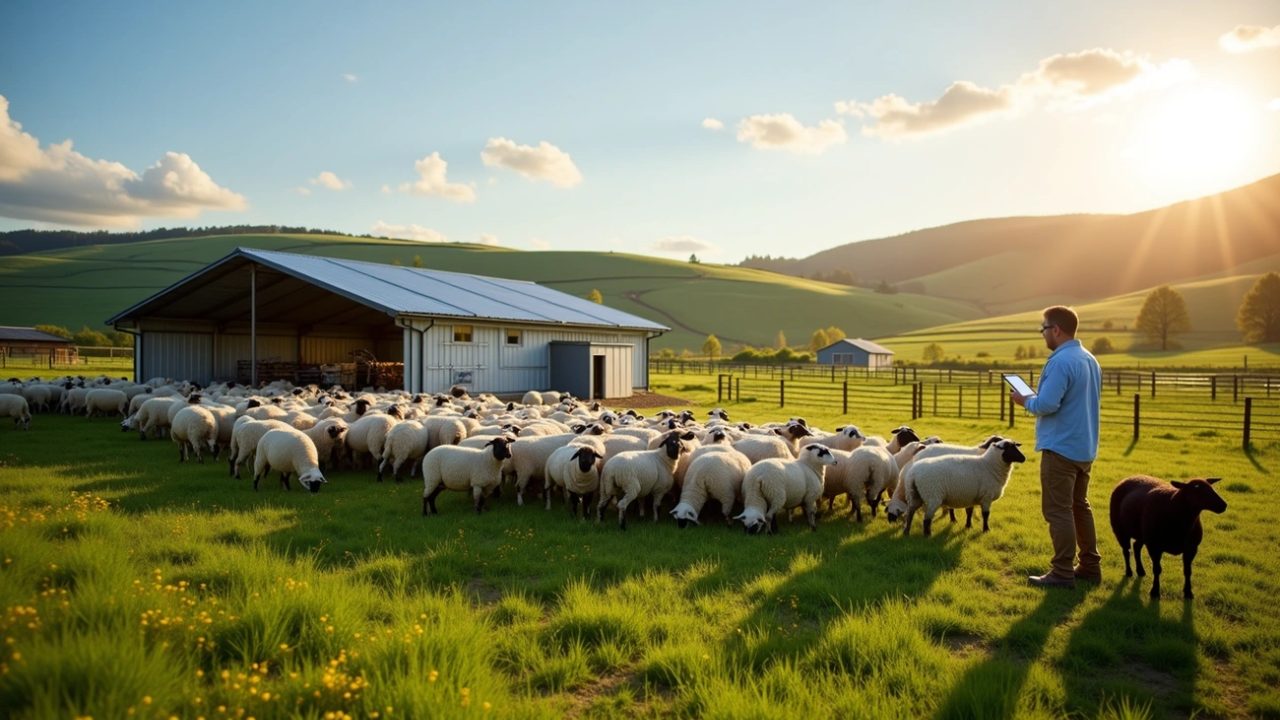
- 🌿 Smart Startup – Kickstart with just ₹9.69 Lakhs covering shed, flock & essentials.
- 💰 Revenue Stream – Earn ₹8.62 Lakhs annually through lambs, wool & manure sales.
- ⚙️ Running Costs – Manage operations at ₹7.40 Lakhs per year (feed, care & upkeep).
- 📈 Profit Potential – Secure a Year-1 net profit of ₹1.21 Lakhs, with higher margins ahead.
- 🐑 Steady Output – Market 71 healthy lambs in Year-1, ensuring consistent cash flow
Starting a Sheep farming business plan is the smartest first step if you want a steady cash flow from meat, wool, and manure with low startup risk. This step-by-step guide keeps the language simple, gives you ready-to-use tables, and shows numbers, costs, and profit so a first-time farmer (even a 15-year-old reader) can follow easily.
Step 1: Research and Business Planning


Image Source: SlideTeam
A profitable sheep farm needs proper preparation and smart planning. Your success depends on good market analysis and a complete roadmap before you invest your resources.
Why planning is critical for sheep farming
A business plan builds the foundation of any successful farming operation. It maps out your entire experience ahead. Sheep farming ventures can fail without proper planning. These points explain why planning matters:
- Prevents costly mistakes: Good planning spots potential challenges before you spend your hard-earned money.
- Increases success chances: Farms showing profit potential on paper succeed more often in real life.
- Attracts financing: A well-laid-out plan shows viability to investors and lenders.
- Guides resource allocation: Smart planning tells you exactly what resources you need and when.
First step: Review your resources, including land, capital, and sheep farming knowledge.
Second step: Pick your farming goals—raising sheep for wool, meat, breeding stock, or mixing these options.
How to conduct market research
The market deserves your attention before buying your first sheep. The sheep supplies industry stands at USD 4.90 billion in 2025 and should reach USD 7.61 billion by 2035, growing at a CAGR of 4.5%.
- Analyse local demand: Check if your area needs enough sheep products.
- Study customer priorities: Learn which sheep products your target market wants most—meat, wool, or breeding stock.
- Identify price patterns: Watch seasonal price changes to plan breeding times and marketing strategies.
- Connect with potential buyers: Talk to chefs, grocers, and farmers’ market vendors about their interest.
- Assess competition: Learn about other sheep farmers nearby and what they offer.
Creating a sheep farming business plan PDF
Your business plan should stay clear, direct, and complete. Effective plans include these core elements:
- Executive summary: Quick overview with mission statement and financial goals.
- Business description: Farm details, sheep breeds, and your unique value.
- Market analysis: Industry overview, target market demographics, and competition review.
- Production plan: Breeding cycles, feeding schedules, and health management details.
- Marketing plan: Ways to sell your sheep products.
- Financial projections: Income statements, cash flow forecasts, and break-even points.
AgPlan from the University of Minnesota or INVenture from Purdue University offer free tools to build your plan.
Setting short-term and long-term goals
Clear goals help measure your farm’s progress. Good goals follow the SMART framework: Specific, Measurable, Achievable, Realistic, and Time-bound.
- Start with broad goals: “Build a profitable sheep farm focused on premium wool production.”
- Break down into specific objectives: “Get 10 hectares fenced for grazing by next spring”.
- Establish productivity targets: “Reach 1.63 lambs per ewe in year one, growing to 2.0 lambs per ewe by year five”.
- Set financial milestones: “Generate INR 8-9 million in annual lamb sales”.
- Review and adjust regularly: Check your progress every quarter and update goals as needed.
Key Components of a Sheep Farming Business Plan
| Component | Purpose | What to Include |
|---|---|---|
| Executive Summary | Overview of business | Mission, goals, key offerings |
| Market Analysis | Understanding demand | Industry trends, target customers |
| Production Plan | Operational details | Breeding cycles, health protocols |
| Financial Plan | Profitability projection | Start-up costs, revenue forecasts |
| Marketing Strategy | Sales approach | Distribution channels, pricing |
Step 2: Selecting the Right Breeds and Farm Location

Your farm’s profitability depends on picking the right sheep breed. You need to match your choice with your climate conditions, available resources, and business goals.
Top Indian and exotic sheep breeds
Step 1: Get to know the top Indian breeds. India has many native sheep breeds that do well in local conditions. The Nellore sheep stands as the tallest Indian breed, and we raised it mainly for meat. The Deccani breed, found throughout the Deccan Plateau, comes from mixing Rajasthan’s woolly types with hairy varieties from southern states. You’ll find other great Indian breeds like Marwari (tough against diseases), Mandya (great meat quality), Chennai Red, and Mecheri (known for quality skin).
Step 2: Learn about exotic sheep breeds. Exotic breeds shine in specific production systems. Spain’s Merino sheep are famous for their fine wool. Rams give 4-5 kg of fleece while ewes produce 3-4 kg. The Rambouillet, which comes from Spanish Merino, gives excellent wool and sticks together well as a flock. Suffolk sheep from the UK give you both quality meat and wool. Adult rams can weigh between 100-135 kg. Dorset sheep typically yield 3-3.25 kg of wool.
Breed selection based on climate and purpose
Step 1: Know your main goal. You should first decide if you want sheep for meat, wool, both purposes, or breeding stock. Wool breeds like Merino and Rambouillet give fine, high-quality fleece. Meat breeds such as Suffolk and Hampshire grow faster. Breeds like Columbia and Targhee work well for both meat and wool.
Step 2: Find breeds that suit your climate. Each breed handles weather differently. Fine wool breeds like Merino can handle heat, cold, and drought. They do well even in tough conditions. That’s why you’ll see them often in Western areas. The Timahdite breed handles big changes in yearly rainfall. Hair sheep usually do better in warmer places.
Step 3: Look at breeding patterns. Fine wool breeds tend to breed outside normal seasons more than others. This matters a lot if you want to speed up production with multiple breeding seasons yearly.
Land requirements and grazing area
Step 1: Figure out space needs. A grown sheep needs about 8 sq. ft. of housing space. If you have 20-30 sheep, you’ll need 1-2 acres to graze them.
Step 2: Set up rotational grazing. Split your pasture into sections and move your sheep regularly. This stops overgrazing and cuts down on parasites. Make sections that give enough food for 4-5 days of grazing.
Step 3: Pick the right spot. Your farm should sit on land that’s not great for crops. It needs protection from strong winds, a slight slope (3-4%), plenty of water, easy road access, and electricity.
Choosing between a backyard and a commercial setup
Step 1: Check your resources and goals. Backyard farms cost less to start but make less money. Commercial farms need more resources, but work better at a larger scale.
Step 2: Think about market reach. Backyard farms usually sell locally. Commercial operations need good distribution networks to handle larger amounts.
Step 3: Plan your time. You can run a backyard setup part-time. Commercial operations need full-time attention to work well and make good money.
Comparison of Indian and Exotic Sheep Breeds
| Breed Type | Example Breeds | Primary Purpose | Climate Suitability | Average Weight (Adult Male) |
|---|---|---|---|---|
| Indian Fine Wool | Gaddi, Chokla | Wool | Northern/Temperate | 15-25 kg |
| Indian Meat | Nellore, Mandya | Meat | Southern/Peninsular | 35-38 kg |
| Exotic Fine Wool | Merino, Rambouillet | Wool | Arid/Semi-arid | 75-80 kg |
| Exotic Meat | Suffolk, Hampshire | Meat | Various | 100-135 kg |
| Dual-Purpose | Columbia, Corriedale | Meat and Wool | Various | 80-110 kg |
Step 3: Infrastructure, Feeding, and Health Management

Reliable infrastructure, feeding practices, and health management are the lifeblood of a successful sheep farming operation. These elements directly affect your farm’s productivity and profitability.
Designing economical sheep sheds
Your first task is to assess your flock size—adult sheep need approximately 20 square feet of floor space each. The shed should be built on higher ground to prevent water stagnation, with an east-west orientation that ensures optimal air circulation. Small operations work well with a shed 10 feet long by 20 feet wide for 10 sheep and a ceiling height of at least 6 feet. Multi-purpose designs with covered yards prove more economical than keeping sheep on grazing.
Feeding schedule by age and weight
Sheep need simple nutrients like energy, protein, minerals, and water. Adult sheep should get 2-3 litres of water per kilogram of dry feed. Nutrition needs increase gradually during the last 6-8 weeks of pregnancy as fetal growth speeds up. Ewes nursing twins produce 20-40% more milk, so they need extra concentrates and should be separated from those with single lambs. Lambs should be weaned around 60-80 days if you’re creep feeding.
Common sheep diseases and prevention
Daily health checks are essential, especially when you have signs of lameness that might indicate footrot. Warm, moist areas create perfect conditions for bacteria causing footrot. Barber’s pole worm, pneumonia, listeriosis, and soremouth are other common threats. Good biosecurity starts with quarantining new animals for at least 30 days. Proper ventilation, appropriate stocking rates, and good nutrition help prevent diseases.
Vaccination and deworming calendar
Ewes need CD&T vaccination 20 days before lambing. Annual boosters maintain protection. Lambs should get their shots at 6-8 weeks, followed by a booster 2-4 weeks later. Deworming treatment begins at 3 months and continues before the monsoon season (May/June). Dewormer rotation prevents resistance development.
Hiring labour and managing daily operations
Labour makes up 20-30% of sheep farm investment. A daily schedule should include feeding, health checks, and facility maintenance. Staff need training on proper handling—sheep should be guided into small spaces with gates instead of pulling wool or yanking legs. Modern technology tools help track feed usage and monitor farm performance to optimise operations.
Vaccination Schedule for Sheep
| Age/Stage | Recommended Vaccines | Diseases Covered |
|---|---|---|
| 2-4 weeks prior to lambing | CD&T for ewes | Enterotoxemia, Tetanus |
| 3-5 months | PPR, FMD, ET, HS | Peste des Petits, Foot & Mouth, Enterotoxemia, Hemorrhagic Septicemia |
| 6-8 weeks (lambs) | CD&T | Enterotoxemia, Tetanus |
| 8-10 weeks (lambs) | CD&T booster | Enterotoxemia, Tetanus |
| Annual (adult sheep) | CD&T, FMD | Enterotoxemia, Tetanus, Foot & Mouth |

Step 4: Breeding, Lambing, and Flock Expansion

Your sheep farming business’s profits depend on how well you manage breeding. You’ll produce more lambs and keep ewes healthy by becoming skilled at reproductive cycles.
Breeding cycles and lambing intervals
Sheep breeding seasons change based on breed and location. Most sheep show seasonal fertility and breed best during the fall months. A healthy ewe’s heat cycle occurs every 17 days, and she stays receptive for 30-36 hours. You’ll notice signs of heat like swollen vulva, nervousness, and tail wagging.
You can optimise breeding by:
- Keeping rams away from ewes until breeding season starts
- Giving ewes extra nutrition before breeding
- Using teaser rams two weeks before breeding
- Keeping proper ram-to-ewe ratios (1:50)
- Writing down breeding dates
Pregnancy usually lasts 146 days. Most farmers stick to yearly lambing, though some boost productivity with programs like “three lambings in two years”.
Care for pregnant ewes and newborn lambs
Pregnant ewes need extra care, particularly in late pregnancy when the fetus grows 75% in the final 6-7 weeks.
Your pregnant ewes need:
- More nutrition as pregnancy progresses
- Supplements to avoid pregnancy toxaemia
- A separate area away from the main flock
- Moving to lambing areas 4-6 days before birth
Right after lambing:
- Clean mucous from the lamb’s nose and mouth
- Make sure lambs get colostrum within hours of birth
- Apply iodine to the navel cord
- Keep ewes and lambs together at least 10 days
Weaning and growing lambs for sale
Smart weaning cuts stress and helps lambs grow better. Most farmers wean around 90 days, though some breeds with less milk might wean at 60 days.
Successful weaning requires:
- Letting lambs stay in familiar fields at first
- Moving ewes completely out of sight and hearing range
- Offering high-quality pasture after a few days
- Aiming for growth rates above 150g/day after weaning
- Regular lamb weighing
How to scale your flock sustainably
Growing your flock needs smart planning:
- Pick twin ewe lambs as replacements
- Choose genetics that work well for outdoor lambing
- Cull strictly based on welfare and labour traits
- Track performance and use DNA testing to improve genetics
- Reduce triplet numbers through breeding choices
Lamb Growth Rate Targets Post-Weaning
| Feeding System | Daily Target Growth Rate | Notes |
|---|---|---|
| Pasture/aftermath | 150-180g/day | Simple system |
| High clover sward | 180g+/day | Better nutrition |
| Forage crops/herbal leys | 200g+/day | Advanced system |
| Red clover/creep feeding | 300g+/day | Maximum growth |
Step 5: Financials, Profitability, and Marketing

Image Source: SlideTeam
A profitable sheep farming venture needs solid financial planning and smart marketing. Smart cost management and revenue growth depend on good planning and market knowledge.
Original investment and recurring costs
Your sheep farm’s success starts with careful budgeting. The money you need upfront changes based on your farm’s size:
- Calculate establishment costs: A 100-sheep operation needs INR 4,134,642, while a 400-sheep setup costs about INR 12,117,032.
- Budget for livestock acquisition: You’ll need INR 25,600 for 20 ewes and 1 ram. Each ewe costs INR 1,200, and rams cost INR 1,600.
- Plan infrastructure expenses: Small units need INR 3,000 for simple sheds, equipment, and other items.
- Manage recurring costs: Set aside money for feed (INR 4 yearly per adult for grazing), vet care (INR 10 per adult, INR 5 per young animal), and insurance (4% yearly).
Expected income from meat, wool, and manure
Multiple income streams from sheep farming create a steady cash flow:
- Project wool income: Each adult sheep gives about 1.2 kg of wool yearly, selling at INR 40 per kg.
- Calculate meat sales: Ram lambs bring INR 800 each, adult ewes INR 1,000, and adult rams INR 1,200.
- Include penning charges: Each adult animal brings in INR 8 monthly for 6 months every year.
- Track manure revenue: Manure sales add a good chunk to your farm’s bottom line.
Government schemes and bank loans
Government support helps sheep farmers reduce their financial load:
- Apply for National Livestock Mission: This program gives a 50% capital subsidy (up to INR 50 lakh) for new sheep farms.
- Explore NABARD refinancing: Commercial banks offer 25-33% capital subsidies (max INR 1-2 lakh) and 3-5% interest subsidies.
- Break down the Sheep Breeding Farm Scheme: The Department of Animal Husbandry gives quality breeding rams at no cost.
- Approach banks: Union Bank of India, Canara Bank, and IDBI Bank give special sheep farming loans with 7-9 year payback periods.
Marketing channels: offline and online
Good marketing drives profits just as much as production:
- Establish offline channels: You can sell through livestock auctions, brokers, cooperatives, or straight to processors.
- Develop direct consumer relationships: Sell “freezer lambs,” join farmers’ markets, or start CSA subscriptions.
- Use online platforms: Create a strong online presence through your farm’s website, social media, and online sales.
- Think over value-added products: Boost your profits by making speciality wool items or unique meat cuts.
Creating a brand for your sheep farm
A strong brand boosts your market value:
- Develop brand identity: Pick a logo, colours, and fonts that show your farm’s character.
- Craft compelling story: Show what makes you special – like eco-friendly practices or heritage breeding.
- Ensure consistency: Keep your quality steady across all sales to build trust.
- Provide documentation: Keep detailed records of genetic progress and health protocols to build trust.
- Add value through service: Build relationships by offering technical support after sales.
Sheep Farm Financial Projections (100 Ewes)
| Year | Total Costs (INR) | Total Revenue (INR) | Net Benefit (INR) |
|---|---|---|---|
| 1 | 30,585 | 2,520 | -28,065 |
| 2 | 1,920 | 6,924 | 5,004 |
| 3 | 3,804 | 12,915 | 9,111 |
| 4 | 2,252 | 13,145 | 10,893 |
| 5 | 4,048 | 17,708 | 13,660 |
| 6 | 2,518 | 69,300 | 66,862 |
Key Takeaways

Master these essential elements to transform your sheep farming venture from startup to profitable enterprise:
• Start with thorough planning: Conduct market research and create a comprehensive business plan before investing – farms with solid planning have significantly higher success rates.
• Choose breeds strategically: Match sheep breeds to your climate, purpose (meat/wool), and resources – Indian breeds like Nellore for meat or exotic Merino for premium wool production.
• Budget for scale: Initial investment ranges from ₹1-3 lakhs, but profitability increases dramatically with 100+ sheep, generating ₹4,000-5,000 per sheep annually.
• Leverage government support: Access up to 50% capital subsidies through National Livestock Mission and NABARD schemes to reduce financial burden significantly.
• Focus on multiple revenue streams: Beyond meat sales, wool production and manure can generate substantial additional income – manure alone yields ₹50,000 for larger operations.
• Implement proper health management: Feed costs account for 40-50% of expenses, while vaccination schedules and disease prevention directly impact profitability and flock sustainability.
Success in sheep farming isn’t just about raising animals – it’s about creating a systematic business approach that maximises every aspect from breeding cycles to marketing channels. With India’s sheep population of 74.26 million and growing market demand, well-planned operations can achieve impressive returns on investment.
Conclusion
You now have a complete, practical sheep farming business plan—from breed choice and shed design to feed, health, records, marketing, and a 5-year financial projection. Start small, lock your SOPs, then scale. Focus on three levers for profit: better live-weight price, tighter feed cost, and higher lambing %. Keep records; they turn a beginner into a professional fast.
Explore more blogs to boost your farming knowledge and make smarter agri-business moves.
FAQs
Start with 30–50 ewes; it’s big enough for cash flow but easy to manage.
Depends on weight, price, and feed costs. In our example, Year-1 net profit ~₹1.2 lakh for 50 ewes; profit per market lamb changes with price/FCR.
Local hardy breeds like Nellore, Deccani, and Bannur perform well. Choose what thrives in your climate.
Dry, ventilated, 1.2–1.5 m² per ewe, lamb creep area, clean water points, non-slip floor, good drainage.
With rotational grazing, 1–1.5 acres of good pasture can support ~50 ewes, plus stall-feeding during lean months.
Usually, PPR (annual) and FMD (as advised by local vets). Keep a written sheep vaccination schedule.
Typically, every 6 months, rotate drugs and use faecal tests to avoid resistance.
About 1:30. Trim hooves and keep rams in good condition before the breeding season.
The common sheep sale weight is 28–32 kg at 6–9 months, depending on feed and genetics.
Direct sales for better price, better FCR, higher lambing percentage, festival-timed marketing, selling manure and some breeding stock.