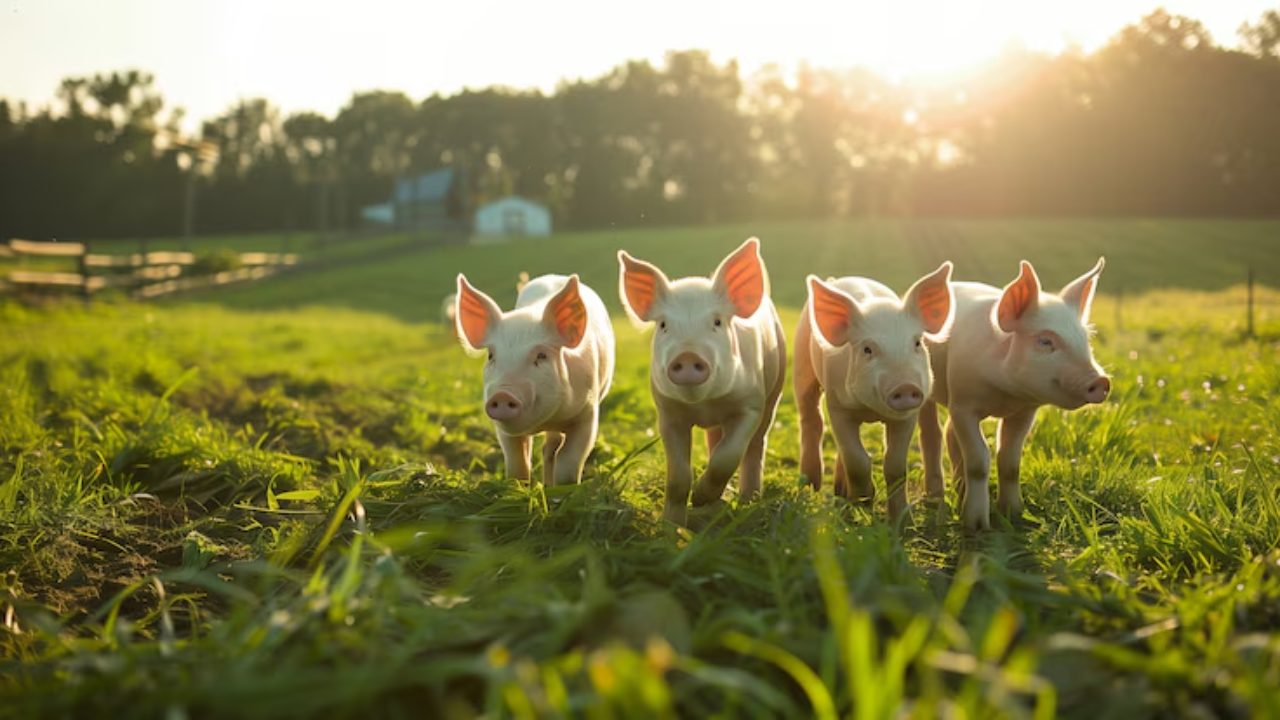
- Learn how to start a piggery farm in small space with low investment.
- Discover the best pig breeds for fast growth and higher profit.
- Get a clear setup cost breakdown — start under ₹1.5 lakh.
- Follow a step-by-step feeding plan for maximum weight gain.
- Understand vaccination & health care to avoid pig losses.
- Estimate your profit potential — earn ₹10+ lakh annually.
Pig farming is one of the fastest-growing and most profitable agribusinesses in India. With the rising demand for pork, setting up a low-cost piggery farm even in a small area can earn big returns. This article provides a step-by-step piggery setup guide that covers all essentials — from infrastructure and breeding to feeding and selling — designed especially for those starting on a small budget.
Benefits of Starting a Piggery Farm

- Low initial investment: Can be started with Rs. 50,000 – Rs. 1.5 lakhs.
- Quick returns: Pigs reach market weight (90-100 kg) in just 6-8 months.
- High feed conversion rate: Pigs convert feed into body weight faster than most livestock.
- Demand growth: Pork consumption is increasing steadily across India.
Note: Pigs reproduce rapidly — one sow can give birth to 8–12 piglets twice a year.
| Advantage | Detail |
|---|---|
| Investment | Low (Starting at Rs. 50,000) |
| Gestation Period | 114 days (~3 months, 3 weeks, 3 days) |
| Reproduction Cycle | 2 Litters/year |
| Market Weight Age | 6–8 Months |
Tip: Start with 2 sows and 1 boar for small-scale operations.
Types of Piggery Farming
- Backyard Piggery: Ideal for rural homes with space.
- Commercial Piggery: Requires more investment but offers higher profits.
- Pig Breeding Farm: Focuses on producing piglets for sale.
Expert Note: For beginners, backyard or small-scale piggery is safer.
How to Start a Low-Cost Piggery Farm: Step-by-Step Guide
Step 1: Conduct Market Research
- Identify local demand for pork.
- Study feed cost, buyer preferences, and nearby butchers/processors.
Step 2: Choose Your Farming Model
- Decide between breeding, fattening, or both.
Step 3: Arrange Space & Infrastructure
- Build a pig shelter with proper ventilation and drainage.
Step 4: Choose Pig Breeds
- Pick breeds that grow fast and have good meat quality.
Step 5: Feed & Health Plan
- Create a feeding schedule and plan for regular deworming.
| Step | Task |
| Step 1 | Market Research |
| Step 2 | Choose Farming Model |
| Step 3 | Infrastructure & Space Setup |
| Step 4 | Select Breeds |
| Step 5 | Feed Plan & Health Management |
Note: Planning saves 30% cost in the long term.

Cost of Setting Up a Piggery Farm
Basic Setup Cost (For 10 Pigs):
| Item | Approximate Cost (INR) |
| Shed Construction | 30,000 |
| 10 Piglets (Large White/Yorkshire) | 50,000 |
| Feed for 6 months | 30,000 |
| Water & Electricity | 5,000 |
| Medicines & Vet Care | 5,000 |
| Miscellaneous | 5,000 |
| Total | ₹1,25,000 |
Expert Tip: Use locally available materials for housing to cut costs.
Space Requirement and Infrastructure

- Per Pig Space: 8–10 sq. ft. for adults, 4–5 sq. ft. for piglets
- Must-Haves:
- Sloped floors for drainage
- Clean water supply
- Separate farrowing area for sows
- Fencing for safety
| Type of Pig | Space Required (sq. ft.) |
| Adult Pig | 8–10 |
| Sow with Piglets | 20–25 |
| Boar | 12–15 |
Tip: Ensure sunlight reaches the shed — it controls odour and improves hygiene.
Best Breeds for Profitable Pig Farming
- Large White Yorkshire
- Landrace
- Hampshire
- Ghungroo (Indian breed)
| Breed | Growth Rate | Meat Quality | Suitability |
| Yorkshire | Fast | Excellent | All Climates |
| Hampshire | Moderate | Good | Eastern/North East |
| Ghungroo | Slow | Moderate | Bengal, Bihar |
Note: Hybrid pigs (crossbreeds) offer faster growth and better profits.
Pig Feed Management
- Starter Feed (0–2 months): Rich in protein
- Grower Feed (2–4 months): Protein + carbs
- Finisher Feed (4+ months): High energy
- Supplement with kitchen waste, vegetables, and grains.
| Age | Feed Type | Quantity/Day |
| 0–2 Months | Milk, Starter | 300–500 gm |
| 2–4 Months | Grower Feed | 1–1.5 kg |
| 4–6+ Months | Finisher Feed | 2–3 kg |
Tip: Balanced feeding ensures 1 kg weight gain for every 3–4 kg of feed.
Health Care & Vaccination Schedule
- Common Diseases: Swine Fever, Foot & Mouth, Worms
- Preventive Measures:
- Deworming every 3 months
- Vaccination as per schedule
| Vaccine | Age to Administer |
| Swine Fever | 8–10 weeks |
| Foot & Mouth | 2–3 months |
| Deworming | Every 3 months |
Expert Note: Always isolate new pigs for 15 days before mixing with the herd.
Marketing and Selling Your Pigs

- Local Butchers: High demand, immediate payment
- Pork Processing Units: Higher volume buyers
- Live Pig Markets/Fairs
- Online Meat Startups (ZappFresh, Licious)
Tip: Form a local piggery group for better prices and bulk selling.
Profit Margin and Return on Investment
Example: 10 Pigs in 6–8 Months
- Investment: ₹1.25 lakh
- Weight per pig: ~100 kg
- Selling price: ₹120/kg
- Income: ₹1.2 lakh
- Total Income: ₹12 lakh (for 10 pigs)
- Net Profit: ₹10.75 lakh (after 2 cycles annually)
| Metric | Amount |
| Investment | ₹1.25 lakh |
| Revenue (2 Cycles) | ₹12 lakh |
| Net Profit | ₹10.75 lakh |
Note: Profit margins can vary based on feed and selling rates.
Challenges and Expert Tips

Challenges:
- Disease outbreaks
- Unhygienic housing
- High feed prices
Expert Tips:
- Keep records of breeding, vaccination, and sales.
- Join government piggery training programs.
- Apply for livestock subsidies and NABARD loans.
Conclusion
Starting a low-cost piggery farm can be a highly profitable and sustainable venture — even with a small land area. With the right breeds, proper feeding, clean housing, and vaccination schedules, you can turn a small piggery setup into a high-income business. Use this guide to plan every aspect smartly and grow your profits cycle after cycle.
Explore more blogs to boost your farming knowledge and make smarter agri-business moves.
Frequently Asked Questions (FAQs)
Minimum ₹50,000 to ₹1.5 lakhs for a small 10-pig setup.
In 100 sq. ft., you can rear up to 10 pigs comfortably.
Up to ₹10–12 lakh annually from 10 pigs (2 cycles/year).
Large White Yorkshire and Landrace.
Balanced diet of protein, carbs, and minerals — include commercial grower and finisher feed.
Follow vet schedule — major vaccines at 2–3 months.
Diseases, high feed cost, and lack of hygiene.
Yes, under NABARD and state livestock development schemes.
Limited due to odour and zoning — best in peri-urban/rural settings.
Yes, but check state-specific livestock policies.