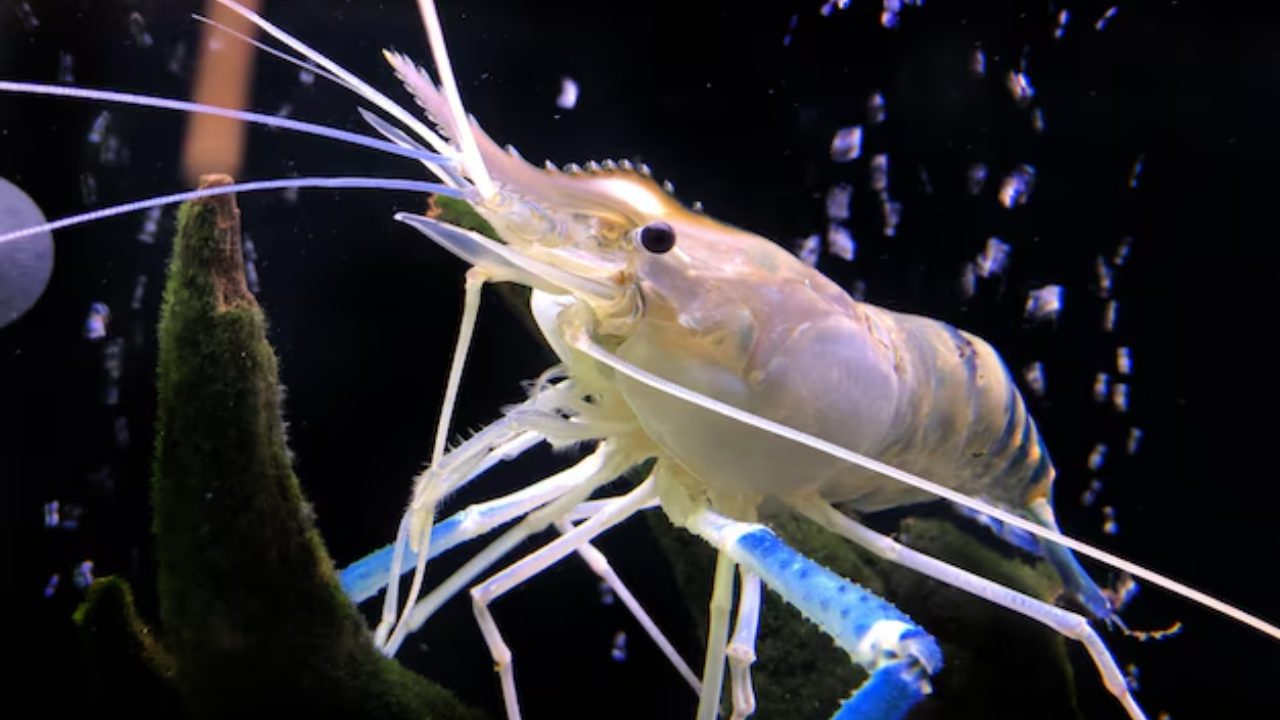
- Start prawn farming in just 1000 sq. ft. of space
- Use Scampi (M. rosenbergii) for fast growth & high demand
- Get 300–500 kg yield per cycle with proper tank setup
- Harvest in 6–8 months with efficient feed & care
- Earn ₹80,000 to ₹1.5 lakh profit per cycle
Freshwater prawn farming in tanks is a modern, profitable method of aquaculture suitable for both small and large-scale farmers. With high market demand, low land requirement, and the ability to control water quality, tank-based prawn farming is becoming a popular choice in India. This guide explains everything step-by-step, from selecting the right species to harvesting your profits.
What is Freshwater Prawn Farming in Tanks?

Freshwater prawn farming involves rearing prawns (mainly Macrobrachium rosenbergii) in a controlled water environment like cement, plastic, or HDPE-lined tanks.
Key Highlights:
- Requires less space than pond farming
- Water quality can be controlled
- Easier to manage diseases
- Suitable for urban and semi-urban areas
Note: Tank farming is ideal for locations with limited land and high water availability.
| Factors | Details |
|---|---|
| Ideal Species | Macrobrachium rosenbergii |
| Tank Size | Minimum 1000 sq. ft. per 1000 prawns |
| Duration | 6–8 months per cycle |
| Yield (Per Sq. Ft.) | 0.3 – 0.5 kg |
| Profit (Per Cycle) | Rs. 80,000 to Rs. 1,50,000 |
Expert Tip: Start with a pilot tank (1000 prawns) to test water quality and growth patterns before expanding.
Benefits of Tank-Based Prawn Farming
- Space Efficient: Requires significantly less land
- Water Saving: Recycling and filtration are possible
- Controlled Environment: Better disease control
- Higher Survival Rates: Up to 80–90% with proper care
- Faster Growth: Improved feed efficiency
Note: Tank systems enable year-round production, unlike seasonal pond-based methods.
Species Selection for Freshwater Tank Farming

The most suitable prawn species for tank farming is:
1. Macrobrachium rosenbergii (Scampi):
- Fast growth rate
- High market value
- Adaptable to tank conditions
- Disease-resistant
| Species Name | Growth Period | Avg. Size at Harvest | Market Price/kg |
| Macrobrachium rosenbergii | 6–8 months | 80–120 grams | Rs. 400–600 |
Expert Tip: Always source seed from certified hatcheries to ensure disease-free stock.
Tank Setup Guide

Types of Tanks:
- Cement Tanks
- HDPE-lined Earthen Tanks
- Plastic/FRP Tanks
Design Considerations:
- Size: 1000–5000 sq. ft.
- Depth: Minimum 4–5 ft
- Drainage System: Essential for waste removal
- Aeration System: Maintain oxygen level >5 mg/L
Setup Steps:
- Level and clean the ground
- Construct walls and install lining (if needed)
- Fix aerators and filters
- Fill with freshwater (treated if needed)
- Check pH (6.5–8.0), DO, temperature
| Component | Specification |
| Water pH | 6.5 to 8.0 |
| Temperature | 26–32°C |
| Oxygen Level | > 5 mg/L |
| Tank Material | Cement, HDPE, Plastic |
Note: Install shade netting if tanks are exposed to direct sunlight.
Seed Stocking & Density
Recommended Stocking:
- Stocking Size: PL (Post-larvae) or Juveniles
- Stocking Density: 2–4 prawns/sq. ft.
Procedure:
- Acclimatise seeds before release
- Stock early morning or late evening
- Distribute evenly across the tank
Expert Tip: Avoid overstocking to reduce stress and mortality.

Feeding Management
Proper feeding boosts growth and reduces FCR (Feed Conversion Ratio).
Feed Types:
- Starter Feed (0–2 months): 35–40% protein
- Grower Feed (2–5 months): 30% protein
- Finisher Feed (5–8 months): 25% protein
Feed Schedule:
- Feed 2–3 times a day
- Adjust quantity based on biomass
| Feed Type | Duration | Protein % | Feeding Rate (of biomass) |
| Starter | 0–2 months | 35–40% | 10% |
| Grower | 2–5 months | 30% | 5–6% |
| Finisher | 5–8 months | 25% | 3–4% |
Note: Uneaten feed must be removed to prevent water contamination.
Water Quality Management

Maintaining clean water ensures high survival and better yield.
Parameters to Monitor:
- pH: 6.5–8.0
- Ammonia: <0.5 ppm
- Nitrite: <0.3 ppm
- DO (Oxygen): >5 mg/L
Tips:
- Change 20–30% water every 15 days
- Use filters and biofloc (optional)
- Regularly check water using test kits
Expert Tip: Use probiotics to improve water and gut health.
Health Management & Disease Control
Common Diseases:
- White Muscle Disease
- Shell Disease
- Gill Chocking
Prevention:
- Maintain water quality
- Avoid overfeeding
- Quarantine new stock
- Use lime, salt, or potassium permanganate if needed
| Issue | Solution |
| Low oxygen | Increase aeration |
| Infections | Apply pond disinfectant |
| Slow growth | Improve feed & water quality |
Note: Consult an aquaculture specialist if mortality exceeds 5% in a week.
Harvesting & Marketing

Harvest Time:
- 6–8 months after stocking
- Prawns reach 80–120 gm
Harvesting Process:
- Lower water level
- Use drag nets or drain the tank
- Sort and weigh the prawns
Market Options:
| Cycle Duration | Avg. Yield (Per 1000 sq. ft.) | Gross Income | Net Profit |
| 6–8 months | 300–500 kg | Rs. 1.8L–3L | Rs. 80k–1.5L |
Expert Tip: You can earn more by selling directly to end consumers or hotels.
Cost & Profit Analysis (Per 1000 sq. ft.)
| Item | Estimated Cost (INR) |
| Tank Construction | 60,000 |
| Seed Stocking (1000) | 5,000 |
| Feed Cost (8 months) | 20,000 |
| Aeration + Electricity | 8,000 |
| Labour & Misc. | 7,000 |
| Total Cost | INR 1,00,000 |
| Gross Income | INR 1.8L – 3L |
| Net Profit | INR 80k – 1.5L |
Note: Profit depends on survival rate, feed quality, and market price.
Conclusion
Freshwater prawn farming in tanks is a high-potential agribusiness with excellent profitability if managed correctly. With growing demand, low space requirement, and easy water control, even beginners can succeed. Just ensure good quality seed, feed, and water management.
Explore more blogs to boost your farming knowledge and make smarter agri-business moves
Frequently Asked Questions (FAQs)
Macrobrachium rosenbergii is ideal for tank farming due to its growth rate and high market demand.
At least 1000 sq. ft. with a depth of 4–5 ft is recommended.
Profit ranges from Rs. 80,000 to Rs. 1.5 lakh per 1000 sq. ft. per cycle.
Change 20–30% of water every 15 days or as needed.
Yes. Prawns need oxygen >5 mg/L, so aerators are essential.
Use protein-rich commercial feed as per growth stage.
6–8 months, depending on stocking density and feed.
Yes. Backyard tank systems are ideal for beginners.
With proper care, survival rates can go up to 80–90%.
Yes. Scampi prawns require clean, freshwater with neutral pH.