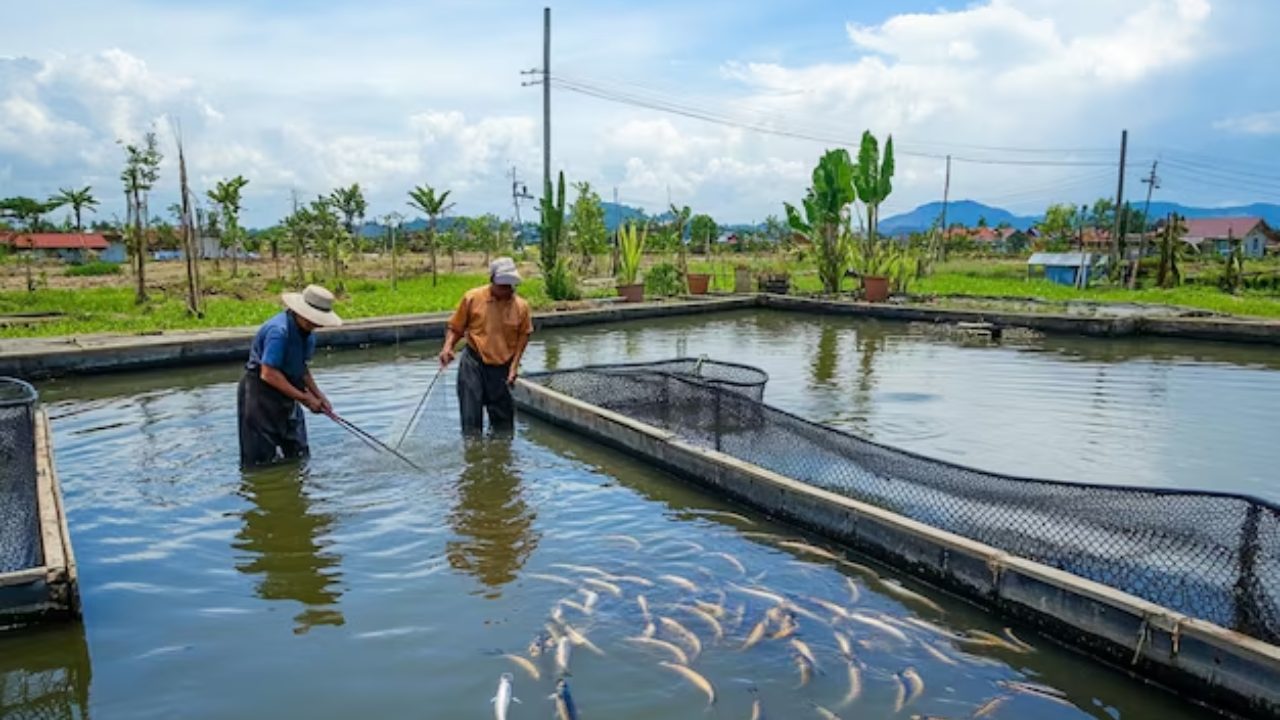
- Profit Reality Check: Learn how a 1-acre fish farm can generate ₹2.5–5 lakh annually with the right approach
- Smart Species Mix: Insights into combining fast-growing and high-value fish for steady cash flow and maximum yield.
- Cost & ROI Clarity: A realistic breakdown of setup cost, running expenses, and potential returns.
- Operational Success Hacks: Practical water quality, feeding, and harvesting tips used by profitable farmers
- Market-Driven Approach: Strategies to time your harvest and build a strong buyer network for better prices.
Fish farming is becoming one of the fastest-growing agribusiness opportunities in India. With proper planning, even a 1-acre pond can generate a steady income for farmers. The secret lies in selecting the right species, maintaining water quality, reducing feed wastage, and selling at the right time. In this guide, you’ll learn how to maximise 1-acre fish farming profit step-by-step.
Understanding 1 Acre Fish Farming Profit

The term “1-acre fish farming profit” refers to the net earnings a farmer can make from raising fish in a pond of one acre in size, after deducting all operational expenses.
Profit Potential:
- ₹2.5 lakh – ₹5 lakh/year (depends on fish type, feed cost, market rates).
- Annual yield: 3,000–6,000 kg of fish.
- Gross margin: 40–60% for efficient farmers.
Key Factors Affecting Profit:
- Fish species choice – Premium species = higher rates.
- Stocking density – Impacts growth and mortality rate.
- Feed cost – The largest recurring expense.
- Market demand – Seasonal spikes can double rates.
| Factor | Impact on Profit | Example |
|---|---|---|
| Fish species | Higher value, more profit | Murrel @ ₹350/kg vs. Rohu @ ₹150/kg |
| Feed quality | Better growth, early harvest | Floating feed improves conversion ratio |
| Market demand | Seasonal price rise | Festivals can boost prices 20–30% |
Expert Tip: Always calculate ROI before stocking your pond to ensure profitability.
Choosing the Right Fish Species for 1 Acre Farming
Top Profitable Fish Varieties in India
- Rohu – ₹140–₹160/kg, 8–10 months growth.
- Catla – ₹150–₹170/kg, 8–10 months growth.
- Grass Carp – ₹120–₹140/kg, weed-eating variety.
- Common Carp – ₹110–₹130/kg, hardy and adaptable.
- Tilapia – ₹120–₹150/kg, fast-growing.
- Murrel – ₹300–₹350/kg, high-end market fish.
Polyculture (mixing species) helps:
- Use all pond layers (top, middle, bottom).
- Spread disease risk.
- Provide continuous harvest.
| Fish Species | Growth Period | Price/kg | Pond Layer |
|---|---|---|---|
| Rohu | 9 months | ₹150 | Middle |
| Catla | 9 months | ₹160 | Top |
| Grass Carp | 8 months | ₹130 | Top |
| Common Carp | 8 months | ₹125 | Bottom |
| Murrel | 10 months | ₹340 | Bottom |
Note: Combining fast-growing (Tilapia) with high-value (Murrel) species balances both quick cash flow and premium profit.
Pond Preparation for 1 Acre Fish Farming

Site Selection
- Soil: Clay or loamy soil holds water better.
- Water Source: Tube well, canal, or rain-fed.
- pH: Maintain 6.5–8.5.
Pond Design
- Depth: 5–6 feet for balanced oxygen levels.
- Inlet & outlet for water exchange.
- Gentle slope for easy harvesting.
Water Quality Management
- Maintain dissolved oxygen above 5 ppm.
- Use aerators in summer.
- Test pH monthly.
| Parameter | Ideal Range | Effect on Fish Growth |
|---|---|---|
| pH | 6.5–8.5 | Healthy growth |
| Dissolved Oxygen | >5 ppm | Prevents mortality |
| Temperature | 25–32°C | Optimal feeding rate |
Quick Tip: Always lime the pond before stocking to stabilise pH.

Seed Selection & Stocking Density
- Buy fingerlings from certified hatcheries only.
- Stock healthy, disease-free seeds.
- Polyculture stocking density: 6,000–8,000 fingerlings/acre.
- Monoculture stocking density: 3,000–5,000/acre.
| Fish Type | Density (per acre) |
|---|---|
| Rohu | 1,500–2,000 |
| Catla | 1,500–2,000 |
| Grass Carp | 1,000–1,500 |
| Common Carp | 1,000–1,500 |
Note: Acclimatise fish by floating seed bags in pond water for 20–30 minutes before release.
Fish Feed & Nutrition Management
Types of Feed
- Natural Feed: Plankton, algae (grown using fertilisation).
- Supplementary Feed: Rice bran, oil cakes.
- Formulated Feed: Floating/sinking pellets.
Daily Feed Formula:
Feed/day (kg) = Total biomass × Feed Conversion Ratio (FCR) ÷ 100
- FCR for carp = 1.5–2.0
- Feed cost = 50–70% of total expense.
Tip: Use automatic feeders to reduce wastage.
Growth Monitoring & Disease Management

- Measure fish length & weight monthly.
- Watch for unusual behaviour (surface gulping = low oxygen).
- Common diseases: Epizootic Ulcerative Syndrome (EUS), fin rot.
- Use probiotics & maintain hygiene.
Quick Note: Quarantine new fish before mixing them into the main pond.
Harvesting & Marketing Strategies
- Harvest when fish reach marketable size (1–1.5 kg for carp).
- Methods: Seine netting, draining pond.
- Sell directly to consumers, hotels, or retail markets.
| Selling Method | Advantage | Disadvantage |
|---|---|---|
| Direct to market | Higher price | More effort in selling |
| Middlemen | Quick bulk sales | Lower profit margin |
Tip: Harvest in phases to maintain a continuous income flow.
1 Acre Fish Farming Cost & Profit Analysis (Example)
| Expense Item | Cost (₹) |
|---|---|
| Pond Preparation | 40,000 |
| Seed/Fingerlings | 25,000 |
| Feed | 90,000 |
| Labor | 20,000 |
| Medicines | 5,000 |
| Electricity | 8,000 |
| Miscellaneous | 7,000 |
| Total Cost | 1,95,000 |
| Revenue Details | Value |
|---|---|
| Yield | 4,500 kg |
| Selling Price/kg | ₹200 |
| Gross Income | ₹9,00,000 |
| Net Profit | ₹3,05,000 |
10 Expert Tips to Maximise Profit

- Always maintain water quality.
- Choose polyculture for better space utilisation.
- Avoid overstocking.
- Feed on schedule and avoid overfeeding.
- Use aeration in summer.
- Keep detailed farm records.
- Diversify species for steady income.
- Sell during high-demand seasons.
- Build a buyer network in advance.
- Monitor fish health daily.
Conclusion
1-acre fish farming can be a highly profitable venture if planned with the right species, proper pond management, and effective marketing. Farmers who focus on quality, efficiency, and market timing can easily make ₹2.5–5 lakh annually.
Explore more blogs to boost your farming knowledge and make smarter agri-business moves
FAQs
₹2.5–5 lakh/year depending on species and management.
Murrel, Pangasius, and Tilapia are among the most profitable.
Around ₹1.8–2 lakh for the first cycle.
6–10 months depending on species.
Yes, but water quality must be tested regularly.
Some states require registration; check local rules.
Floating formulated feed with balanced nutrients.
Maintain clean water, avoid overstocking, and use probiotics.
Yes, integrated fish farming with rice or ducks is profitable.
Yes, if proper training and guidance are taken.