PPF Calculator 2025: How Much Will Your Savings Grow in 15 Years?
Overview
The PPF calculator is a simple yet powerful tool that helps you estimate the future value of your savings in a Public Provident Fund (PPF) account. By entering your annual investment amount (₹500 to ₹1.5 lakh) and choosing your deposit frequency, the calculator shows how your money grows at the current 7.1% annual interest rate (as of Q1 FY 2025–26). It factors in compound interest and tax-free returns, giving you a clear picture of your long-term gains. Ideal for planning retirement, education, or wealth-building goals, the calculator removes guesswork and makes financial decisions easier and more precise.
A PPF calculator shows just how powerful long-term savings can be. For example, investing ₹1,50,000 annually in a PPF account at the current 7.1% interest rate can grow to over ₹40.6 lakh in 15 years—with more than ₹18 lakh earned as interest alone. Even smaller contributions, like ₹1,00,000 a year, can mature to over ₹27 lakh. This article explains how these returns are calculated, the formula behind them, and how you can use a PPF calculator to plan your financial goals with zero risk and full tax benefits.
What is a PPF account, and why does it matter in 2025
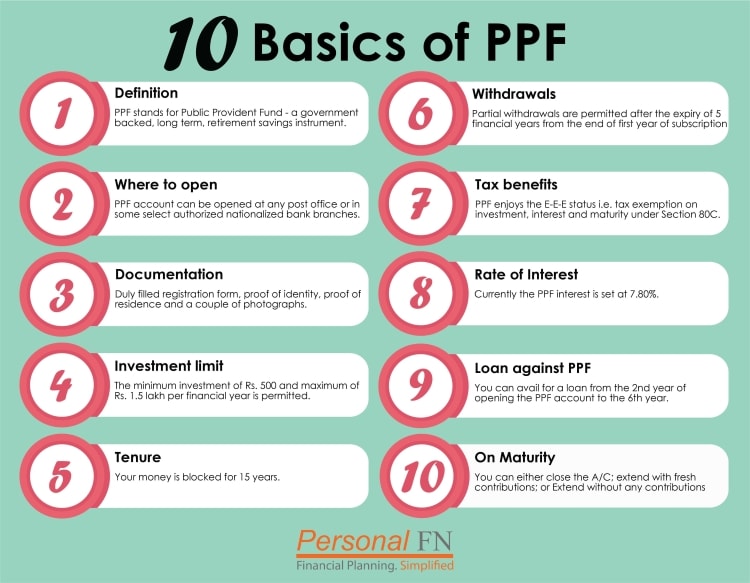
The Public Provident Fund (PPF) has been one of India’s most trusted long-term investment schemes since 1968, when the National Savings Institute launched it. This government-backed savings plan helps citizens build wealth securely while providing substantial tax benefits.
Key features of a PPF account
- Eligibility: Any Indian resident can open a PPF account, and minors can get one through their guardians.
- Investment limits: Deposit between ₹500 (minimum) and ₹1,50,000 (maximum) annually.
- Tenure: Fixed lock-in period of 15 years that you can extend in 5-year blocks.
- Interest rate: Currently offers 7.1% per annum, compounded yearly.
- Safety: The Government of India backs it completely, making it one of the safest ways to invest.
- Loan facility: You can get loans from the 3rd to 6th year of the account.
- Partial withdrawals: You can withdraw after completing 5 financial years.
Tax benefits under Section 80C
- Deduction limit: Tax deduction applies to contributions up to ₹1.5 lakh under Section 80C.
- Triple tax advantage: PPF has EEE (Exempt-Exempt-Exempt) status.
- Tax-free contributions: Your taxable income is reduced by the invested amount.
- Tax-free interest: You pay no tax on earned interest.
- Tax-free maturity: You get the entire maturity amount tax-free.
- Claiming process: Include investment details in your income tax returns under Section 80C exemptions.
Note:
You can contribute twice monthly, with a maximum of 12 contributions yearly.
Why PPF is ideal for long-term savings
- Disciplined savings: The 15-year lock-in helps build consistent financial habits.
- Compounding benefits: Your corpus grows substantially through annual interest compounding.
- Risk-free returns: Returns stay stable, whatever the economic conditions, since they’re not market-linked.
- Retirement planning: You can build a substantial nest egg for retirement.
- Protection from creditors: Creditors cannot touch your PPF savings during financial hardships.
Tips
Make your deposits before the 5th of each month to maximise interest benefits.
| Feature | Details |
|---|---|
| Interest Rate | 7.1% p.a. compounded annually |
| Minimum Investment | ₹500 per year |
| Maximum Investment | ₹1.5 lakh per year |
| Lock-in Period | 15 years (extendable) |
| Tax Benefits | EEE status under Section 80C |
| Risk Profile | Government-backed, zero risk |
Want to take control of your money and build real financial freedom?
Get step-by-step strategies proven by finance experts and wealth coaches – download the Boss Wallah App now
How the PPF calculator works

Digital calculators make projecting long-term PPF savings effortless by eliminating complex math and showing potential returns instantly. These tools have turned financial planning from guesswork into precision.
What is a PPF calculator?
- A PPF calculator is an internet-based tool that estimates your maturity value, interest accrued, and overall returns based on your annual deposit, current PPF interest rate, and investment duration.
- The calculator uses the compound interest formula to show your total corpus, including both principal and interest earnings.
- This financial tool answers questions about your Public Provident Fund account and tracks your capital growth.
- The calculator gives precise projections instantly, unlike manual calculations that take time and effort.
Inputs required for accurate results
- Investment frequency: Select monthly, quarterly, semi-annual, or annual contributions based on your preferred deposit schedule.
- Investment amount: Enter your planned contribution (minimum ₹500, maximum ₹1.5 lakh annually).
- Investment duration: Choose your timeframe (minimum 15 years, with options to extend in 5-year blocks).
- Current interest rate: The calculator automatically applies the current rate (7.1%, compounded annually).
Note:
PPF interest rates change periodically based on macroeconomic situations, which could affect your projected returns.
How it simplifies financial planning
- Accurate forecasting: The calculator removes manual work by applying the latest interest rates and compounding rules for precise projections.
- Scenario testing: Try different investment amounts and frequencies to find your optimal strategy.
- Goal-based planning: Set achievable financial objectives by seeing potential returns.
- Risk management: See how changes in interest rates or investment amounts could affect your future corpus.
- Time efficiency: Get results instantly without complex calculations.
Tips
Your PPF deposits should reach before the 5th of each month to maximise returns. Any contributions after this date won’t earn interest for that month.
| Investment Period | Annual Investment | Interest Rate | Interest Earned | Maturity Amount |
|---|---|---|---|---|
| 15 years | ₹1,50,000 | 7.1% | ₹18,18,209 | ₹40,68,209 |
| 20 years | ₹1,50,000 | 7.1% | ₹36,58,288 | ₹66,58,288 |
| 30 years | ₹1,50,000 | 7.1% | ₹1,09,50,911 | ₹1,54,50,911 |
Pro Tip
Tired of financial confusion? This no-fluff 2025 guide simplifies it all – Click here and take charge of your finances
Understanding the PPF calculation formula

The PPF calculation’s mathematical formula shows exactly how your money grows over time. This formula’s understanding helps you appreciate why PPF serves as the lifeblood of long-term financial planning.
The formula used in the PPF maturity calculator
- PPF calculators use this standard formula: M = P [ ( { (1 + i) ^ n } – 1 ) / i ]
- Your investment’s future value gets calculated based on your contributions and the current interest rate
- The formula factors in compound interest, where your earned interest generates additional returns
- Future value of an annuity calculations form the basis of this formula
Breakdown of variables: P, i, n, M
- P shows your annual instalment or contribution amount
- i represents the interest rate (currently 7.1% or 0.071 in decimal form)
- n shows the investment duration (minimum 15 years)
- M represents your investment’s maturity amount
- The formula’s expression after P is called the “annuity factor”
Example: ₹1.5 lakh/year for 15 years at 7.1%
- These values apply here: P = ₹1,50,000, i = 0.071, n = 15 years
- M = 1,50,000 [ ( { (1 + 0.071) ^ 15 } – 1 ) / 0.071 ]
- Calculate (1 + 0.071) ^ 15 = 2.77 first
- Subtract 1: 2.77 – 1 = 1.77
- Interest rate division follows: 1.77 / 0.071 = 24.93
- Annual investment multiplication: 24.93 × 1,50,000 = ₹37,39,500
- The actual maturity amount reaches ₹40,68,209 with compound interest effects
Note:
Your PPF account receives annually credited interest, though calculations happen monthly
How compounding works in your favour
- Your principal amount earns interest in the first year
- Both principal and accumulated interest earn returns from the second year
- Your money’s growth rate increases each year through this snowball effect
- To cite an instance, see how ₹1.5 lakh yearly investment grows to ₹40.68 lakh in 15 years and expands to ₹1.54 crore in 30 years—showing exponential growth
- Compound interest’s power grows stronger with longer investment periods
Tips
Make your PPF contribution before the 5th month to maximise returns, since the lowest balance between the 5th and the month-end determines interest calculations
PPF Investment Growth Over Time (Annual Investment: ₹1.5 Lakh)
| Investment Period | Annual Investment | Total Investment | Interest Earned | Maturity Value |
|---|---|---|---|---|
| 15 years | ₹1.5 lakh | ₹22.5 lakh | ₹18,18,209 | ₹40,68,209 |
| 20 years | ₹1.5 lakh | ₹30 lakh | ₹36,58,288 | ₹66,58,288 |
| 30 years | ₹1.5 lakh | ₹45 lakh | ₹1,09,50,911 | ₹1,54,50,911 |
Pro Tip : Want to build money skills without spending a rupee? Check out the top free financial education resources of 2025 — Click now
Benefits of using a PPF interest calculator

Your hard-earned money needs precision and foresight when investing. PPF interest calculators make complex financial decisions easier to plan.
Accurate maturity projections
- Your investment amount, duration, and current interest rates help calculate precise potential returns
- Automated computations eliminate common errors in manual calculations
- The actual growth trajectory shows up in accurate estimations of your investment
- Quick automated calculations save time and prevent mistakes
Helps in goal-based planning
- Potential returns over your chosen timeframe help set realistic financial goals
- Different scenarios emerge when you adjust contribution amounts and frequency
- Specific goals like retirement, education expenses, or corpus building need clear roadmaps
- Your target corpus determines the required regular investment amount
Compare fixed vs variable contributions
- Different contribution patterns shape your final returns
- Monthly and annual contributions need review to find the best approach
- Regular instalments and lump sum investments show different growth patterns
- Your financial situation guides the most suitable approach through customised inputs
Track interest earned over time
- Your PPF investment growth shows throughout its duration
- Compound interest accelerates your savings growth and keeps you motivated
- Performance insights guide investment strategy adjustments
- Interest earnings become clear at different investment stages
Note:
Monthly interest calculations happen for PPF accounts, with final credit at the financial year’s end.
Plan deposits before the 5th of the month
- Early deposits by the 5th maximise your interest earnings
- PPF calculates interest on the minimum balance between the 5th and the month-end
- Late deposits after the 5th miss that month’s interest
- Yearly contributors should deposit before April 5th for maximum returns
- This critical timing prevents loss of monthly interest
Tips
Smart timing of PPF deposits before the 5th of each month can substantially affect your long-term gains.
💰 PPF Earnings Overview (Annual Investment: ₹1.5 Lakh)
| Investment Period | Annual Investment | Total Interest Earned | Maturity Value |
|---|---|---|---|
| 15 years | ₹1.5 lakh | ₹18,18,209 | ₹40,68,209 |
| 20 years | ₹1.5 lakh | ₹36,58,288 | ₹66,58,288 |
| 30 years | ₹1.5 lakh | ₹1,09,50,911 | ₹1,54,50,911 |
WATCH | Course on Financial Freedom
Key Takeaways
Understanding PPF calculations empowers you to make informed long-term investment decisions and maximise your wealth-building potential through this government-backed savings scheme.
• PPF offers exceptional growth potential: Investing ₹1.5 lakhs annually for 15 years at 7.1% interest yields ₹40.68 lakh maturity value—over ₹18 lakh in pure interest earnings.
• Triple tax advantage maximises returns: PPF provides EEE status under Section 80C—tax-free contributions, tax-free interest, and tax-free maturity amount.
• Timing deposits boosts earnings significantly: Make PPF contributions before the 5th of each month to earn interest for the entire month and maximise returns.
• PPF calculator simplifies complex planning: Use online calculators to experiment with different investment scenarios, compare contribution frequencies, and set realistic financial goals.
• Compounding accelerates wealth exponentially: Extended investment periods dramatically multiply returns—30-year investments grow to ₹1.54 crore versus ₹40.68 lakh for 15 years.
The PPF calculator transforms abstract financial concepts into concrete projections, helping you visualise how disciplined savings and strategic timing can build substantial wealth over time. This government-backed scheme remains one of India’s most reliable long-term investment options for risk-averse investors seeking steady, tax-efficient growth.
Want to master your personal finances and build real wealth?
Explore Boss Wallah, where 500+ practical courses by top finance experts and wealth coaches offer step-by-step guides on budgeting, saving, investing, and achieving financial freedom.
Courses are available in Tamil, Telugu, Kannada, Malayalam, Hindi, and English, so you can learn in your own language.
Discover proven strategies, smart investment ideas, tax-saving methods, and real-world money management tips that actually work. Start your journey to financial independence today — download the Boss Wallah App now.
Conclusion
The PPF calculator is a valuable tool for anyone focused on long-term financial planning, turning complex projections into clear insights. With benefits like tax-free contributions, interest, and maturity under Section 80C, plus secure, government-backed returns, it stands out as a smart, low-risk option. By contributing consistently and depositing before the 5th of each month, investors can maximise earnings through the power of compounding—growing ₹22.5 lakh into over ₹40 lakh in 15 years or even ₹1.54 crore over 30 years.
FAQs
A PPF calculator is a free online tool that helps estimate the maturity amount and interest you will earn on your Public Provident Fund investments.
As of 2025, the PPF interest rate is 7.1% per annum, compounded yearly.
The lock-in period is 15 years, but you can extend it in blocks of 5 years after that.
PPF interest is calculated monthly but compounded annually. It is based on the lowest balance between the 5th and last day of each month.
Yes, partial withdrawals are allowed after 7 years, subject to certain conditions.
Yes, for long-term savings, PPF offers higher returns and tax-free maturity, unlike most FDs.
You can invest a minimum of ₹500 and a maximum of ₹1.5 lakh per year in a PPF account.
No, NRIs are not allowed to open or extend PPF accounts in India.
Absolutely. With its safe, tax-saving, and guaranteed return structure, PPF continues to be a top choice in 2025.
You can deposit monthly either through online banking or by visiting your bank/post office, before the 5th of each month, for maximum interest.