Aeroponic Farming: A Complete Guide (2025)
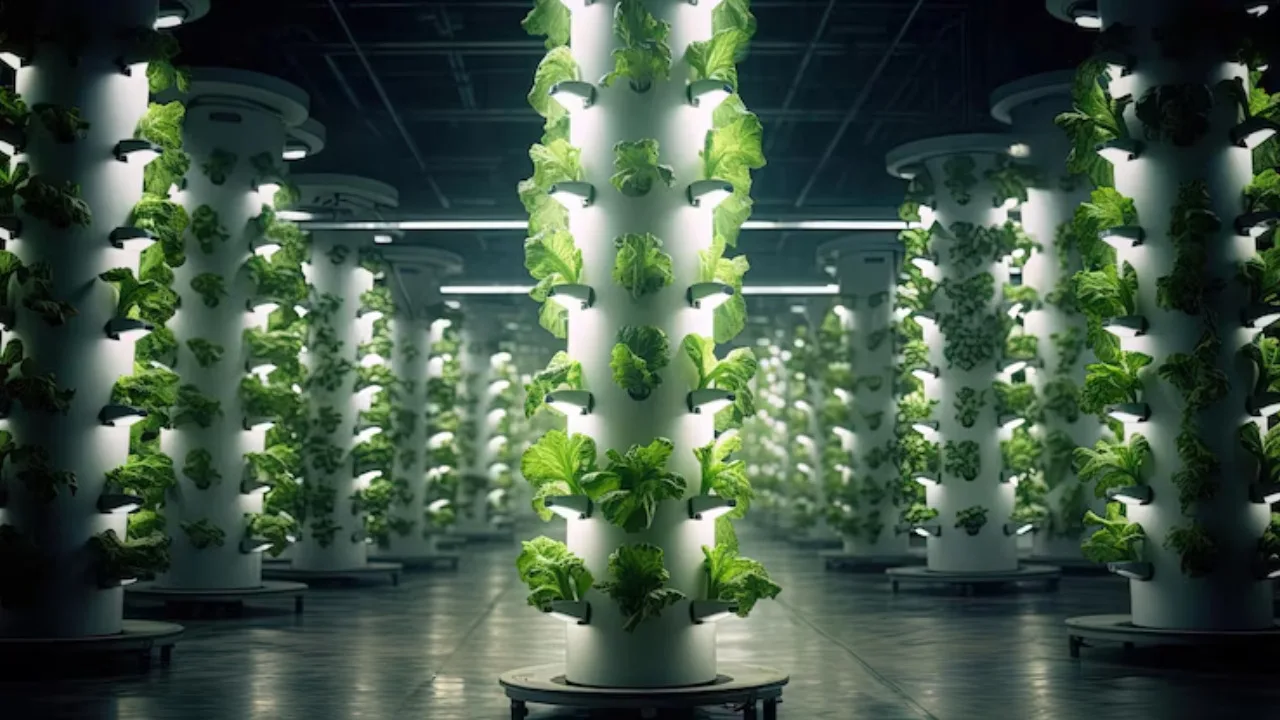
Table of contents
- What is Aeroponic Farming?
- Why is Aeroponic Farming Gaining Traction in India?
- Difference Between Aeroponics, Hydroponics, and Vertical Farming
- Suitable Crops for Aeroponic Farming in India
- Notable Aeroponic Farming Initiatives in India
- Advantages of Aeroponic Farming
- Components of an Aeroponic System
- Economic Aspects of Aeroponic Farming
- Getting Started with Aeroponic Farming
- Cost & Profit Analysis of Aeroponic Farming in India (2025)
- Government Support & Subsidies for Aeroponic Farming in India (2025)
- Challenges and Consideration
- Conclusion
- Frequently Asked Questions (FAQs)
Aeroponic farming is an innovative method of growing plants without soil, where roots are suspended in the air and misted with a nutrient-rich solution. This technique offers a sustainable solution to challenges like water scarcity, limited arable land, and the need for pesticide-free produce, making it increasingly relevant in India’s agricultural landscape.
What is Aeroponic Farming?

Aeroponic farming is a soilless cultivation technique where plant roots hang in the air and are periodically misted with a nutrient-rich solution. This method allows for efficient nutrient absorption and oxygenation, leading to faster plant growth and higher yields.
Why is Aeroponic Farming Gaining Traction in India?
- Water Efficiency: Uses up to 95% less water compared to traditional farming methods.
- Space Optimisation: Ideal for urban areas with limited space; vertical setups maximise yield per square foot.
- Year-Round Production: Controlled environments allow for continuous cultivation regardless of external weather conditions.
- Reduced Pesticide Use: Minimised exposure to soil-borne pests reduces the need for chemical pesticides.
- Faster Growth Rates: Enhanced oxygenation leads to quicker plant development.
Difference Between Aeroponics, Hydroponics, and Vertical Farming
| Feature | Aeroponics | Hydroponics | Vertical Farming |
|---|---|---|---|
| Definition | Growing plants in air with roots misted by nutrients | Growing plants in water-based, nutrient-rich solutions | Growing plants in vertically stacked layers |
| Medium Used | No medium; roots are suspended in air | Water with nutrients; sometimes with inert mediums (e.g., coco peat) | Can use aeroponic or hydroponic systems |
| Water Usage | Extremely low (uses up to 95% less water) | Low (uses about 90% less water than soil farming) | Depends on the system used (usually low water consumption) |
| Plant Growth Rate | Very high due to oxygen-rich environment | High | High (especially in controlled environments) |
| Space Efficiency | High, especially when combined with vertical setups | Moderate | Very high (multi-level farming in urban spaces) |
| Maintenance | Requires high technical skill and monitoring | Easier than aeroponics but still needs maintenance | Varies (depends on system – hydroponic/aeroponic) |
| Initial Setup Cost | High | Moderate | High (especially with automation and climate control) |
| Use in India | Growing – urban startups & research labs | Widely used in startups and commercial farms | Urban agriculture hubs in metros like Bengaluru, Mumbai, Pune |
| Examples in India | Urban Kisaan (Hyderabad), Acqua Farms (Chennai) | Letcetra Agritech (Goa), BitMantis Innovations (Bengaluru) | Simply Fresh (Hyderabad), Barton Breeze (Gurgaon) |
💡 Pro Tip: If you want to start a Business but have too many doubts, connect with a Business expert from Boss Wallah for guidance – Check Out
Suitable Crops for Aeroponic Farming in India
- Leafy Greens: Spinach, lettuce, kale, and arugula.
- Herbs: Basil, mint, coriander, and rosemary.
- Fruits: Strawberries and tomatoes.
- Medicinal Plants: Aloe vera and tulsi (holy basil).
Notable Aeroponic Farming Initiatives in India
- UrbanKisaan: An Indian startup utilising aeroponic technology to grow fresh vegetables in urban settings.
- Government Holkar Science College, Indore: Implemented hydroponics and aeroponics methods in controlled environments, achieving superior yields for leafy greens like spinach and lettuce .
Advantages of Aeroponic Farming
- Resource Efficiency: Significant reduction in water and fertiliser usage.
- Higher Yields: Enhanced growth rates lead to increased productivity.
- Pest and Disease Control: Controlled environments reduce the risk of infestations.
- Environmental Sustainability: Lower carbon footprint due to reduced resource consumption.
Components of an Aeroponic System
- Growth Chamber: An Enclosure where plant roots are suspended.
- Misting System: Delivers nutrient-rich mist to the roots.
- Reservoir: Holds the nutrient solution.
- Pump: Circulates the nutrient solution to the misting system.
- Lighting: Provides artificial light for photosynthesis, especially in indoor setups.
- Climate Control: Regulates temperature and humidity within the growth chamber.
Economic Aspects of Aeroponic Farming
- Initial Investment: Higher setup costs due to specialised equipment.
- Operational Costs: Lower ongoing expenses due to reduced water and pesticide use.
- Return on Investment: Faster crop cycles and higher yields can lead to quicker ROI.
- Market Demand: Growing consumer preference for pesticide-free and locally grown produce.
Getting Started with Aeroponic Farming

- Research and Training: Gain knowledge through workshops or online courses.
- Site Selection: Choose a location with a reliable power supply and access to clean water.
- System Setup: Install the aeroponic system with the necessary components.
- Crop Selection: Start with fast-growing crops like leafy greens.
- Monitoring: Regularly check system parameters and plant health.
- Marketing: Promote your produce through local markets or online platforms.
ALSO READ | Vertical Farming in India: Definition, Types and More
Cost & Profit Analysis of Aeroponic Farming in India (2025)
Initial Setup Cost for 1,000 sq ft Aeroponic Farm
| Expense Item | Estimated Cost (INR) |
|---|---|
| Aeroponic System Setup | ₹3,00,000 – ₹5,00,000 |
| Structure (polyhouse/net house) | ₹2,00,000 – ₹3,00,000 |
| Climate Control System (optional) | ₹1,00,000 – ₹2,00,000 |
| Seeds/Seedlings (First Cycle) | ₹5,000 – ₹10,000 |
| Nutrients & Misting Solution | ₹10,000 – ₹20,000/year |
| Labor and Maintenance | ₹50,000 – ₹75,000/year |
| Miscellaneous (electricity, tools, etc.) | ₹30,000 – ₹50,000 |
| Total Setup Cost (approx.) | ₹6,95,000 – ₹10,55,000 |
Profit Estimation (Per Year)
| Revenue Stream | Details | Estimated Earnings (INR/year) |
|---|---|---|
| Sale of Leafy Greens (Lettuce, Spinach) | 12,000 kg/year × ₹80/kg | ₹9,60,000 |
| Sale of Herbs (Basil, Mint, etc.) | 1,000 kg/year × ₹150/kg | ₹1,50,000 |
| By-products (seedlings, saplings) | Sold to local nurseries, small farmers | ₹50,000 |
| Workshops / Agritourism (Optional) | Training sessions, urban agri-tours | ₹30,000 – ₹1,00,000 |
| Total Annual Revenue | ₹11,90,000 – ₹12,60,000 | |
| Net Profit (after operational costs) | ₹12.6L – ₹2.5L = ₹9.6 – ₹10L/year |
💡 ROI (Return on Investment): Break-even is typically reached within 1.5 to 2 years, depending on market access and production efficiency.
ALSO READ | Growing Profits with Hydroponic Farming in India
Government Support & Subsidies for Aeroponic Farming in India (2025)
Central & State Government Schemes
| Scheme Name | Benefit Type | Details |
|---|---|---|
| MIDH (Mission for Integrated Development of Horticulture) | Capital Subsidy | Up to 50% subsidy on setup cost (polyhouse, micro-irrigation) |
| PMKSY (Pradhan Mantri Krishi Sinchayee Yojana) | Water-Saving Techniques Subsidy | Covers advanced irrigation technologies used in aeroponics |
| Startup India Scheme | Funding Support | For agritech startups promoting sustainable farming |
| Agriculture Infrastructure Fund (AIF) | Low-Interest Loan | Loans for modern farming infra at ~3% interest with 1-year moratorium |
| State Horticulture Missions (SHM) | State-specific Subsidies | E.g., Karnataka, Maharashtra offer extra 10-25% subsidy on greenhouses |
| ICAR & Agri-Universities Support | Technical Training | Hands-on aeroponic training and pilot project support for small farmers |
Challenges and Consideration
- Technical Expertise: Requires knowledge of system management and plant nutrition.
- Power Dependency: Reliance on electricity for system operation.
- Initial Costs: High setup expenses may be a barrier for small-scale farmers.
- Market Awareness: Need for consumer education on the benefits of aeroponically grown produce.
Need Expert Guidance?
Starting a business can be challenging, but you don’t have to do it alone! At Boss Wallah, our 2,000+ business experts are ready to provide valuable insights and guidance. Whether you need help with marketing, finance, sourcing, or any other area of any business, our business experts are here to help you succeed
Confused about Which Business to Start?
Want to start your own business but unsure which one to choose? Explore Boss Wallah, where you’ll find 500+ courses by successful business owners, featuring practical, step-by-step guides on starting and growing various businesses.
Find your perfect business idea today
Conclusion
Aeroponic farming presents a promising avenue for sustainable agriculture in India, addressing challenges like water scarcity and limited arable land. With the right investment and knowledge, it offers a viable solution for urban farming and contributes to food security.
Frequently Asked Questions (FAQs)
1. What is aeroponic farming?
- A method of growing plants without soil, using nutrient-rich mist to nourish suspended roots.
2. How does it differ from hydroponics?
- Hydroponics involves roots submerged in nutrient solutions, whereas aeroponics suspends roots in air and mists them.
3.Is aeroponic farming suitable for all crops?
- Best suited for leafy greens, herbs, and certain fruits like strawberries.
4. What are the initial costs involved?
- Higher than traditional farming due to specialised equipment and setup.
5. Can aeroponic systems be used in homes?
- Yes, small-scale systems are available for home use.
6. What are the maintenance requirements?
- Regular monitoring of nutrient levels, pH, and system components.
7.Is aeroponic produce organic?
- Not automatically; certification depends on adherence to organic farming standards.
8. How does it impact the environment?
- Reduces water usage and eliminates the need for chemical pesticides, making it environmentally friendly.
9. Are there government subsidies for aeroponic farming in India?
- Some states offer support; it’s advisable to check with local agricultural departments.
10. Where can I learn more about setting up an aeroponic farm?
- Online courses, agricultural universities, and workshops offer training and resources.