YouTube Copyright: Why “Credit to Owner” Will Not Save Your Channel
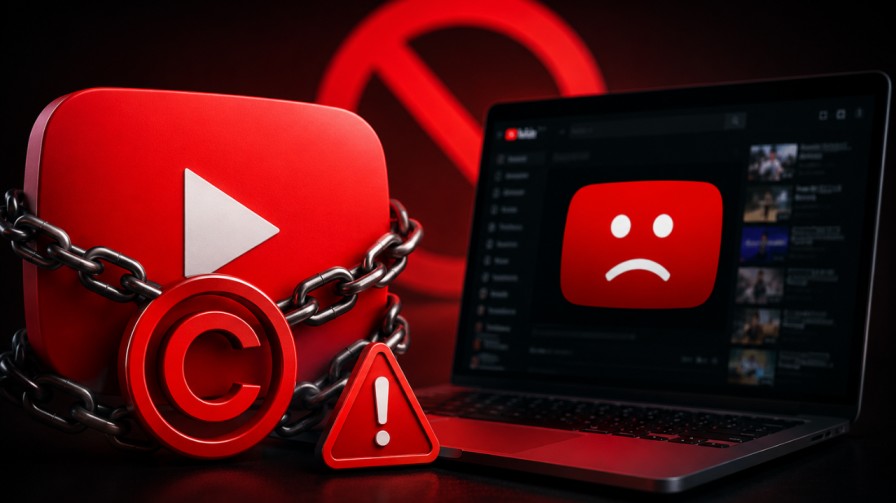
Many new creators believe one magical sentence can protect them from YouTube copyright problems:
“Credits to the owner. I do not own this content.”
Sounds safe, right?
Sadly, YouTube does not care how politely you write it. Adding “credit to the owner” does not give you permission to use someone else’s content. It is like borrowing your neighbour’s bike, writing “bike belongs to Ravi” on a sticky note, and expecting the police to clap for your honesty.
This misunderstanding has caused thousands of creators to receive copyright claims, copyright strikes, demonetisation, and even channel removal. If you are serious about growing on YouTube, understanding YouTube Copyright is not optional anymore.
What Is YouTube Copyright?
(Source – OpenAI)
YouTube Copyright is a legal protection system that protects original content creators. This includes:
- Videos
- Music
- Images
- Movie clips
- Podcasts
- Animations
- Background scores
- TV shows
- Gaming footage in some cases
The moment someone creates original content, they automatically own the copyright to it. That means nobody else can reuse it without permission.
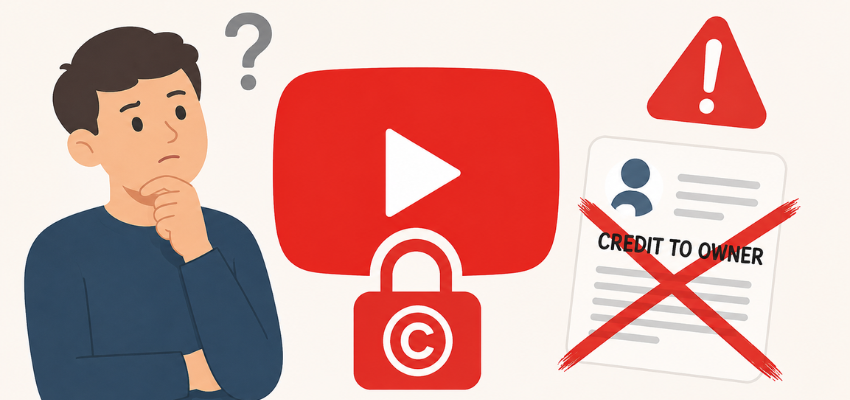
Many creators confuse “giving credit” with “getting permission.” These are completely different things.
Giving credit is polite.
Getting permission is legal.
And YouTube follows legal rules, not emotional ones.
Why “Credit to Owner” Does Not Work
Here is the simple truth:
You cannot use copyrighted content just because you mentioned the owner’s name.
If a creator uploads a song, movie clip, or video, they control how it is used. Whether you write:
- “No copyright intended”
- “Credits to the owner”
- “All rights belong to respective owners”
…it still does not change ownership.
YouTube’s system checks whether you have the right to use the content, not whether you thanked the owner in the description.
👉Click here to see how Boss Wallah works with brands and what we can build for you
How YouTube Detects Copyright Content
Many people think copyright complaints happen only when the owner manually reports the video.
Actually, YouTube has an advanced system called Content ID.
What Is Content ID?
Content ID is YouTube’s automated copyright detection system. It scans videos for copyrighted material such as:
- Songs
- Visual clips
- Background music
- Movie scenes
- TV content
Even a few seconds of copyrighted audio can trigger detection.
So if you upload a motivational video with a famous song in the background and write “credit to owner,” YouTube can still detect the music within minutes.
That is when trouble starts.
Read More | YouTube Shorts Monetization India: Can Shorts Replace Your Salary in 2026?
Difference Between Copyright Claim and Copyright Strike
Many creators panic when they hear the word copyright. But there are two different things you should understand.
| Feature | Copyright Claim | Copyright Strike |
|---|---|---|
| Seriousness | Moderate | Serious |
| Video Removal | Usually No | Often Yes |
| Monetisation Impact | Revenue may go to the owner | Possible penalties |
| Channel Risk | Low | High |
| Multiple Violations | Usually manageable | Can terminate channel |
Copyright Claim
A copyright claim usually means the owner allows the video to stay online but may:
- Take ad revenue
- Restrict viewing in some countries
- Track video performance
Copyright Strike
A copyright strike is more dangerous. This happens when the owner formally requests that YouTube remove your video.
Too many strikes can result in:
- Loss of monetisation
- Live streaming restrictions
- Channel suspension
- Permanent channel deletion
And yes, “credit to owner” does not stop strikes either.
Common Mistakes Creators Make
Using Popular Songs
Many creators add trending songs to Shorts, vlogs, or travel videos without checking copyright rules.
Even if the song is only 10 seconds long, it may still trigger copyright detection.
Reuploading Movie Clips
Some channels upload movie scenes and add captions or reactions while assuming it becomes “fair use.”
Unfortunately, not every edited video qualifies as fair use.
Copying Instagram Reels or TikTok Videos
Downloading viral clips and reposting them on YouTube is risky unless you have permission.
Adding “source: Instagram” is not enough.
Using Copyrighted Background Music
Even soft background music in cafes, weddings, or events can create copyright issues if detected.
Sometimes, creators get claims without even realising where the music came from.
What Is Fair Use?
Fair use is one of the most misunderstood topics in YouTube Copyright.
Fair use allows limited use of copyrighted material under specific conditions, such as:
- Commentary
- Education
- Criticism
- News reporting
- Parody
But fair use is not automatic protection.
Just because you react to a video does not guarantee safety.
Courts usually examine factors like:
- How much content was used
- Whether the content was transformed
- Whether it harms the original creator’s income
- Purpose of usage
This is why two reaction channels may receive different outcomes.
Can You Use Copyrighted Content Legally?
Yes, but only in certain ways.
Get Permission
The safest option is to ask the original owner for permission.
Written permission is always better than verbal permission.
Use Royalty-Free Content
Many websites offer royalty-free music, images, and videos for creators.
Always read the licence terms carefully because “free” does not always mean “free for YouTube monetisation.”
Use YouTube Audio Library
YouTube itself provides free music and sound effects through its Audio Library.
This is one of the safest options for beginners.
Create Original Content
Original content is always the safest and strongest long-term strategy.
Your own voice, editing style, storytelling, and creativity build a channel that nobody can copy.
What Happens If You Ignore YouTube Copyright Rules?
Ignoring copyright rules can seriously damage your channel growth.
Possible consequences include:
- Videos getting blocked
- Ad revenue loss
- Reduced reach
- Monetisation rejection
- Channel termination
Some creators spend years building an audience and lose everything because they repeatedly reused copyrighted material carelessly.
That is a painful lesson nobody wants.
Why This Myth Still Exists
The “credit to the owner” myth continues because many videos survive without immediate punishment.
But surviving does not mean safe.
Sometimes copyright owners:
- Ignore small channels
- Allow claims instead of strikes
- Detect content later
- Change policies later
A video that stayed untouched for six months can suddenly receive a copyright claim overnight.
That is why relying on luck is dangerous.
Read More | YouTube Earnings in India: From 1K to 1 Million Subscribers.
Smart Tips to Avoid YouTube Copyright Problems
(Source – classplusapp.com)
Always Check Music Licences
Before uploading, confirm whether the audio is safe for YouTube.
Avoid Downloading Random Clips
If you did not create it and do not have permission, think twice before uploading it.
Read YouTube Policies
Many creators skip reading YouTube guidelines and later regret it.
Understanding the basics saves future headaches.
Keep Proof of Permissions
If someone allows you to use their content, save emails or agreements safely.
Focus on Originality
Original creators build stronger audiences, better brand value, and more stable monetisation opportunities.
Need Videos, Creators, or Regional Content for Your Brand?
Boss Wallah helps brands plan and execute video content at scale, without managing multiple vendors.
We work with companies to:
- Shoot large volumes of short-form videos using real creators and studio setups, suitable for social media, websites, campaigns, and launches
- Adapt the same videos for different languages, regions, and platforms, so one shoot works across India and global markets
- Launch products or campaigns through dozens or hundreds of creators, all managed, tracked, and reported in one system
- Support brands with ongoing content, launches, regional expansion, and performance-focused campaigns
Whether you need videos for a new launch, content for multiple markets, creator-led visibility, or a steady content pipeline, Boss Wallah acts as a single partner handling production, creators, and execution end-to-end.
👉Click here to see how Boss Wallah works with brands and what we can build for you
Final Thoughts
“YouTube Copyright” is not something creators can avoid with a disclaimer.
Writing “credit to owner” may look respectful, but it does not replace legal permission. YouTube’s systems are designed to protect original creators, not clever descriptions.
The good news is that avoiding copyright trouble is actually simple:
- Create original content
- Use licensed resources
- Understand fair use carefully
- Respect other creators’ work
That approach protects your channel and also helps you grow professionally on YouTube.
Because at the end of the day, the safest content strategy is not copying better.
It is creating better.
FAQs
1. Does writing “credit to owner” prevent copyright claims on YouTube?
No. Giving credit does not give you legal permission to use copyrighted content.
2. Can I use 10 seconds of copyrighted music on YouTube?
Not always. Even short clips can trigger YouTube copyright detection systems.
3. What happens after a YouTube copyright strike?
A strike may remove your video, and repeated strikes can lead to channel suspension or deletion.
4. Is fair use automatic protection on YouTube?
No. Fair use depends on several legal factors and is decided on a case-by-case basis.
5. Where can I find safe music for YouTube videos?
You can use the YouTube Audio Library or licensed royalty-free music platforms.